
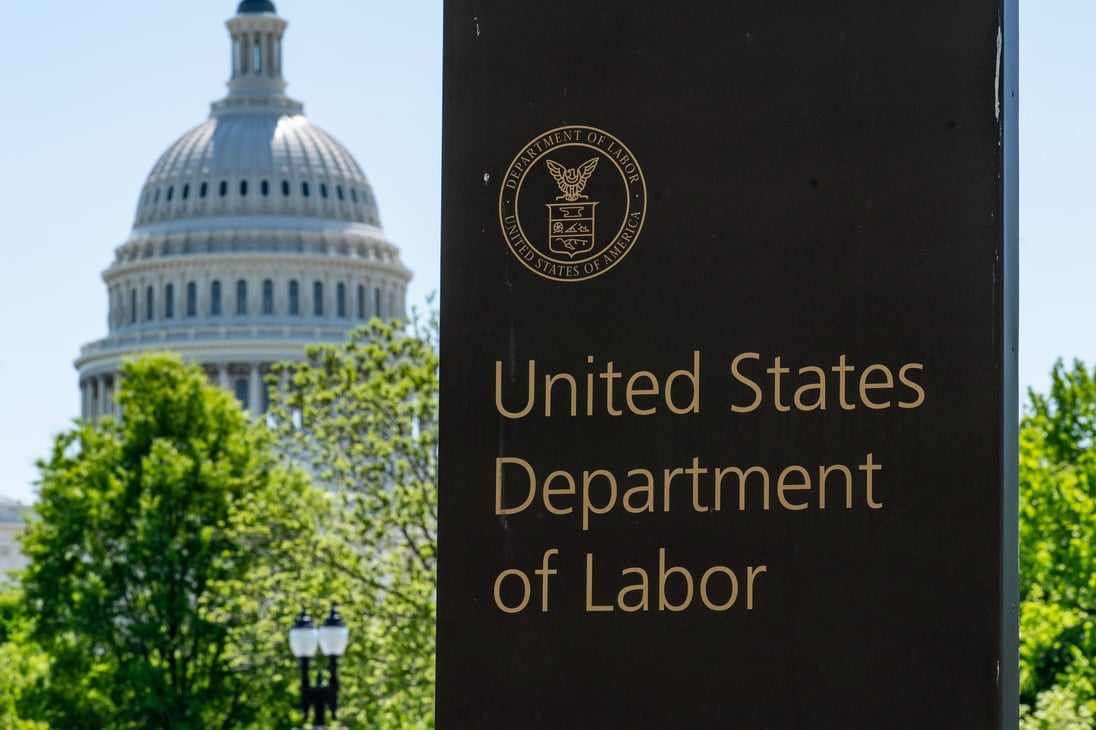
DOL v Sun Valley Orchards H-2A: $500K Penalty Upheld for Visa Labor Violations
Summary
- The Supreme Court will hear arguments in *Department of Labor v. Sun Valley Orchards* regarding the DOL's authority to impose penalties for H-2A visa labor violations.
- Sun Valley Orchards allegedly subjected 96 H-2A workers and 51 domestic workers to poor conditions, including long hours, lack of clean facilities, and inadequate housing, before laying off H-2A workers midseason.
- The Department of Labor found Sun Valley in violation of H-2A program requirements and ordered over half a million dollars in civil penalties and back wages.
- Sun Valley argues that monetary penalties for private rights issues must be adjudicated in Article III courts, citing *SEC v. Jarkesy*, challenging the administrative state's power.
- Progressive groups, despite past opposition to the Trump administration, support the government's position, asserting that upholding DOL's administrative enforcement H-2A penalties protects immigrant worker protections.
Allegations of H-2A Violations
The Supreme Court is now set to hear oral arguments in *Department of Labor v. Sun Valley Orchards*, a case that will determine the extent of the federal government's power to hold employers accountable for labor violations against immigrant workers.
Sun Valley Orchards, a New Jersey agricultural employer, secured permission for 96 H-2A visas in 2015 to bring foreign workers into the country. These temporary laborers were intended to pick asparagus and peppers between April and October, working alongside 51 domestic employees. The H-2A program permits U.S. employers to fill temporary or seasonal agricultural roles with foreign nationals when domestic workers are unavailable, requiring employers to adhere to specific terms and conditions, including minimum standards for working and living conditions.
However, the working and living conditions provided by Sun Valley Orchards reportedly fell short of these requirements. Workers, both immigrant and domestic, were expected to labor for 12 hours daily with only a single one-hour break. On the job, they allegedly lacked access to clean bathrooms and drinking water. Their housing situation was also problematic, with six bedrooms each containing 20 bunk beds, and bathrooms described as dirty with insufficient hot water.
When several workers approached the owner of Sun Valley Orchards to discuss these substandard provisions, the company's response was to provide them with pre-filled departure forms. These forms falsely stated that the workers were voluntarily leaving due to personal issues. Subsequently, the H-2A workers were laid off midseason. Following an investigation, the Department of Labor (DOL) concluded that Sun Valley had violated the H-2A program's requirements. An administrative law judge and the DOL's Administrative Review Board upheld these findings, ordering the company to pay over half a million dollars in civil penalties and back wages.
The Legal Battle Over Administrative Authority
Sun Valley Orchards subsequently challenged the Department of Labor's findings in federal court, contending that the department lacked the constitutional authority to impose monetary penalties through administrative proceedings. The company argued that matters involving private rights must be adjudicated in Article III courts, citing the Supreme Court's 2024 ruling in *SEC v. Jarkesy*. This argument positions the case within a broader trend of the Roberts court's decisions that have been characterized as "disarming the administrative state," a term referring to the governing power exercised by federal agencies.
The distinction between administrative law judges (ALJs) and Article III judges is central to this legal challenge. Unlike judges in Article III courts, who are part of the judicial branch, ALJs operate under the executive branch. There are approximately 2,000 ALJs working across 30 federal agencies, a significant number when compared to the roughly 900 judges serving in Article III courts. Sun Valley's appeal questions the scope of administrative enforcement H-2A penalties and whether such penalties can be assessed without a trial in a traditional court.
Supreme Court Review and Unconventional Alliances
The Supreme Court is now set to hear oral arguments in *Department of Labor v. Sun Valley Orchards*, a case that will determine the extent of the federal government's power to hold employers accountable for labor violations against immigrant workers. The Trump administration, which initiated the defense of this authority, advocates for the Department of Labor to retain its ability to adjudicate companies' labor violations through administrative proceedings rather than requiring them to be heard in Article III courts.
This stance has garnered support from an unexpected coalition of progressive groups, including Public Citizen and the Constitutional Accountability Center. Public Citizen, despite having filed over 50 lawsuits against the Trump administration, has sided with the government in this instance, asserting that a victory for the government would ultimately benefit immigrant workers. Similarly, the Constitutional Accountability Center, also known for its high-profile litigation against the Trump administration, has expressed that upholding the government's arguments serves the public interest. They emphasize that the DOL's capacity to impose these penalties is crucial for ensuring that employers voluntarily participating in the H-2A program comply with its requirements, thereby preventing "temporary alien workers" from negatively impacting "the wages, terms and conditions of domestic workers." This case, therefore, carries significant implications for immigrant worker protections and the future of administrative enforcement.
Practical Implications
This Supreme Court case will determine the scope of the Department of Labor's authority to impose penalties for H-2A program violations through administrative proceedings, rather than requiring adjudication in Article III courts. Lawyers advising agricultural employers utilizing H-2A visas should monitor this decision closely, as it will clarify the enforcement risks and compliance obligations related to temporary foreign worker programs, potentially impacting the speed and finality of penalty assessments.
Source
Source: Original reporting via CN
How does this affect you?
Get an AI analysis of this article grounded in your jurisdictions, practice areas, and any policy documents you've uploaded to Wansom.
Wansom is AI and can make mistakes.