
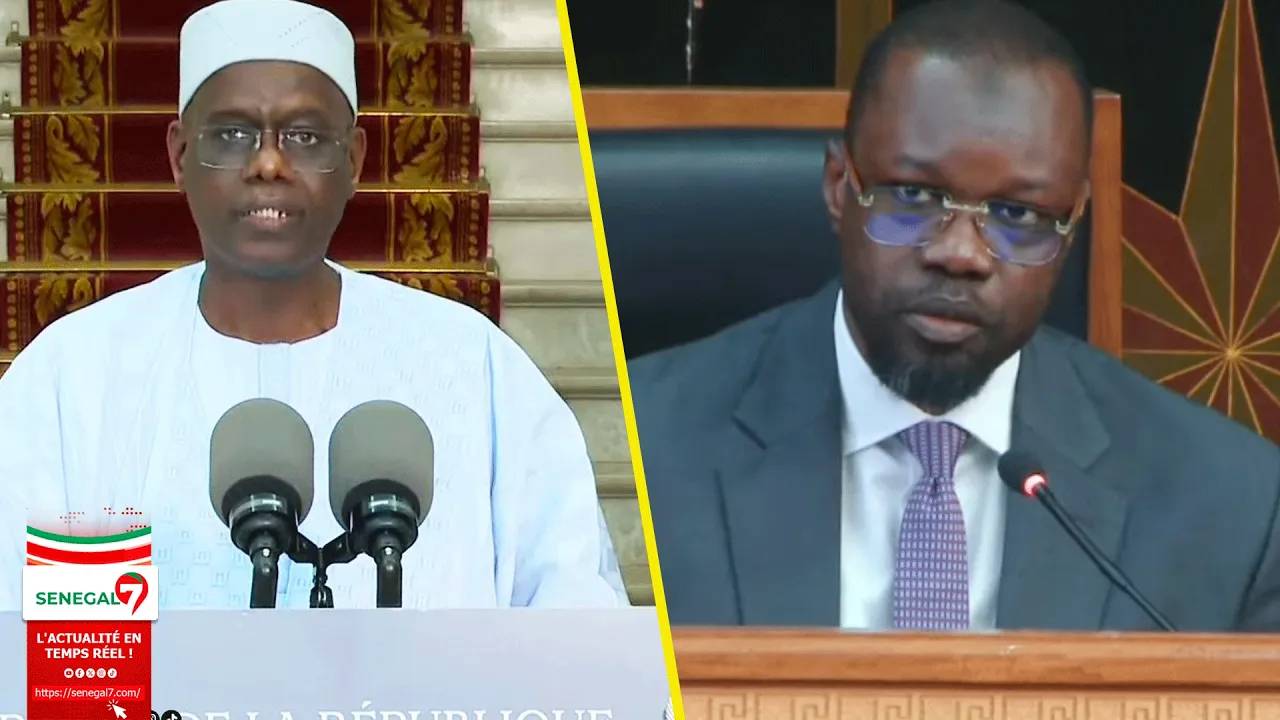
Senegal: Diomaye Faye Pastef Special Funds Debate Challenges Transparency
Summary
- A proposed law regulating special funds is causing tension between President Bassirou Diomaye Faye and the Pastef party in Senegal.
- Pastef may accuse the executive of hindering transparency, potentially challenging President Faye's leadership and leveraging its position in the National Assembly.
- Ousmane Sonko, former Prime Minister dismissed in May 2026, now serves as President of the National Assembly.
- President Faye is negotiating with the International Monetary Fund, leading the executive to adopt a cautious approach to domestic political disputes.
- A motion of censure against the Ahmadou Al Aminou Lô government is being considered, following an amendment supported by Pastef that limits such motions to two annually.
Senegal's Special Funds Debate Heats Up
This strategic posturing could directly undermine President Diomaye Faye's authority and leadership, particularly given the existing strained relationship between the head of state and key figures within Pastef.
A significant political discussion is unfolding in Senegal concerning a proposed legislative framework designed to regulate special funds. This debate has created a point of contention between President Bassirou Diomaye Faye and the Pastef party, marking a period of heightened political tension within the nation. The proposed law aims to bring greater oversight to these funds, but its handling has sparked accusations of backtracking on commitments to transparency, a core promise of the current administration.
The controversy centers on the potential for Pastef to frame any perceived obstruction of this transparency initiative as a direct challenge to the executive. Such a move would position the party as a champion of accountability, while simultaneously portraying the government as an impediment to reform. This strategic posturing could directly undermine President Diomaye Faye's authority and leadership, particularly given the existing strained relationship between the head of state and key figures within Pastef. The broader political landscape in Senegal is thus characterized by this ongoing Diomaye Faye Pastef special funds debate.
Pastef's Strategic Challenge to the Executive
The Pastef party is reportedly considering a strategy that would involve denouncing the censorship of the special funds bill, viewing it as a departure from earlier pledges for greater openness. This approach would allow Pastef to adopt the role of a victim, asserting that the executive branch is hindering the very transparency it once championed. Such a tactic would directly question the leadership of President Bassirou Diomaye Faye, exacerbating the already tense dynamic between him and Ousmane Sonko.
Ousmane Sonko, who previously served as Prime Minister before his dismissal in May 2026, now holds the influential position of President of the National Assembly. This role grants Pastef significant institutional leverage within the legislative body. The party's response to the executive's actions could therefore escalate into a broader institutional confrontation, utilizing its presence in the Assemblée nationale to press its agenda. This potential for legislative action underscores the gravity of the ongoing Diomaye Faye Pastef special funds debate Senegal.
President Faye Navigates IMF Talks and Domestic Tensions
Amidst these domestic political challenges, President Diomaye Faye is concurrently engaged in critical negotiations with the International Monetary Fund (IMF). This external engagement significantly influences the executive's approach to the internal political friction. The need to maintain a stable and transparent image for international partners, particularly regarding fiscal matters, is paramount during these discussions.
Consequently, a direct or confrontational response from the presidency to Pastef's potential criticisms is deemed unlikely in the immediate future. The prevailing hypothesis suggests that the executive will exercise caution and prudence until the conclusion of its discussions with the IMF. This strategic restraint highlights the delicate balance President Faye must strike between addressing internal political pressures and ensuring favorable outcomes from crucial international financial negotiations, especially concerning IMF Senegal fiscal transparency requirements.
Legislative Maneuvers and Government Dynamics
The political maneuvering extends to legislative mechanisms, with a potential motion of censure against the Ahmadou Al Aminou Lô government being considered. This action could materialize following the Prime Minister's general policy statement, which is anticipated on Tuesday. Such a motion would represent a significant challenge to the current administration, reflecting the deep divisions within the political sphere.
Adding another layer of complexity, the debate surrounding motions of censure follows the recent adoption of an amendment in commission. This amendment, which received support from the Pastef group, restricts the number of such motions to two per year. Furthermore, Pastef has notably declined to formally join the government led by Ahmadou Al Aminou Lô, signaling its independent stance and potential for opposition from outside the formal cabinet structure. This decision further complicates the political landscape surrounding the Pastef special funds law amendment and the broader governance of Senegal.
Source
How does this affect you?
Get an AI analysis of this article grounded in your jurisdictions, practice areas, and any policy documents you've uploaded to Wansom.
Wansom is AI and can make mistakes.