
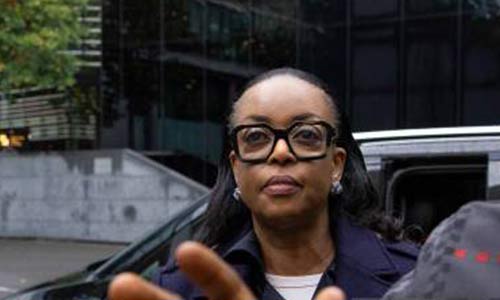
Federal High Court Abuja: Adjourns Diezani Alison-Madueke Asset Recovery Suit
Summary
- The Federal High Court in Abuja adjourned a suit filed by Diezani Alison-Madueke.
- The former Minister of Petroleum Resources seeks to recover assets forfeited to the Federal Government and sold by the EFCC.
- Justice Inyang Ekwo set the new hearing date for January 26, 2027.
- The adjournment on November 11, 2026, was granted to allow more time to study the case file.
What Happened
The latest adjournment in the Diezani Alison-Madueke asset recovery suit to January 26, 2027, by Justice Inyang Ekwo, signifies the protracted and often arduous path of high-stakes asset forfeiture cases in Nigeria.
A legal proceeding initiated by Diezani Alison-Madueke, Nigeria's former Minister of Petroleum Resources, to reclaim assets previously confiscated by the Federal Government and subsequently liquidated by the Economic and Financial Crimes Commission (EFCC), has been postponed. The Federal High Court in Abuja, presided over by Justice Inyang Ekwo, announced the adjournment on Wednesday, November 11, 2026. The court's decision moves the next hearing date for the Diezani Alison-Madueke asset recovery suit to January 26, 2027. This delay was granted to allow for additional time to thoroughly examine the extensive case file, indicating the complex nature of the ongoing litigation.
The former minister is actively challenging the forfeiture and sale of her assets, which were seized as part of broader anti-corruption efforts. This particular Diezani Alison-Madueke asset recovery suit represents a significant legal battle against the government's actions, aiming to reverse the earlier forfeiture orders. The prolonged nature of the proceedings underscores the intricate legal and procedural hurdles involved in such high-profile cases within the Nigerian judicial system.
Legal Context
The case involving Diezani Alison-Madueke falls within the broader scope of asset recovery litigation Nigeria has seen in recent years, particularly those spearheaded by the EFCC. The Economic and Financial Crimes Commission is empowered by law to investigate financial crimes, prosecute offenders, and seek the forfeiture of assets believed to be proceeds of illicit activities. These EFCC asset forfeiture cases are a cornerstone of the nation's anti-corruption strategy, aiming to deprive individuals of ill-gotten wealth and return it to public coffers.
When assets are forfeited, they are typically transferred to the Federal Government and can then be sold off. However, individuals whose assets have been forfeited retain the right to challenge these orders in court, as Diezani Alison-Madueke is currently doing. The legal framework governing these actions involves intricate judicial processes, including proving the origin of funds and adherence to due process during seizure and sale. The ongoing challenge regarding Diezani forfeited assets Nigeria highlights the legal avenues available to contest such governmental actions, even after initial forfeiture.
Why It Matters
The latest adjournment in the Diezani Alison-Madueke asset recovery suit to January 26, 2027, by Justice Inyang Ekwo, signifies the protracted and often arduous path of high-stakes asset forfeiture cases in Nigeria. This specific case, given the prominence of the former minister, draws considerable attention and its outcome could potentially influence future EFCC asset forfeiture cases and the broader landscape of asset recovery litigation Nigeria. The extended timeline for resolution underscores the judicial system's careful, albeit slow, deliberation on matters involving significant public interest and complex legal arguments.
For legal professionals and compliance officers, the new hearing date of January 26, 2027, is a critical marker. The eventual judgment in this Diezani Alison-Madueke asset recovery suit could establish important precedents concerning the process of asset forfeiture, the rights of individuals challenging such actions, and the operational procedures of agencies like the EFCC. The ongoing legal battle over Diezani forfeited assets Nigeria continues to be a key indicator of the challenges and complexities inherent in the nation's fight against corruption and the recovery of public funds.
Practical Implications
This adjournment underscores the prolonged and complex nature of high-profile asset forfeiture and recovery litigation in Nigeria. Lawyers and compliance officers monitoring such cases should note the new hearing date of January 26, 2027, as the outcome could set precedents for similar proceedings or inform strategies for clients involved in asset recovery disputes.
Source
How does this affect you?
Get an AI analysis of this article grounded in your jurisdictions, practice areas, and any policy documents you've uploaded to Wansom.
Finish Reading the Full Story and the Expert Analysis.
Get the latest legal & regulatory intelligence in Nigeria
Wansom is AI and can make mistakes.