
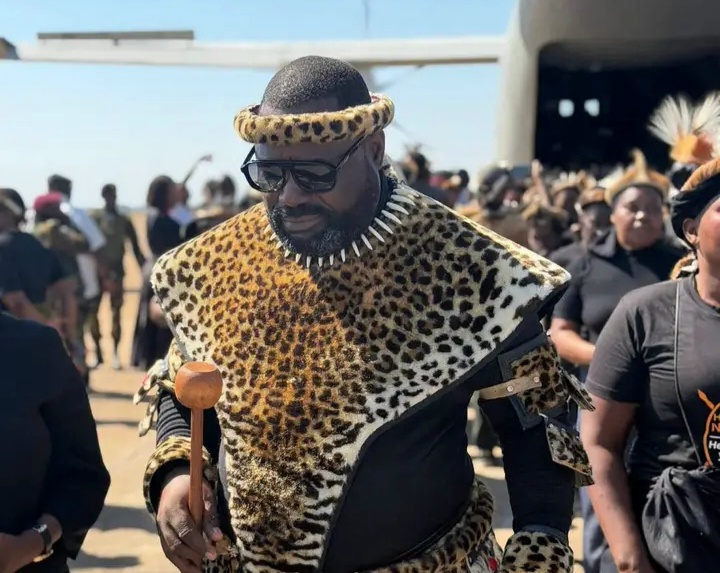
Dickson Jere: Questions Ngoni Chief Succession Process, Instrument of Power
Summary
- Dickson Jere intensely followed the recent succession process for Chief Liteta.
- A new successor for Chief Liteta was chosen just days before Jere's commentary, but that Chief Liteta has since passed away in August 2026, initiating a new succession process.
- Jere sought information from friends in the area about the succession procedures.
- The instrument of power related to the succession was observed at the District Commissioner's office.
- Jere questioned why this instrument of power was located at a government administrative office.
Observing a Traditional Transition
Jere's inquiry into the location of the instrument of power serves as a reminder that the mechanisms of traditional leadership are not always isolated from modern administrative frameworks.
Dickson Jere, a keen observer of traditional affairs and customary practices, recently dedicated significant attention to the succession proceedings for Chief Liteta. His focus was particularly intense as the complex process unfolded, culminating in the selection of a new leader, Chief Liteta, who has since passed away in August 2026, initiating a new succession process. The transition of leadership within traditional structures is often a deeply rooted and intricate affair, drawing considerable interest from both local communities and those who monitor customary practices across the region.
Jere's engagement extended beyond mere observation; he actively sought to understand the specific intricacies of the succession. He reached out to individuals familiar with the area, specifically friends who hail from the region governed by Chief Liteta, to gather insights into the customary procedures and protocols involved in identifying and affirming a new chief. This proactive approach underscores the importance of understanding the nuanced steps that define such a significant cultural and administrative event, highlighting the community's role and the established traditions.
The District Commissioner's Role in Question
A particular aspect of the Chief Liteta succession process captured Jere's attention and prompted further inquiry: the unexpected presence of the "instrument of power" at the District Commissioner's office. This observation led him to question the conventional path for such a significant symbol of authority, which typically remains within traditional custodianship. The customary transfer of power usually follows established traditional norms, and its appearance in a government administrative office raised questions about the interplay between customary law leadership and state administrative structures.
Jere's curiosity stemmed from the perceived deviation from what might be expected in a purely traditional succession, prompting him to seek clarification. He pondered why this crucial item, emblematic of the chief's authority and integral to the Ngoni Chief Succession, would be lodged with a state official rather than remaining exclusively within the traditional framework. This specific detail highlights a potential point of intersection, or perhaps divergence, between the traditional authority of chiefs and the oversight or involvement of government bodies like the District Commissioner in Zambian customary law leadership.
Broader Implications for Traditional Governance
The succession of traditional leaders, such as Chief Liteta, holds profound significance for the communities they serve, impacting local governance, land rights, and social cohesion. The meticulous observation by individuals like Dickson Jere underscores the public interest and the need for transparency and adherence to established customs in these transitions. When questions arise regarding the procedural aspects, particularly concerning the involvement of external administrative bodies, it can spark broader discussions about the integrity and autonomy of traditional institutions within Zambia.
Understanding the precise roles of various entities, from traditional councils to government representatives like the District Commissioner, is crucial for maintaining confidence in the succession process. Jere's inquiry into the location of the instrument of power serves as a reminder that the mechanisms of traditional leadership are not always isolated from modern administrative frameworks. The clarity surrounding these interactions is vital for all stakeholders, ensuring that the transition of authority is both legitimate in the eyes of the community and recognized by the state, thereby upholding the stability of traditional governance.
Practical Implications
Lawyers advising clients on land rights, community relations, or investment projects in areas under traditional authority in Zambia should understand the legal and administrative intricacies of chief succession processes, particularly the role of government bodies like the District Commissioner in the recognition and transfer of traditional power.
Source
How does this affect you?
Get an AI analysis of this article grounded in your jurisdictions, practice areas, and any policy documents you've uploaded to Wansom.
Finish Reading the Full Story and the Expert Analysis.
Get the latest legal & regulatory intelligence in Zambia
Wansom is AI and can make mistakes.