
Departure From Prescribed Rules Under SARFAESI Act Renders Sale Illegal: Supreme Court
What Happened
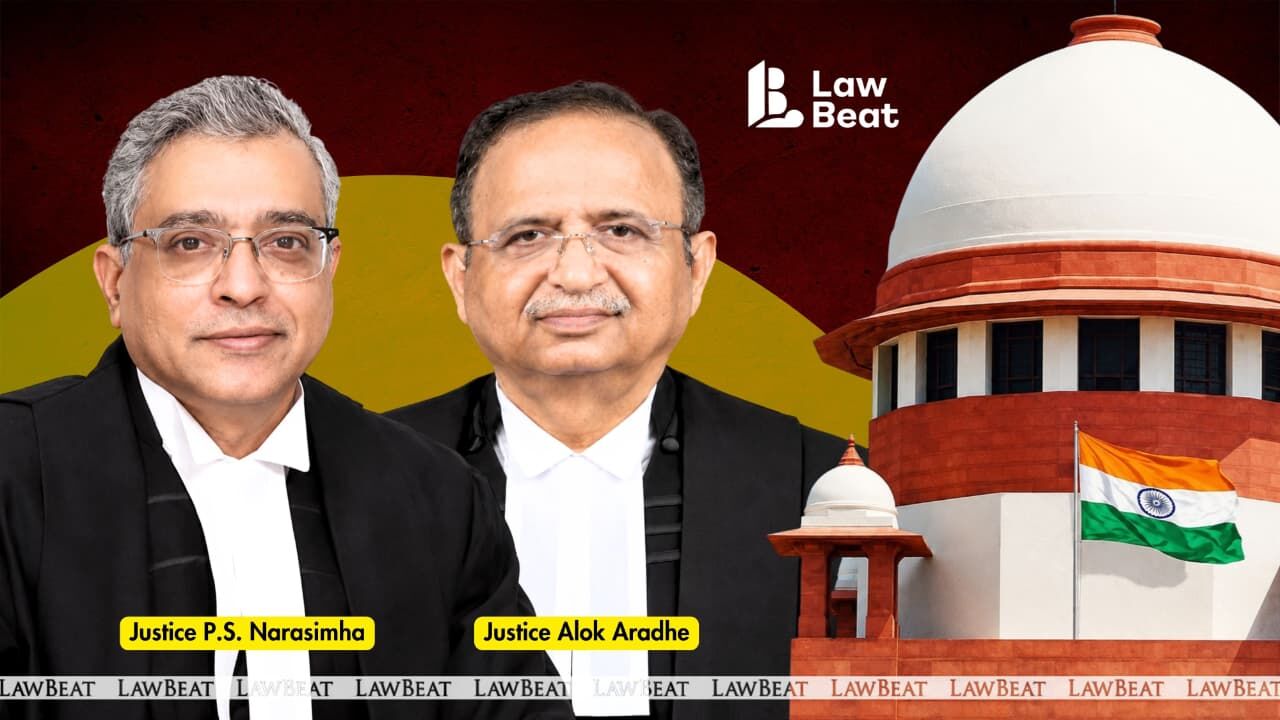
Home / Top Stories / Supreme Court Judgments Departure From Prescribed Rules Under SARFAESI Act Renders Sale Illegal: Supreme Court X SC sets aside illegal auction of Ooty hill resort. The Supreme Court held that SARFAESI auction sales must comply with mandatory procedures, including 30-day notice under Rule 9 and the borrower’s Article 300A property rights. The Supreme Court has held that the statutory requirements under the SARFAESI Act must be scrupulously followed, as they are the very conditions upon which the extraordinary power of sale is conferred. A Bench of Justices P S Narasimha and Alok Aradhe observed that any departure from the prescribed procedure renders the sale illegal, particularly when it undermines the borrower’s right of redemption as it stood before the 2016 amendment to the law. The Bench made the observation while allowing an appeal filed by Sterling Holiday Resorts Ltd and others, and held that the auction process conducted by the authorised officer was illegal due to multiple procedural infirmities, including receiving bids during a period when a tribunal had restrained the officer from proceeding further. Why did the Supreme Court hold the SARFAESI auction illegal? Court held that an act done in violation of an order passed by a court or tribunal is not merely an irregularity but is bereft of legal effect. “Parties cannot be permitted to retain advantages secured through the defiance of such orders,” the Bench said, holding that the auction notice and acceptance of bids were illegal as they took place during a period when the tribunal had restrained the authorised officer from proceeding further. The Bench also highlighted that Rule 9(1) of the Security Interest (Enforcement) Rules , 2002 mandates a 30-day notice period before an auction. “When proceedings are stayed by a court, the period of the stay must be excluded when computing the notice period, as an act of court shall prejudice no one,” the Bench said. In the present case, Court held that the auction sale could not be sustained because it was concluded before the mandatory 30-day notice period had expired after accounting for the period during which the proceedings were stayed. Can a sale certificate be issued to someone who did not participate in the auction? The Supreme Court held that under Rules 9(2) and 9(6) of the Security Interest (Enforcement) Rules, 2002, the sale certificate must be issued in favour of the highest bidder who participated in the auction process. “Neither the rules nor the auction notice contemplate the substitution of the bidder with a nominee or a third party who did not participate or exist at the time of the auction,” the Bench said. In this case, Court found that the sale certificate was issued in favour of an entity that was neither the successful bidder nor in existence at the time of the auction. Court held this to be impermissible. The Bench further underscored that the principle of finality in auction sales presupposes that the auction was conducted in accordance with law. “Sanctity is the reward of legality, and sales vitiated by material irregularity or non-compliance with mandatory procedure may be set aside even after confirmation,” the Bench said. Court thus clarified that the principle of sanctity of auction sales applies only to sales conducted in accordance with law and does not protect sales vitiated by material irregularity or fraud. What was the dispute over the Ooty hill resort? The batch of matters concerned the fate of a hill resort that has been the subject of litigation for well over a decade. The central issue before the Court was whether the process culminating in the issuance of the sale certificate had been conducted in conformity with the statutory framework governing such sales. Sterling Holiday Resorts Limited was the borrower, while M/s P M Associates was the purchaser. In 1991, the borrower had obtained a loan of Rs 2.06 crores from the Industrial Finance Corporation of India Limite
Source
Source: Original reporting via LawBeat
How does this affect you?
Get an AI analysis of this article grounded in your jurisdictions, practice areas, and any policy documents you've uploaded to Wansom.
Finish Reading the Full Story and the Expert Analysis.
Get the latest legal & regulatory intelligence in India
Wansom is AI and can make mistakes.