
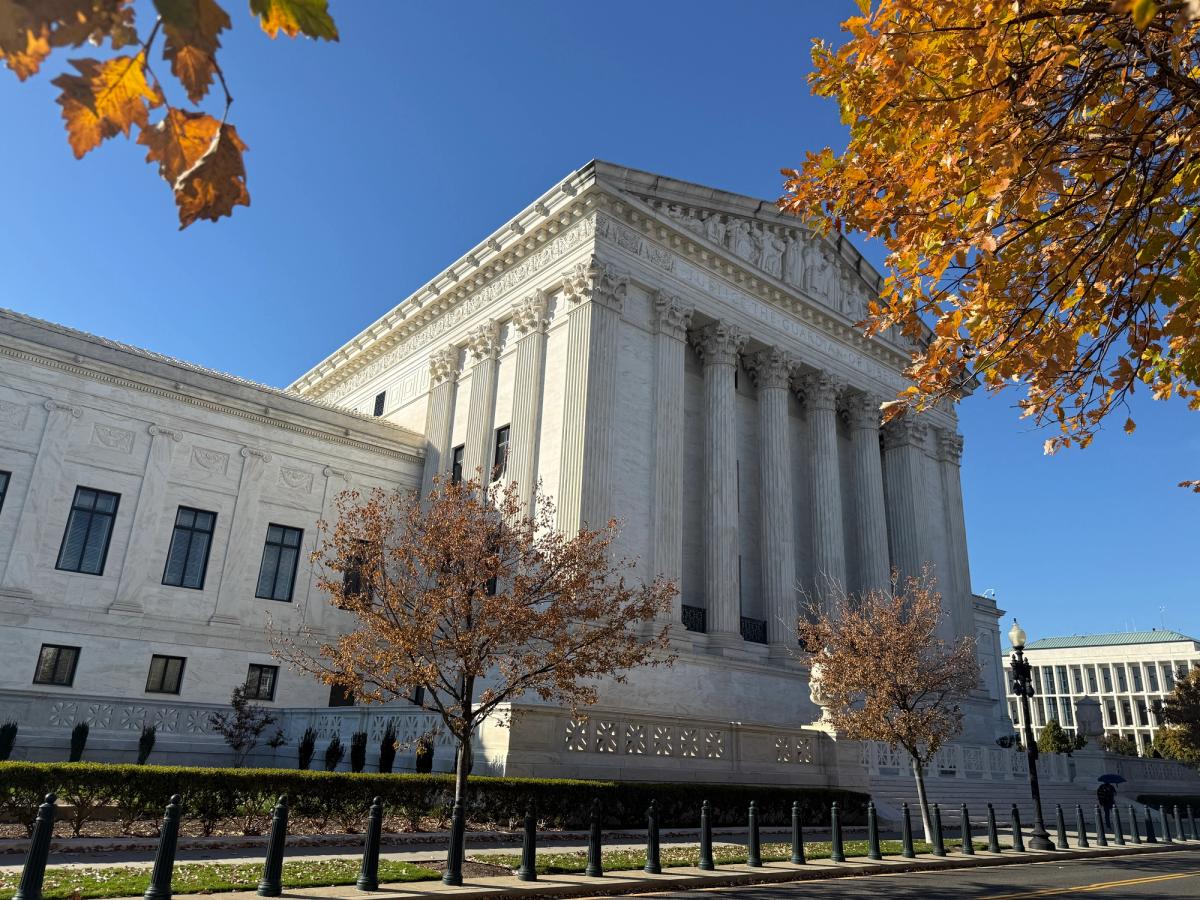
SCOTUS to Hear Department of Labor v. Sun Valley Orchards: Agency Adjudication Tested
Summary
- The Supreme Court will hear Department of Labor v. Sun Valley Orchards on November 10, addressing the constitutionality of agency adjudication.
- Agency adjudication involves administrative agencies resolving disputes internally, a practice facing constitutional challenges.
- The Court uses a "history-and-tradition" methodology to assess the constitutionality of administrative tribunals.
- A key difficulty in this methodology is choosing the appropriate historical tradition when multiple traditions exist.
- Article III of the Constitution vests judicial power in federal courts, yet non-Article III tribunals have historically handled certain disputes.
The Upcoming Supreme Court Challenge
The upcoming hearing will specifically test the Court's "history-and-tradition" methodology, which it has increasingly applied to assess the legality of such administrative functions.
The Supreme Court is set to hear arguments in Department of Labor v. Sun Valley Orchards on November 10, a case poised to critically examine the constitutional boundaries of agency adjudication. This practice, where federal administrative agencies resolve disputes internally rather than through traditional court proceedings, has become a focal point of constitutional scrutiny. The upcoming hearing will specifically test the Court's "history-and-tradition" methodology, which it has increasingly applied to assess the legality of such administrative functions.
This particular case highlights the inherent difficulties in applying a judicial methodology that relies heavily on historical precedent. The challenge lies in discerning which among potentially competing historical traditions should ultimately guide contemporary constitutional interpretation. The issues presented in Department of Labor v. Sun Valley Orchards are not isolated, but rather exemplify broader methodological complexities that resonate across numerous legal domains.
Constitutional Foundations of Judicial Power
At the heart of the debate over administrative tribunals lies Article III of the United States Constitution, which explicitly vests the "judicial power of the United States" in the Supreme Court and other federal courts established by Congress. This constitutional provision seemingly reserves the authority to adjudicate disputes for the judicial branch. However, a long-standing historical tension exists, as various tribunals outside the Article III framework have, since the nation's inception, handled disputes that would otherwise fall under federal court jurisdiction.
These non-Article III bodies include territorial courts, military tribunals, bankruptcy courts, and magistrate judges. Most relevant to the current discussion are administrative tribunals, often presided over by administrative law judges, which form an integral part of the federal government's dispute resolution apparatus. For instance, the adjudication of claims related to Social Security and veterans' benefits represents a significant and routine function performed by these administrative bodies.
The "History and Tradition" Conundrum
The Supreme Court's current approach to evaluating the constitutionality of agency adjudication frequently employs a "history-and-tradition" methodology. This analytical framework seeks to validate or invalidate modern governmental practices by examining their lineage and consistency with historical norms. However, this method faces a significant hurdle: the challenge of selecting the definitive historical tradition when multiple, sometimes conflicting, historical practices or understandings exist.
The forthcoming arguments in Department of Labor v. Sun Valley Orchards are expected to underscore these very difficulties. The case will require the Court to grapple with how to interpret and apply historical context to contemporary administrative structures, particularly when historical practices themselves may not offer a clear, singular path forward. This methodological ambiguity is central to the broader constitutional questions surrounding the administrative state.
Broader Implications for Agency Adjudication
The practice of agency adjudication, which allows administrative agencies to resolve disputes "in-house," has been a recurring subject of intense constitutional challenge over recent decades. This internal dispute resolution mechanism, distinct from direct judicial review, is a fundamental characteristic of the modern administrative state. The Supreme Court's decision in Department of Labor v. Sun Valley Orchards will therefore have profound implications for the validity and operational scope of administrative tribunals across the federal government.
The outcome could redefine the permissible extent of administrative power in adjudicatory matters, potentially influencing how various federal agencies conduct their dispute resolution processes. Clarifying the constitutional limits of agency adjudication will impact the validity of decisions made by administrative bodies, thereby affecting compliance strategies and litigation involving numerous federal agencies.
Practical Implications
This Supreme Court case will clarify the constitutional limits of agency adjudication, impacting the validity of decisions made by administrative bodies. Lawyers should monitor the outcome to understand potential shifts in challenging or defending agency actions, particularly those based on historical precedent or tradition, which could affect compliance strategies and litigation involving various federal agencies.
Source
How does this affect you?
Get an AI analysis of this article grounded in your jurisdictions, practice areas, and any policy documents you've uploaded to Wansom.
Finish Reading the Full Story and the Expert Analysis.
Get the latest legal & regulatory intelligence in United States
Wansom is AI and can make mistakes.