
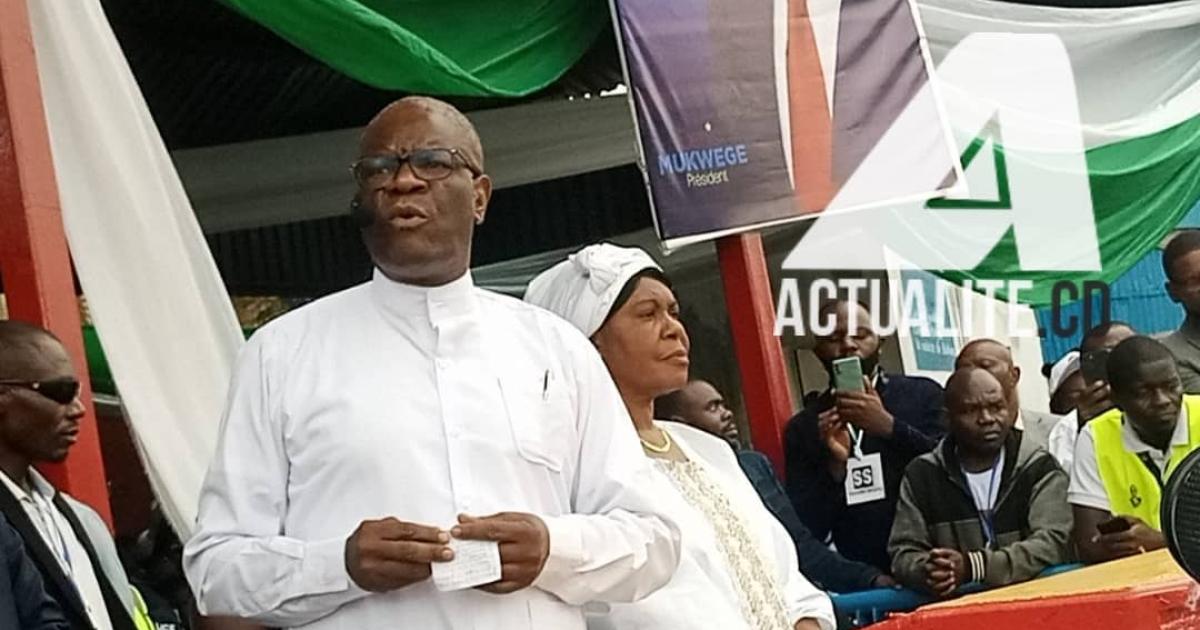
Denis Mukwege: Calls for Lemera Transitional Justice in DRC
Summary
- Dr. Denis Mukwege, the 2018 Nobel Peace Prize laureate, has reiterated his call for transitional justice.
- This appeal is on behalf of the victims of the massacres that occurred in Lemera, South Kivu.
- The massacres took place on October 6, 1996, in the Uvira territory.
- Dr. Mukwege's renewed demand comes thirty years after the tragic events.
- He advocates for accountability and reparations for those affected by the violence.
Renewed Call for Justice in South Kivu
His recent reiteration of the demand for Denis Mukwege Lemera transitional justice is not an isolated plea but rather a continuation of his broader mission to ensure that historical injustices, such as the massacres of Lemera in 1996, are thoroughly investigated and addressed.
Nobel Peace Prize laureate Dr. Denis Mukwege has once again issued a powerful appeal for the implementation of transitional justice measures in the Democratic Republic of Congo. This urgent call is specifically directed towards securing accountability and redress for the victims of the devastating massacres that occurred in Lemera, a community situated within the Uvira territory of South Kivu. His consistent advocacy highlights the deep-seated need for comprehensive solutions to historical atrocities.
The specific events Dr. Mukwege referenced took place on October 6, 1996, marking a tragic day in the region's history. His recent statement, made precisely three decades after these horrific incidents, serves as a poignant reminder of the enduring pain and the unfulfilled quest for justice faced by those affected. The passage of time has not diminished the imperative to address these past crimes, emphasizing the long-term impact of such violence on communities.
Understanding Transitional Justice for Lemera Victims
The framework of transitional justice, as championed by Dr. Mukwege, encompasses a multifaceted approach designed to confront widespread human rights violations in societies emerging from periods of conflict or severe repression. This typically involves several key components: establishing truth commissions to document past abuses, initiating criminal prosecutions against perpetrators of war crimes, providing comprehensive reparations for victims, and implementing institutional reforms to prevent future atrocities. For the victims of the Lemera massacres, this framework offers a structured path toward recognition and healing.
Dr. Mukwege's persistent demand for justice transitionnelle RDC underscores the critical importance of acknowledging the suffering endured by the people of Lemera. His advocacy aims to ensure that the crimes de guerre Sud-Kivu, particularly those committed on October 6, 1996, are not consigned to oblivion. The focus remains on securing meaningful reparations victimes Lemera, thereby fostering a sense of closure and rebuilding trust within the affected communities.
The Enduring Legacy of the 1996 Massacres
The massacres at Lemera, which unfolded on October 6, 1996, represent a profoundly traumatic episode in the history of the Uvira territory in South Kivu. These acts of violence inflicted immense suffering and loss upon the local population, leaving an indelible mark of trauma and injustice that continues to affect generations. The memory of these events remains a powerful catalyst for the ongoing demands for accountability.
Despite the passage of thirty years, the need for comprehensive justice for the Lemera massacres 1996 remains as urgent as ever. Dr. Mukwege’s renewed call serves as a critical reminder that true peace and reconciliation cannot be achieved without addressing the root causes and consequences of such widespread human rights abuses. It highlights the long-term societal impact of unaddressed crimes and the necessity of robust legal and social mechanisms to confront them.
Dr. Mukwege's Moral Authority and Advocacy
Dr. Denis Mukwege, globally recognized for his tireless humanitarian work and awarded the 2018 Nobel Peace Prize, has consistently leveraged his prominent platform to advocate for the rights of victims of sexual violence and other grave human rights violations across the Democratic Republic of Congo. His unwavering commitment and moral authority lend significant weight to his calls for justice, both domestically and on the international stage.
His recent reiteration of the demand for Denis Mukwege Lemera transitional justice is not an isolated plea but rather a continuation of his broader mission to ensure that historical injustices, such as the massacres of Lemera in 1996, are thoroughly investigated and addressed. This sustained advocacy is vital for maintaining pressure on relevant authorities to establish effective accountability mechanisms and to deliver tangible reparations for the victims, thereby contributing to a more just and peaceful future for the region.
Practical Implications
Lawyers specializing in human rights or international criminal law in the DRC should monitor this renewed call for transitional justice as it indicates sustained pressure for accountability mechanisms (e.g., truth commissions, reparations, special tribunals) that could impact future legal proceedings or policy reforms concerning the Lemera massacres and similar atrocities.
Source
Source: Original reporting via PMaki
How does this affect you?
Get an AI analysis of this article grounded in your jurisdictions, practice areas, and any policy documents you've uploaded to Wansom.
Finish Reading the Full Story and the Expert Analysis.
Get the latest legal & regulatory intelligence in DR Congo
Wansom is AI and can make mistakes.