
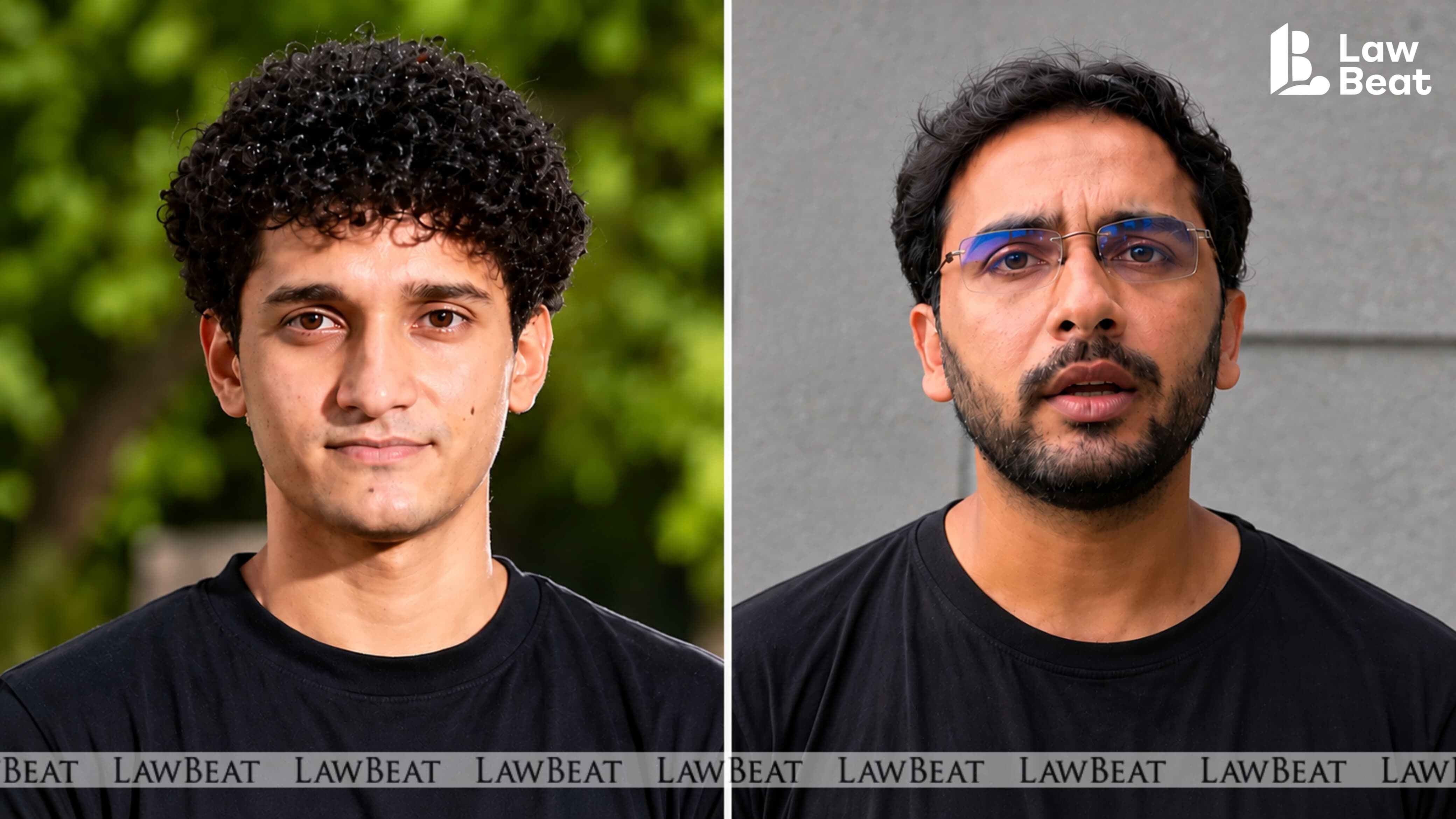
Delhi Magistrate: Saurav Das Peace Bond Needs Address Proof
Summary
- Special Executive Magistrate Ritu Raj ordered CJP's Saurav Das to provide proof of his Delhi residential address for peace bond proceedings.
- The Delhi Police argued that Das had not submitted a rent agreement or lease document to establish his residency.
- Das and Ashutosh Ranka were detained on October 12 after entering a restricted protest site at Jantar Mantar and were later released on ₹50,000 bonds.
- The peace bond proceedings under BNSS 2023 run alongside a separate criminal investigation by the Delhi Police Crime Branch under BNS 2023.
- The matter is listed for November 17 for the examination of the requested residential documents.
What Happened
This case, particularly the demand for Saurav Das peace bond Delhi address proof, underscores the rigorous enforcement by Special Executive Magistrates regarding residential documentation for peace bonds under the recently enacted Bharatiya Nagarik Suraksha Sanhita (BNSS), 2023.
Saurav Das, co-convener of the Cockroach Janta Party (CJP), has been directed by Special Executive Magistrate Ritu Raj to furnish verifiable proof of his Delhi residential address. This order was issued during ongoing peace bond proceedings, which are scheduled for a subsequent hearing on November 17. The Magistrate's instruction came after Delhi Police counsel asserted that the documentation submitted by Das did not sufficiently demonstrate his residency in the city, specifically noting the absence of a rent agreement or lease.
Das and fellow CJP leader Ashutosh Ranka appeared before the court with their sureties when the deficiency in documentation was highlighted. Das's legal team requested additional time to compile and present the necessary residential proof, a request that the Magistrate granted. These proceedings are a continuation of preventive actions initiated by the Parliament Street police under Sections 126 and 170 of the Bharatiya Nagarik Suraksha Sanhita (BNSS), 2023, stemming from an apprehension of a breach of public peace.
Legal Context
The preventive action against Das and Ranka originated from an incident on October 12, when they were detained after reportedly scaling a gate and entering a restricted protest site at Jantar Mantar. This occurred amid broader demonstrations and calls for protests targeting the Chief Election Commissioner over alleged irregularities. Following their detention, the two leaders spent a week in judicial custody before being released on October 21, each furnishing personal and surety bonds of ₹50,000. The prosecution had opposed their release, citing ongoing threats to public safety and order.
Upon their release, the Special Executive Magistrate's order recorded that both individuals provided written undertakings. These included commitments not to breach the peace, an affirmation of "full faith in judiciary and all its instruments including the learned SEM Court," and a pledge to refrain from organizing protests at Jantar Mantar until its de-notification in accordance with law. They further stated that any future protests would adhere to constitutional boundaries. The SEM concluded that the measures outlined in Section 135(3) of the BNSS could be sufficiently secured by the peace bond and these undertakings.
Crucially, these peace bond proceedings are running concurrently with a separate criminal investigation. The Delhi Police transferred the Jantar Mantar incident probe to the Inter State Cell of its Crime Branch on October 19. Das and Ranka subsequently appeared for questioning at the Mandir Marg police station, having previously requested more time. The initial First Information Report (FIR) was lodged at Connaught Place police station under Sections 223A (disobedience to an order duly promulgated by a public servant), 332 (house-trespass to commit an offence), and 61(2) (criminal conspiracy) of the Bharatiya Nyaya Sanhita (BNS), 2023. A second FIR was registered at Parliament Street police station, citing Sections 221 (obstructing a public servant), 115(2) (voluntarily causing hurt), 132 (assault or criminal force to deter a public servant), and 121(1) (voluntarily causing hurt).
Why It Matters
This case, particularly the demand for Saurav Das peace bond Delhi address proof, underscores the rigorous enforcement by Special Executive Magistrates regarding residential documentation for peace bonds under the recently enacted Bharatiya Nagarik Suraksha Sanhita (BNSS), 2023. The insistence on a rent agreement or lease document highlights a strict interpretation of bond conditions, emphasizing the need for meticulous compliance from individuals subject to such preventive measures. This development signals that authorities are scrutinizing the foundational details of peace bonds more closely, potentially setting a precedent for future cases involving activists and public figures.
The parallel criminal investigations under the Bharatiya Nyaya Sanhita (BNS) further complicate the legal landscape for Das and Ranka. While the peace bond proceedings aim to prevent future disturbances, the criminal charges address past alleged offenses, creating a dual legal challenge. This scenario demonstrates how the new legal framework, including the BNSS 2023 peace bond Delhi provisions, can lead to both preventive and punitive actions simultaneously, requiring comprehensive legal strategies. The outcome of this case will be closely watched by legal practitioners, particularly concerning the intersection of preventive justice and criminal law under India's updated statutes.
Practical Implications
Lawyers should note the strict enforcement by Special Executive Magistrates regarding residential proof for peace bonds under the new BNSS, highlighting the need for meticulous compliance with bond conditions and the potential for parallel criminal investigations under the BNS.
Source
How does this affect you?
Get an AI analysis of this article grounded in your jurisdictions, practice areas, and any policy documents you've uploaded to Wansom.
Finish Reading the Full Story and the Expert Analysis.
Get the latest legal & regulatory intelligence in India
Wansom is AI and can make mistakes.