
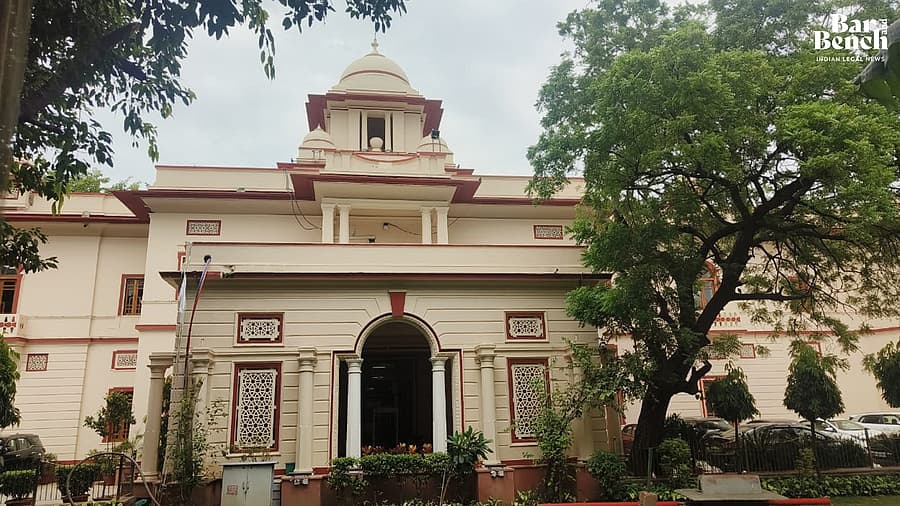
Delhi Court: Delhi Race Club Eviction Order Stay Rejected, Must Vacate Lutyens Delhi
Summary
- A Delhi court rejected the Delhi Race Club's plea for an interim stay against a government eviction order.
- The eviction order, issued by an Estate Officer on August 11, directed the club to vacate its Lutyens Delhi premises within 15 days.
- The club argued violations of natural justice and that the proceedings were barred by *res judicata* due to a quashed 1999 notice.
- The court found the club failed to establish a *prima facie* case for a stay against the order, which was issued under the Public Premises (Eviction of Unauthorised Occupants) Act.
- The decision underscores the difficulty in obtaining interim stays against eviction orders for public premises, even with procedural and prior adjudication arguments.
Court Rejects Delhi Race Club's Eviction Stay Plea
The court concluded that the appellant, the Delhi Race Club, had failed to establish a *prima facie* case for a stay against the impugned order.
A Delhi court recently denied an application by the Delhi Race Club (DRC) seeking an interim stay against a government order to vacate its premises. The ruling, issued by Principal District & Sessions Judge Pitamber Dutt of the Patiala House Courts on Tuesday, upheld the eviction directive that mandated the century-old horse-racing institution to vacate its Lutyens Delhi property within 15 days of the order's issuance.
The eviction order, dated August 11, was originally passed by an Estate Officer under the provisions of the Public Premises (Eviction of Unauthorised Occupants) Act. The Delhi Race Club, a prominent establishment, is situated on Central Golf Link Road, directly opposite the Prime Minister's House, making its location in Lutyens Delhi particularly significant. The court's decision means the Delhi Race Club eviction order stay rejected, leaving the club to face the immediate implications of the vacate Lutyens Delhi directive.
Legal Arguments Against Eviction Order
During the proceedings, Senior Advocate Suhail Dutt, representing the Delhi Race Club, presented several arguments challenging the Estate Officer's August 11 order. A primary contention was that the order violated fundamental principles of natural justice, as the club had not been provided with a copy of the plaint despite repeated requests, hindering its ability to mount a proper defense.
Furthermore, Dutt argued that the eviction proceedings were barred by the legal doctrine of *res judicata*. This principle, which prevents the re-litigation of matters already judged, was invoked on the basis that an earlier show cause notice issued in 1999 had previously been quashed by the Delhi High Court. The club's counsel also highlighted the continued payment of rent as evidence against the unauthorized occupancy claim, asserting that these factors should have led to a stay of the eviction under the Public Premises Eviction Unauthorised Occupants Act.
Court's Rationale for Dismissal
The Patiala House Courts eviction ruling ultimately sided with the government, dismissing the club's application for an interim stay. The court concluded that the appellant, the Delhi Race Club, had failed to establish a *prima facie* case for a stay against the impugned order. This finding indicates that the court did not find sufficient initial evidence or legal merit in the club's arguments to warrant a temporary halt to the eviction process.
In its pronouncement, the court stated, “In view of the above facts and circumstances, I am of the considered view that appellant has failed to make a prima facie case for stay of the impugned order dated 11.08.2026 passed by the Ld. Estate Officer in case No.ESO/11/3(1)/2026 titled as Union of India Vs. Delhi Race Club. Accordingly, the application filed by the applicant/appellant for interim stay is dismissed.” This specific reference to the case details, including the case number and the precise date of the Estate Officer's order, underscores the court's detailed consideration of the matter, despite the arguments concerning natural justice and res judicata public premises act.
Implications for Public Premises Evictions
This judicial outcome highlights the significant hurdles faced by occupants seeking to challenge eviction orders issued under the Public Premises (Eviction of Unauthorised Occupants) Act, particularly when attempting to secure interim stays. The court's emphasis on the failure to establish a *prima facie* case, even when arguments of natural justice and *res judicata* are presented, sets a high bar for such challenges.
The ruling underscores the robust nature of the Public Premises Act in facilitating the recovery of government properties. It suggests that procedural fairness and prior adjudication arguments, while crucial, may not automatically guarantee an interim stay against an eviction order if the court perceives a lack of a strong initial case on the merits. This reinforces the need for occupants of public premises to present a compelling and legally sound defense from the outset of any eviction proceedings.
Practical Implications
This ruling underscores the significant challenge in securing interim stays against eviction orders issued under the Public Premises (Eviction of Unauthorised Occupants) Act, even when procedural fairness (natural justice) or prior adjudication (res judicata) are argued. Lawyers advising clients occupying public premises should note the high bar for establishing a prima facie case to challenge such orders, emphasizing the need for robust initial defense against eviction proceedings.
Source
Source: Original reporting via Live Law
How does this affect you?
Get an AI analysis of this article grounded in your jurisdictions, practice areas, and any policy documents you've uploaded to Wansom.
Wansom is AI and can make mistakes.