
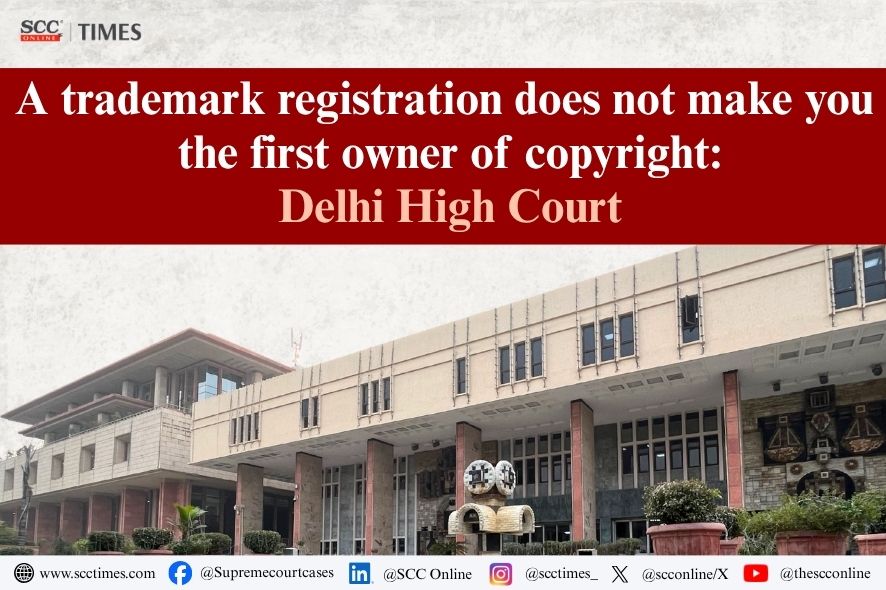
Delhi High Court: Trademark Registration Not Copyright Ownership Proof
Summary
- The Delhi High Court dismissed a rectification petition filed by Japan Tobacco.
- The court ruled that mere trademark registration is insufficient to establish first ownership of copyright.
- This decision specifically applies to an original artistic work under Section 17 of the Copyright Act.
- The judgment clarifies the distinct requirements for proving copyright ownership versus trademark registration in India.
The Court's Ruling on IP Ownership
Legal professionals must now more emphatically advise their clients that trademark registration alone is insufficient to establish first ownership of copyright in an original artistic work.
The Delhi High Court recently delivered a noteworthy judgment, dismissing a rectification petition initiated by Japan Tobacco. This decision provides critical clarity on the interplay between different forms of intellectual property rights, specifically addressing the assertion of copyright ownership based solely on trademark registration. The court's unequivocal stance was that the mere act of registering a trademark is not sufficient to establish first ownership of copyright in an original artistic work.
Japan Tobacco had sought to rectify records, a legal mechanism typically employed to correct inaccuracies or omissions within official registers. However, the High Court determined that the foundation of their claim regarding copyright ownership lacked the necessary legal basis. This ruling underscores the fundamental principle that distinct legal frameworks govern trademarks and copyrights, each requiring adherence to its own specific criteria for the establishment and proof of rights. The judgment reinforces the need for a nuanced understanding of intellectual property ownership in India.
Legal Foundations of Copyright and Trademark
The Delhi High Court's determination is deeply rooted in the statutory provisions of the Copyright Act, particularly Section 17, which delineates the first owner of copyright. Under Indian law, copyright in an original artistic work is automatically vested in its creator upon its creation, rather than being contingent on any form of registration. This section of the Copyright Act India specifies who is legally recognized as the initial proprietor of a copyright, typically the author, or in certain circumstances, the employer or commissioning party. The court's dismissal of the petition filed by Japan Tobacco regarding its copyright artistic work emphasizes that the legal path for securing copyright protection is fundamentally separate from the process of trademark registration.
A trademark primarily functions as an identifier for the commercial source of goods or services, aiming to prevent consumer confusion and is protected either through registration or extensive market use. In contrast, copyright safeguards the unique expression of ideas found in original literary, dramatic, musical, or artistic creations, granting the owner exclusive rights to reproduce, distribute, and adapt the work. The court's ruling highlights that even if an artistic work is incorporated into a trademark, the act of registering that trademark does not automatically serve as "original artistic work copyright proof" or establish the "trademark registration copyright first owner" status under the Copyright Act.
Implications for Robust IP Protection
This recent judgment from the Delhi High Court carries substantial implications for businesses and legal practitioners managing intellectual property ownership in India. It serves as a crucial reminder that relying solely on "Delhi High Court trademark registration copyright ownership" as a basis for asserting copyright over an artistic component embedded within a trademark is an inadequate strategy. Legal professionals must now more emphatically advise their clients that trademark registration alone is insufficient to establish first ownership of copyright in an original artistic work.
To ensure comprehensive and robust intellectual property protection, entities must be prepared to furnish separate and compelling evidence demonstrating the creation and ownership of their artistic works. This necessitates meticulous record-keeping of the creative process, clear identification of authorship, and proper documentation of any assignments or licenses of rights, all of which are vital for establishing "original artistic work copyright proof". Without such distinct evidence, companies may find their claims to copyright ownership vulnerable to challenges, including rectification petitions, potentially undermining their intellectual property assets. The ruling underscores the necessity for a holistic approach to intellectual property management, ensuring that each type of right is secured and proven according to its specific legal requirements.
Practical Implications
Lawyers must advise clients that trademark registration alone is insufficient to establish first ownership of copyright in an original artistic work, necessitating separate evidence of creation and ownership for robust IP protection and to defend against rectification petitions in India.
Source
Source: Original reporting via SCC Times
How does this affect you?
Get an AI analysis of this article grounded in your jurisdictions, practice areas, and any policy documents you've uploaded to Wansom.
Finish Reading the Full Story and the Expert Analysis.
Get the latest legal & regulatory intelligence in India
Wansom is AI and can make mistakes.