
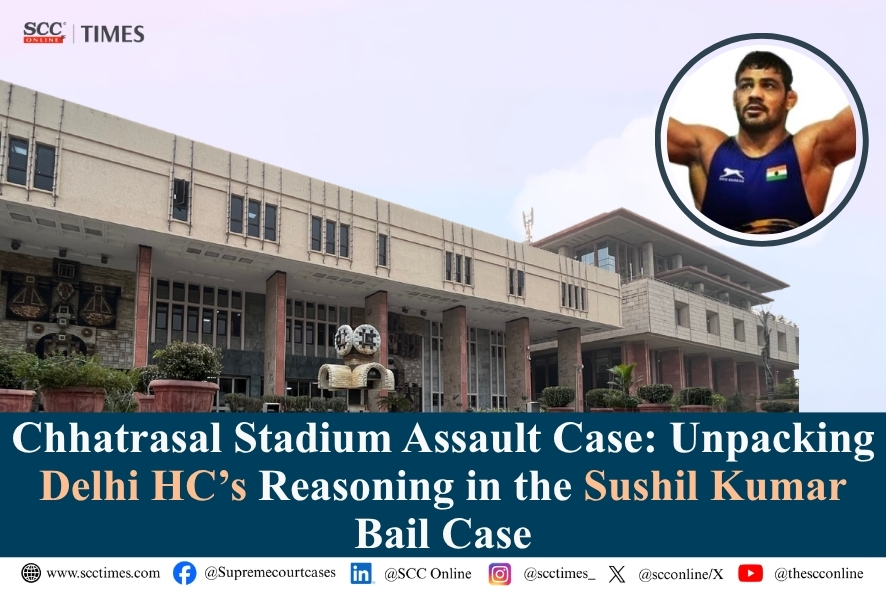
Delhi High Court: Sushil Kumar Bail Denied in Chhatrasal Stadium Assault Case
Summary
- The Delhi High Court denied bail to Sushil Kumar in the Chhatrasal Stadium assault case.
- The court emphasized the gravity of the allegations against Kumar, including premeditated assault resulting in death and recovery of a firearm.
- Kumar's alleged influence over witnesses and the existence of forensic video evidence were also key factors in the court's decision.
- This decision may set a precedent for future bail applications in similar cases.
A Grave Precedent Set
The court emphasized the gravity of the allegations against Kumar, including premeditated assault resulting in death and recovery of a firearm.
The Delhi High Court's denial of bail to Sushil Kumar in the Chhatrasal Stadium assault case has significant implications for future cases with similar allegations. The court's reasoning highlights the gravity of the charges against Kumar, including premeditated assault resulting in death, recovery of a firearm, and influence over witnesses. This decision may set a precedent for future bail applications in similar cases, where courts will closely examine the circumstances surrounding the alleged crimes. In this context, it is essential to understand the legal framework governing such cases and the factors that influenced the court's decision.
The Legal Context
Sushil Kumar's bail application was filed under Section 483 Nagarik Suraksha Sanhita, 2023, which corresponds to Section 439 of the Criminal Procedure Code, 1973. The prosecution case against Kumar arises from an incident on May 4-5, 2021, when several people were found grievously assaulted in the Chhatrasal Stadium parking area. The investigation alleged that the injured persons had been abducted and brought to the stadium, where they were assaulted by Kumar and his associates with lathis, dandas, and hockey sticks. One of the injured, Sagar Dhankhad, succumbed to his injuries, leading to the addition of Section 302 IPC.
Why This Decision Matters
The Delhi High Court's decision to deny bail to Sushil Kumar has far-reaching implications for the legal community. The court's emphasis on the gravity of the allegations and the need for a genuine change in circumstances highlights the importance of considering the severity of the crimes alleged. In this context, it is crucial to examine the factors that influenced the court's decision, including the recovery of a firearm, the existence of forensic video evidence, and Kumar's alleged influence over witnesses. This decision may set a precedent for future cases with similar allegations, where courts will closely scrutinize the circumstances surrounding the alleged crimes.
Practical Implications
Lawyers should note that the Delhi High Court's denial of bail to Sushil Kumar in the Chhatrasal Stadium assault case highlights the gravity of allegations against him, including premeditated assault resulting in death, recovery of a firearm, and influence over witnesses. This decision may set a precedent for future bail applications in similar cases.
Source
Source: Original reporting via [Source]
How does this affect you?
Get an AI analysis of this article grounded in your jurisdictions, practice areas, and any policy documents you've uploaded to Wansom.
Wansom is AI and can make mistakes.