
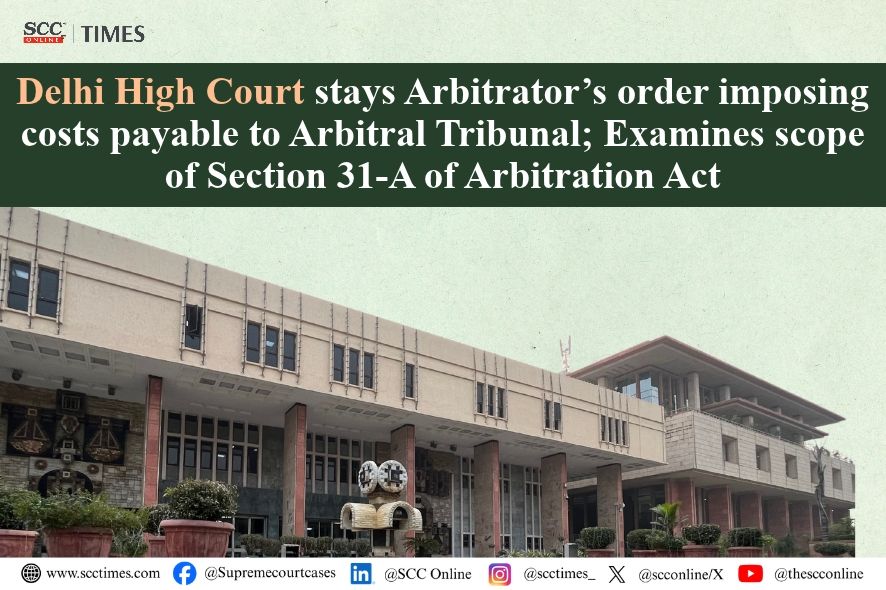
Delhi High Court: Stays Arbitral Tribunal Costs Order
Summary
- The Delhi High Court has stayed an order from an arbitral tribunal that imposed costs payable directly to the tribunal.
- The High Court observed that the issue requires consideration under Section 31-A of the Arbitration and Conciliation Act, 1996.
- The court will examine the scope of Section 31-A of the Arbitration Act in relation to such cost orders.
- This judicial action provides a significant precedent for challenging arbitral tribunal fees and cost orders in India.
Judicial Intervention in Arbitral Costs
The Delhi High Court stays arbitral tribunal costs, signaling that such orders are not immune from judicial review and can be challenged, particularly when they involve payments to the tribunal itself.
The Delhi High Court has recently taken a significant step by staying an order issued by an arbitral tribunal. This judicial intervention specifically targeted a directive from the tribunal that imposed costs which were to be paid directly to the arbitral body itself. The High Court's decision underscores a critical area of arbitration practice, particularly concerning the financial aspects of dispute resolution.
The court's action was not merely a procedural pause; it was accompanied by an observation that the matter warranted thorough consideration. This indicates a deeper scrutiny into the powers and limitations of arbitral tribunals when it comes to levying costs, especially when those costs are directed towards the tribunal members. The stay effectively puts the contentious cost order on hold, pending a more detailed examination by the High Court.
Scope of Section 31-A Under Scrutiny
Central to the Delhi High Court's decision is its intention to examine the scope of Section 31-A of the Arbitration and Conciliation Act, 1996. This particular section of the Act deals with the power of an arbitral tribunal to award costs, outlining the principles and factors that should guide such determinations. The High Court's observation that the issue warrants consideration under this section suggests a potential question regarding the interpretation or application of Section 31-A in the context of costs payable directly to the arbitral tribunal.
By undertaking this examination, the High Court is delving into the precise boundaries of an arbitrator's authority to impose costs. The legal framework provided by the Arbitration and Conciliation Act 1996 costs provisions is designed to ensure fairness and transparency in arbitral proceedings. The court's focus on Section 31-A indicates a need to clarify whether the specific arbitrator's order stayed Delhi falls within the legitimate exercise of powers granted by the statute, or if it oversteps those bounds.
Implications for Arbitration Practice
This development carries substantial implications for arbitration practitioners and parties involved in disputes under the Arbitration and Conciliation Act, 1996. The Delhi High Court stays arbitral tribunal costs, signaling that such orders are not immune from judicial review and can be challenged, particularly when they involve payments to the tribunal itself. This judicial oversight provides a crucial check on the discretion of arbitrators regarding cost awards.
The High Court's decision to stay the arbitrator's order and examine Section 31-A's scope could influence future arbitral awards concerning costs. It highlights the importance of tribunals meticulously justifying any cost imposition, especially those directed towards their own remuneration. For parties, this offers a precedent for challenging arbitral tribunal fees and orders that they believe exceed statutory authority or are otherwise unjust, reinforcing the principle that even arbitral awards are subject to certain judicial safeguards.
Practical Implications
Lawyers practicing in India, particularly in the Delhi jurisdiction, should note that orders imposing costs payable to an Arbitral Tribunal are subject to judicial scrutiny and potential stays by the High Court, especially concerning the interpretation of Section 31-A of the Arbitration Act. This development impacts advice on arbitration cost exposure and strategy for challenging or defending such orders.
Source
Source: Original reporting via SCC Times
How does this affect you?
Get an AI analysis of this article grounded in your jurisdictions, practice areas, and any policy documents you've uploaded to Wansom.
Wansom is AI and can make mistakes.