
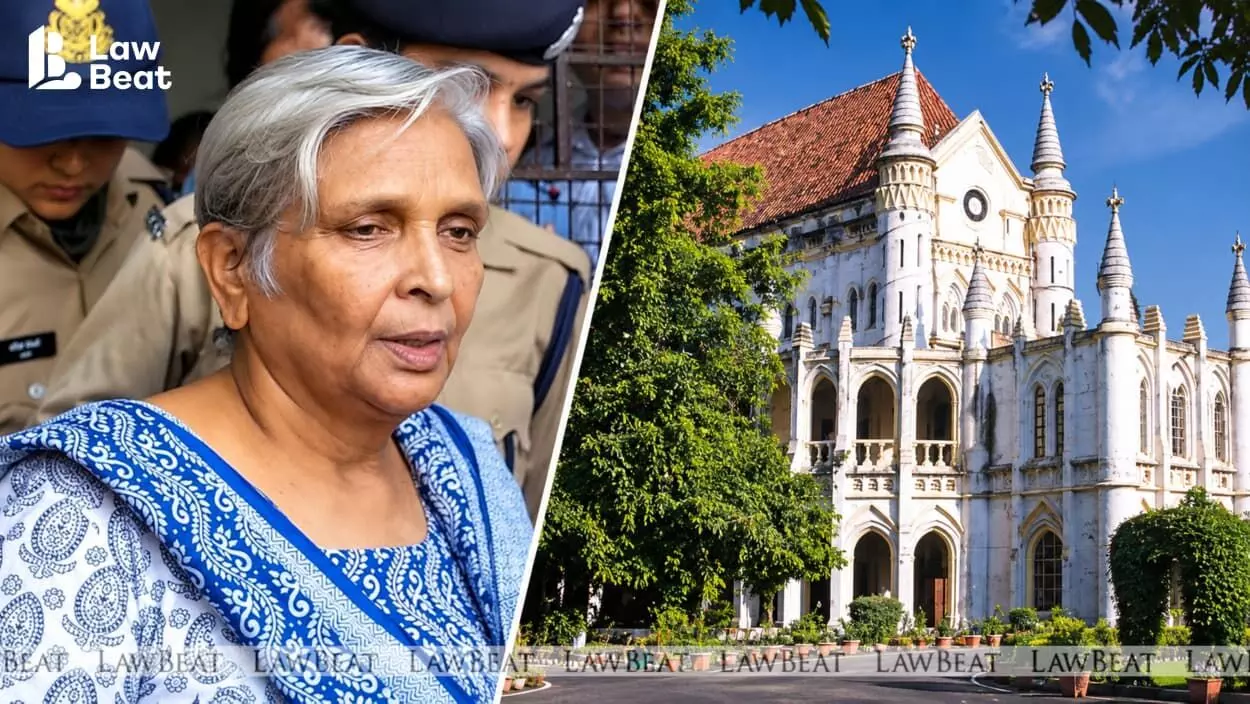
MP High Court: Giribala Singh Bail Rejected in Daughter-in-Law Death
Summary
- The Madhya Pradesh High Court rejected the bail plea of Giribala Singh, a former judicial officer, in the Twisha Sharma death case.
- The court cited pending CBI investigation and crucial forensic reports as primary reasons for denying bail.
- Giribala Singh, the mother-in-law of the deceased, faces charges under the new Bharatiya Nyaya Sanhita and the Dowry Prohibition Act.
- Justice Ajay Kumar Nirankari's order emphasized that the accused's role requires thorough examination during trial.
- The ruling highlights the court's strict stance on bail when investigations are ongoing and key evidence is yet to be analyzed.
Court Denies Bail to Former Judicial Officer
The court emphasized that the roles of the accused require thorough examination during trial, especially with crucial forensic reports still pending and the investigation ongoing.
The Madhya Pradesh High Court has rejected the bail application of Giribala Singh, a former member of the higher judiciary, in connection with the death of her daughter-in-law, Twisha Sharma. The court, presided over by Justice Ajay Kumar Nirankari, issued its order on October 26, 2026, emphasizing that a comprehensive examination of the accused's role is necessary during the trial phase. This decision marks the first bail plea filed by the 64-year-old, who has been in custody since June 2, 2026.
The court's refusal to grant regular bail stems from the ongoing investigation by the Central Bureau of Investigation (CBI) and the anticipation of critical forensic reports. The CBI is conducting its probe under RC 4(S)/2026, with charges registered under various sections of the Bharatiya Nyaya Sanhita (BNS), including 80(2), 85, 108, and 3(5), which correspond to Sections 304-B, 498-A, 306, and 34 of the Indian Penal Code, respectively. Additionally, Sections 3 and 4 of the Dowry Prohibition Act have been invoked in the case.
Allegations and Investigative Details
The prosecution's narrative details that Twisha Sharma met Samarth Singh, an advocate practicing in Bhopal, through a dating application in February 2025. The couple married on December 9, 2025, with the consent of both families. However, Twisha was allegedly subjected to mental cruelty by Samarth, while Giribala Singh stands accused of instigating her son and providing him protection whenever Twisha raised complaints. Furthermore, it is alleged that both individuals pressured Twisha to transfer her equity investments, valued at approximately Rs 20 lakh, into a joint bank account.
Twisha was discovered deceased at her matrimonial residence on the night of May 12, 2026, and was subsequently pronounced dead at AIIMS Bhopal. The investigation has revealed several critical pieces of evidence, including WhatsApp messages sent by Twisha to her mother and sister-in-law prior to her death, which reportedly detailed continuous harassment. A chat from May 9 indicated her husband had questioned the paternity of their child. On May 12, Twisha reportedly decided to return to her parents, and that evening, she informed her sister-in-law and then her parents that Samarth had become aggressive and violent, causing her fear. CCTV footage also reportedly shows Giribala Singh, followed by Samarth, proceeding towards the terrace around 10:23 pm, after which Giribala descended to open the main gate, and Twisha was then carried downstairs by Samarth, a cousin, and a house helper. Allegations also suggest that Giribala Singh contacted influential individuals following the incident, and the extraction report from Twisha's iPhone, along with the CFSL report on the DVR, are still pending.
Defense Arguments and Court's Rationale
Senior Advocates Surendra Singh and Ajay Gupta, representing Giribala Singh, argued that their client had not committed any offense. They contended that WhatsApp conversations primarily leveled accusations against her son, and that statements from doctors recorded by the police indicated Twisha herself had wished to terminate her pregnancy. Regarding the dowry allegations, the defense asserted that Rs 7.5 lakh had been transferred by the applicant and her son into Twisha’s account, and there was no evidence of her parents having paid any money, nor anything to suggest cruelty "soon before her death." The defense further argued that Giribala Singh had already provided a voice sample, rendering custodial interrogation unnecessary. They cited Supreme Court rulings in cases such as Mahendra Awase, Jayedeepsingh Pravinsingh Chavda, Arnesh Kumar, and Jayesh Khanna, to argue that harassment alone, without clear mens rea, does not constitute abetment of suicide.
Justice Nirankari, however, noted that disputes between Twisha and the applicant primarily arose after the termination of the pregnancy. The court found the defense's reliance on Jayedeepsingh Pravinsingh Chavda to be misplaced, distinguishing the facts of that case from the present one. The court ultimately held that the question of mens rea cannot be examined in isolation at this stage, particularly given the ongoing investigation and the gravity of the charges. The bail application was filed under Section 483 of the Bharatiya Nagarik Suraksha Sanhita (BNSS), which corresponds to Section 439 of the Criminal Procedure Code.
Significance of the Ruling
This ruling by the Madhya Pradesh High Court underscores a strict judicial stance on bail applications, especially in serious cases where investigations are still active and critical forensic evidence is awaited. The court's emphasis on the necessity of trial scrutiny for the accused's role, even when arguments concerning mens rea are presented, sets a high bar for securing bail under the new criminal codes. The decision highlights the judiciary's commitment to ensuring a thorough examination of all facts and evidence before making determinations on culpability.
The court's observation that disputes between the deceased and the applicant emerged following a pregnancy termination suggests a complex interplay of personal and alleged criminal factors that warrant detailed investigation. The ongoing nature of the CBI probe, coupled with the pending extraction report of Twisha’s iPhone and the CFSL report on the DVR, indicates that the court prioritizes comprehensive evidence gathering over early release, reinforcing the principle that the full scope of the alleged actions must be evaluated during a complete trial.
Practical Implications
Lawyers handling bail applications under the new Bharatiya Nagarik Suraksha Sanhita (BNSS) and Bharatiya Nyaya Sanhita (BNS) should note the court's strict stance, particularly when investigations are ongoing and crucial forensic reports are pending. This ruling emphasizes that the court will prioritize thorough trial scrutiny of the accused's role, even when arguments regarding mens rea are presented, setting a high bar for bail in serious cases involving new criminal codes.
Source
How does this affect you?
Get an AI analysis of this article grounded in your jurisdictions, practice areas, and any policy documents you've uploaded to Wansom.
Wansom is AI and can make mistakes.