
Delhi HC: PIL Seeks Sewer Worker Compensation, Regularisation
Summary
- The Delhi High Court has issued notices to the Delhi government and Delhi Jal Board regarding a PIL seeking regularisation of sewer workers.
- The PIL demands over ₹1 crore in compensation for families of deceased sewer workers and compassionate government employment for a dependent.
- Filed by Dalit Adivasi Shakti Adhikar Manch, the petition highlights workers' marginalisation, sub-minimum wages, and lack of benefits.
- It details severe health risks, including chronic illnesses, disabilities, and death, from exposure to hazardous sewer conditions.
- The court has directed authorities to collect and provide complete data on the issue.
Delhi High Court Addresses Sewer Worker Plight
The demand for ₹1 crore compensation sewer death represents a significant push for accountability and recognition of the extreme risks involved in such work.
The Delhi High Court recently initiated proceedings on a significant public interest litigation (PIL) petition, issuing notices to both the Delhi government and the Delhi Jal Board (DJB). This judicial action stems from a plea seeking comprehensive directives to improve the conditions of sewer workers across the national capital. Among the key demands are the regularisation of all sewer workers and the provision of substantial compensation, exceeding ₹1 crore, to the families of individuals who have died while working in sewers or septic tanks. Additionally, the petition advocates for compassionate government employment for one dependent of each deceased worker.
A Division Bench, comprising Chief Justice Devendra Kumar Upadhyaya and Justice Tejas Karia, is overseeing the matter. The court has specifically instructed the government authorities involved to gather all pertinent data and furnish complete information to the bench. This directive underscores the court's intent to thoroughly examine the prevailing conditions and the efficacy of existing measures for worker welfare, particularly concerning `Delhi HC PIL sewer worker compensation` and `Delhi High Court sewer worker regularisation`.
Systemic Neglect and Hazardous Conditions
The PIL, filed by the Dalit Adivasi Shakti Adhikar Manch, highlights the severe challenges faced by sewer workers, who are described as one of the most economically and socially marginalised segments of society. The petition alleges that these workers are frequently paid below minimum wage standards and are deprived of essential benefits such as provident fund contributions, gratuity, and bonuses, which are typically afforded to regular employees.
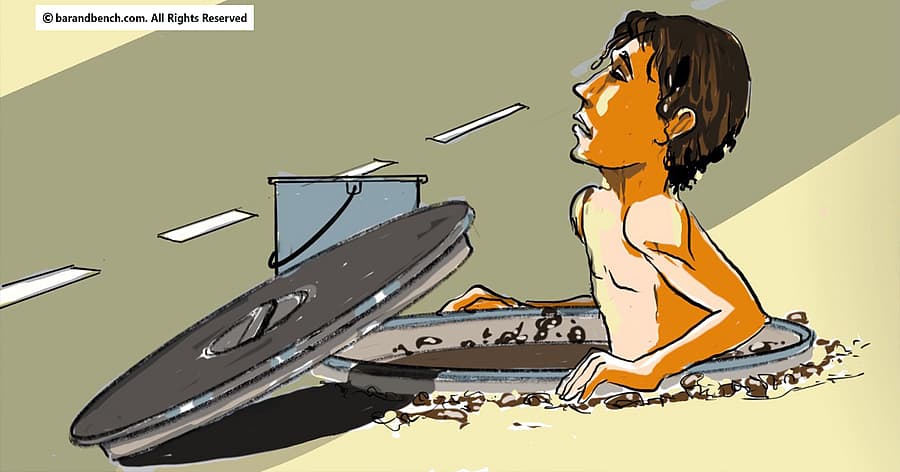
Furthermore, the plea details the grave health risks inherent in their profession. Sanitation workers, particularly those engaged in manual scavenging, are said to endure chronic illnesses, permanent disabilities, and a range of occupational diseases. These conditions are directly attributed to repeated exposure to untreated human waste, toxic gases, contaminated water, and consistently unsafe working environments. Such hazardous exposure not only impacts their physical health but also significantly affects their mental well-being and overall life expectancy.
The petition specifically warns of the acute dangers posed by gas exposure within sewers, which can lead to immediate and severe health consequences. These include suffocation, unconsciousness, acute respiratory failure, pulmonary oedema, neurological damage, and, tragically, death. Even non-fatal exposures can result in lasting health impairments, underscoring the critical need for improved safety protocols and adequate `manual scavenging compensation India`.
Implications for Worker Rights and Accountability
This intervention by the Delhi High Court signals a heightened judicial focus on the rights and safety of sanitation workers, particularly in the context of `Delhi Jal Board worker compensation PIL`. The demand for `₹1 crore compensation sewer death` represents a significant push for accountability and recognition of the extreme risks involved in such work. Should the court rule in favor of the petitioners, it could set a precedent for more robust compensation frameworks and stricter enforcement of labor laws for workers engaged in hazardous sanitation tasks.
The court's directive for comprehensive data collection from the Delhi government and the DJB indicates a serious intent to understand the full scope of the issue. This move could pave the way for systemic reforms, including mandatory regularisation and the implementation of safer working practices. The outcome of this PIL will be closely watched by advocates for worker rights and could have far-reaching implications for how sanitation workers are treated and protected across the country.
Practical Implications
Compliance officers and legal counsel for entities employing sanitation workers in Delhi, particularly those contracting with the Delhi Jal Board, should monitor this PIL closely. It signals increased judicial scrutiny on worker welfare, safety, and compensation, potentially leading to stricter enforcement of labor laws and significant liability for non-compliance, including demands for substantial compensation and regularisation.
Source
How does this affect you?
Get an AI analysis of this article grounded in your jurisdictions, practice areas, and any policy documents you've uploaded to Wansom.
Finish Reading the Full Story and the Expert Analysis.
Wansom is AI and can make mistakes.