
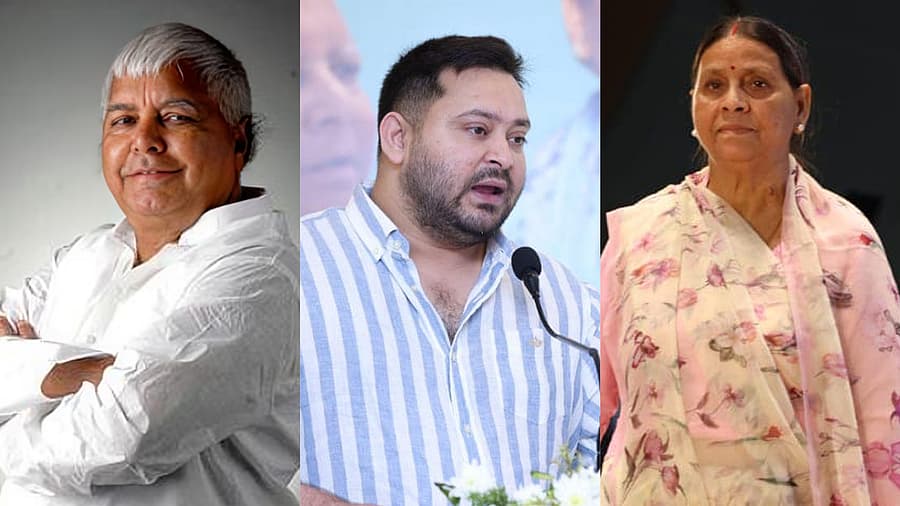
Delhi High Court Rejects Lalu Yadav's Plea Against IRCTC Scam Charges
The Delhi High Court, specifically Justice Swarana Kanta Sharma, on Thursday rejected petitions filed by former Bihar Chief Minister Lalu Prasad Yadav, his wife Rabri Devi, and son Tejashwi Yadav, challenging a trial court's order that framed criminal charges against them in the alleged IRCTC scam case.
This decision by the Delhi High Court means that the criminal proceedings against the prominent political figures will proceed to trial based on the charges framed by the Special Judge. It underscores the judiciary's role in upholding the framing of charges in corruption cases, particularly those involving high-profile individuals and alleged misuse of public office. For legal practitioners, it highlights the high bar for challenging charge-framing orders at the High Court level, indicating that such challenges are often unsuccessful unless there are clear jurisdictional errors or manifest illegality in the trial court's decision.
The case involves allegations of corruption, criminal conspiracy, and cheating under the Prevention of Corruption Act and the Indian Penal Code. The charges were initially framed by Special Judge (PC Act) Vishal Gogne of the Rouse Avenue Courts. The Delhi High Court, as a superior court, exercises revisional or appellate jurisdiction over orders passed by trial courts, including those related to the framing of charges. The Central Bureau of Investigation (CBI) is the prosecuting agency, alleging that Lalu Yadav, as Railway Minister from 2004 to 2009, awarded contracts to a private firm, Sujata Hotels, through a manipulated tender process in exchange for land and shares, implicating his family members in the conspiracy. The legal framework governing such cases involves stringent provisions aimed at combating corruption in public life.
The key parties involved are the Delhi High Court (Justice Swarana Kanta Sharma), Special Judge (PC Act) Vishal Gogne of the Rouse Avenue Courts, former Bihar Chief Minister Lalu Prasad Yadav, his wife Rabri Devi, son Tejashwi Yadav, and the Central Bureau of Investigation (CBI). The Yadav family has questioned the probe and maintained that the case is politically motivated, but the outcome of the trial itself is not yet reported.
Attorneys representing clients in corruption cases, especially those involving public figures, should note the High Court's affirmation of the trial court's decision to frame charges. This indicates a judicial inclination to allow trials to proceed when prima facie evidence supports the charges, making it challenging to quash such orders at an interlocutory stage. Practitioners should meticulously prepare their defense for the trial phase, focusing on disproving the allegations of corruption, criminal conspiracy, and cheating, rather than relying heavily on pre-trial challenges to charge framing, which appear to have a limited scope for success in such high-profile matters.
How does this affect you?
Get an AI analysis of this article grounded in your jurisdictions, practice areas, and any policy documents you've uploaded to Wansom.
Finish Reading the Full Story and the Expert Analysis.
Get the latest legal & regulatory intelligence in India
Wansom is AI and can make mistakes.