
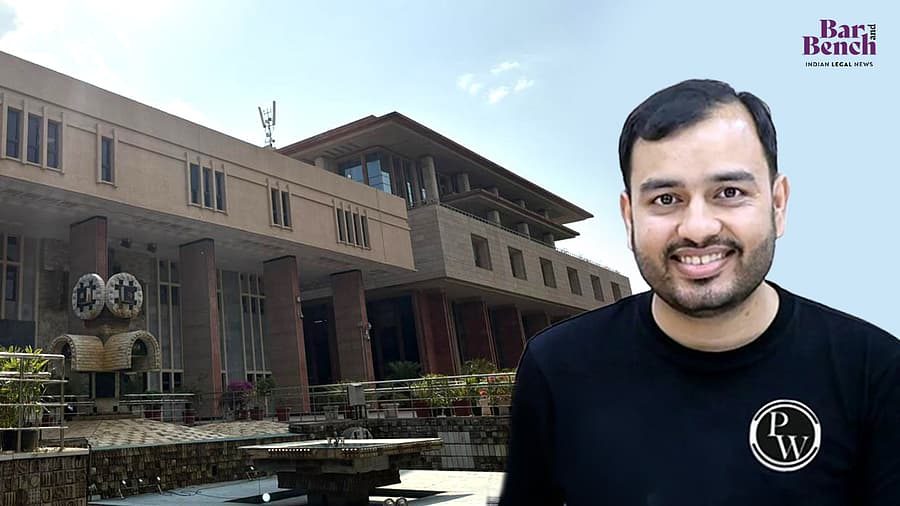
Delhi High Court Orders Takedown of Derogatory PhysicsWallah Founder Content
Summary
- The Delhi High Court has ordered the takedown of several websites and social media content flagged as obscene, derogatory, and involving unauthorized commercial use of Alakh Pandey's personality traits.
- Pandey's image and likeness were used to create Telegram stickers that were being sold for commercial purposes without his consent.
- The court directed Google, X, Telegram, and LinkedIn to share basic subscriber information (BSI) of those behind the websites hosting objectionable content.
- The order highlights the potential for commercial exploitation of personality traits and the importance of obtaining consent before using someone's image or likeness for commercial purposes.
Derogatory Content Takedown Order Issued by Delhi High Court
Pandey had flagged certain obscene and derogatory content against his client, highlighting instances where his personality traits were commercially exploited without consent.
The Delhi High Court has passed an interim injunction order directing the takedown of several websites and social media content that have been flagged as obscene, derogatory, and involving the unauthorized commercial use of personality traits of Alakh Pandey, the founder of PhysicsWallah. The court's decision was made in response to a suit filed by Pandey seeking protection for his personality rights. The order also includes a directive for Google, X, Telegram, and LinkedIn to share basic subscriber information (BSI) of those behind the websites hosting objectionable content.
Justice Anup Jairam Bhambhani passed the interim order in the suit, which was represented by Senior Advocate J Sai Deepak. Pandey had flagged certain obscene and derogatory content against his client, highlighting instances where his personality traits were commercially exploited without consent.
Commercial Exploitation of Personality Traits
The Delhi High Court's order highlights the potential for commercial exploitation of personality traits, which can have serious consequences for individuals. In this case, Pandey's image and likeness were used to create Telegram stickers that were being sold for commercial purposes without his consent. This unauthorized use not only damages an individual's reputation but also opens them up to potential ridicule and criticism from their students or peers.
The court's decision serves as a reminder to individuals and businesses alike of the importance of obtaining consent before using someone's image or likeness for commercial purposes. It is essential for lawyers advising clients on online presence to note this aspect, as it can have significant implications for their clients' reputations and livelihoods.
Legal Context and Relevance
The Delhi High Court's order is a significant development in the context of personality rights in India. The court's decision to issue an interim injunction order directing the takedown of objectionable content sets a precedent for future cases involving unauthorized commercial use of personality traits. This ruling also underscores the importance of protecting individuals' rights and reputations online, particularly in the age of social media where personal information can be easily shared and exploited.
The court's directive to Google, X, Telegram, and LinkedIn to share basic subscriber information (BSI) of those behind the websites hosting objectionable content is also noteworthy. This move demonstrates the court's commitment to holding accountable those responsible for spreading obscene and derogatory content online.
Practical Implications
Lawyers advising clients on online presence should note the potential for commercial exploitation of personality traits and the importance of obtaining consent, as well as the risk of reputational damage from unauthorised use of their image or likeness.
Source
How does this affect your business?
Get an AI analysis of this article grounded in your jurisdictions, practice areas, and any policy documents you've uploaded to Wansom.
Wansom is AI and can make mistakes.