
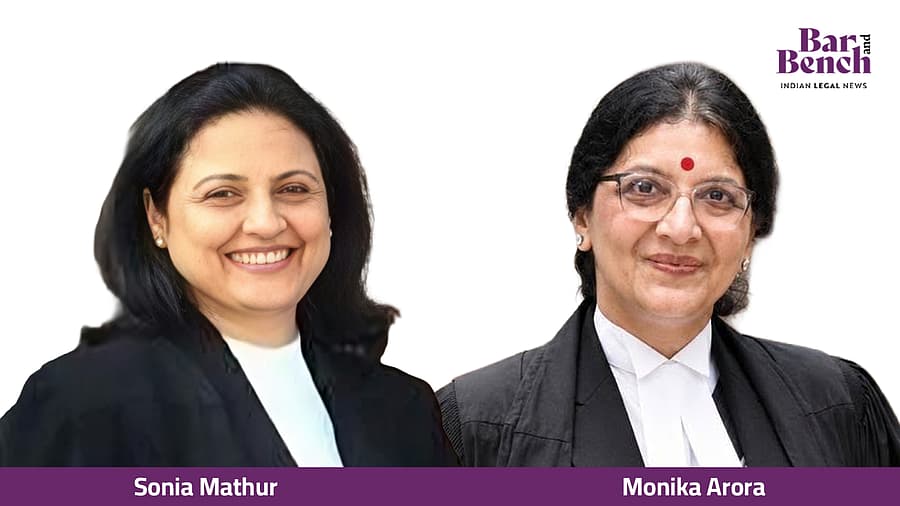
Delhi High Court Nominates Mathur, Arora to Bar Council of Delhi (BCD)
Summary
- The Delhi High Court has nominated Senior Advocate Sonia Mathur and Advocate Monika Arora as members of the Bar Council of Delhi (BCD).
- Chief Justice Devendra Kumar Upadhyaya made these appointments, which were confirmed by a formal letter issued to the BCD.
- These nominations were made in direct compliance with a Supreme Court direction issued on September 2 in the case of M Varadhan v. Union of India & Ors.
- The Supreme Court's order had requested all High Court Chief Justices to complete the co-option of two women members to every State Bar Council within two weeks.
- The appointments signify a broader judicial push for enhanced gender diversity and representation within legal regulatory bodies across India.
Delhi High Court Bolsters Bar Council with Key Appointments
The nomination of Senior Advocate Sonia Mathur and Advocate Monika Arora to the Bar Council of Delhi, therefore, represents more than just individual appointments; it is a direct manifestation of a nationwide judicial commitment to fostering greater gender equity within the legal profession's regulatory framework.
The Delhi High Court has officially nominated Senior Advocate Sonia Mathur and Advocate Monika Arora as new members of the Bar Council of Delhi (BCD). This significant development, confirmed by a formal letter issued to the BCD, marks a notable change in the composition of the regulatory body responsible for legal practice within the capital. The nominations were personally made by Chief Justice Devendra Kumar Upadhyaya, underscoring the high-level judicial endorsement of these appointments.
The Bar Council of Delhi plays a crucial role in upholding professional standards, regulating legal education, and administering disciplinary actions for advocates practicing in the region. The inclusion of these two distinguished legal professionals is poised to bring fresh perspectives and expertise to its deliberations and functions. These appointments are not merely routine but are a direct response to a specific directive from the Supreme Court, signaling a broader judicial push for enhanced representation within state bar councils nationwide.
Supreme Court Mandates Enhanced Gender Representation
The impetus for these appointments originates from a landmark Supreme Court direction issued on September 2, in the case of M Varadhan v. Union of India & Ors. In its comprehensive order, the apex court explicitly requested all High Court Chief Justices across the country to undertake and finalize the co-option of two women members to every State Bar Council. A strict two-week deadline was stipulated for the completion of this exercise, emphasizing the urgency and importance the Supreme Court placed on achieving this objective.
This directive serves as a clear mandate, rather than a mere suggestion, for judicial leaders to actively promote gender diversity within the self-governing bodies of the legal profession. The Supreme Court's intervention highlights a systemic recognition of the need for more inclusive representation in institutions that shape legal practice and policy, ensuring that the Bar Council of Delhi, like its counterparts, reflects the diverse demographics of the legal community it serves.
A New Era for the Bar Council of Delhi and National Legal Governance
The nomination of Senior Advocate Sonia Mathur and Advocate Monika Arora to the Bar Council of Delhi, therefore, represents more than just individual appointments; it is a direct manifestation of a nationwide judicial commitment to fostering greater gender equity within the legal profession's regulatory framework. These appointments are integral to the broader objective of ensuring that women members are adequately represented in State Bar Councils, thereby enriching their decision-making processes and enhancing their legitimacy.
The presence of diverse voices, particularly those of women, is critical for addressing the unique challenges and perspectives within the legal community, potentially influencing future policy directions, disciplinary committee decisions, and administrative practices that affect legal professionals in Delhi. By acting swiftly on the Supreme Court's directive, the Delhi High Court, under Chief Justice Upadhyaya, has ensured that the Bar Council of Delhi appointments align with the national imperative for more inclusive governance, setting a precedent for other state councils to follow in fulfilling this crucial mandate.
Practical Implications
The appointment of Senior Advocate Sonia Mathur and Advocate Monika Arora to the Bar Council of Delhi, mandated by a Supreme Court directive, signals a broader push for gender diversity within state bar councils. Lawyers should be aware of the new composition of the BCD, as these appointments may influence future policy directions, disciplinary committee decisions, and administrative practices affecting legal professionals in Delhi.
Source
How does this affect you?
Get an AI analysis of this article grounded in your jurisdictions, practice areas, and any policy documents you've uploaded to Wansom.
Finish Reading the Full Story and the Expert Analysis.
Get the latest legal & regulatory intelligence in India
Wansom is AI and can make mistakes.