
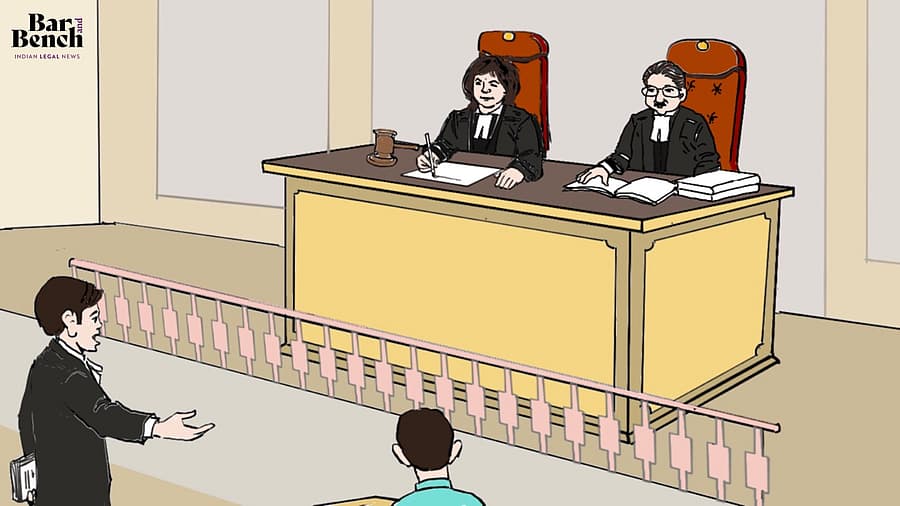
Delhi High Court: Lawyer Submissions Binding Client, Even Without Instructions
Summary
- The Delhi High Court ruled that litigants cannot disown orders based on their lawyer's submissions by claiming lack of authority.
- This decision came during the dismissal of a writ petition by Equitas Small Finance Bank, which sought to set aside a September 2024 Lok Adalat award.
- Equitas claimed its lawyer wrongly stated a cheque bounce case was settled without authorization or clarity.
- Justice Saurabh Banerjee observed that allowing such disavowal would create chaos in the legal system.
- The court emphasized that litigants cannot be granted a second opportunity to challenge orders based on their counsel's earlier arguments.
What Happened
The court explicitly articulated that no litigant should be allowed to retract from orders that have been issued based on the strength of their counsel authority binding litigant India.
The Delhi High Court recently delivered a significant ruling, asserting that litigants are unequivocally bound by the submissions made by their legal counsel in court. This holds true even if the client subsequently attempts to claim that their lawyer acted without proper instructions or authority. This pivotal observation was made by Justice Saurabh Banerjee during the dismissal of a writ petition lodged by Equitas Small Finance Bank Ltd. The bank's petition aimed to nullify a Lok Adalat award issued in September 2024.
The Lok Adalat award in question had facilitated the settlement of a cheque bounce case that had been initiated against a borrower. Equitas Small Finance Bank, however, later contended that its legal representative had mistakenly informed the Lok Adalat that the dispute had already been resolved. The bank further alleged that this particular submission was made under a state of considerable confusion and entirely without proper authorization from the bank, leading to its request for the Lok Adalat award to be recalled and set aside.
The Court's Rationale
Justice Saurabh Banerjee, presiding over the matter, firmly rejected Equitas Small Finance Bank's plea for relief, emphasizing the profound implications of allowing such a retraction. The court highlighted the potential for widespread disorder and instability within the judicial system if parties were routinely permitted to disavow arguments previously presented by their authorized legal representatives. This resolute stance reinforces the established legal principle that a `Delhi High Court lawyer submissions binding client` is a cornerstone of maintaining procedural integrity and finality in legal proceedings.
The court explicitly articulated that no litigant should be allowed to retract from orders that have been issued based on the strength of their `counsel authority binding litigant India`. To permit such a retraction, the court reasoned, would inevitably lead to a chaotic environment within the legal system, undermining the very foundation of dispute resolution. The ruling effectively prevents a litigant from seeking a re-evaluation or a "second bite at the cherry" after their counsel has made a definitive statement in court, thereby upholding the sanctity of judicial pronouncements.
Implications for Litigants and Counsel
This judgment carries substantial weight for both individuals and corporate entities engaged in legal disputes, particularly in the context of `civil procedure client responsibility lawyer`. It profoundly underscores the critical importance of clear, unambiguous communication and explicit, documented instructions between clients and their legal representatives. The court's affirmation of the inability to `resile from advocate arguments Delhi` means that clients bear a significant and direct responsibility for the actions, statements, and concessions made by their chosen counsel in open court.
The ruling serves as a stark reminder that judicial efficiency, the finality of legal orders, and the overall integrity of the justice system depend heavily on the reliability and binding nature of counsel's representations. It effectively mandates that lawyers must secure unequivocal mandates from their clients, especially when entering into settlements, making admissions, or presenting statements that could irrevocably bind the client. For clients, this necessitates diligent oversight and proactive engagement with their legal teams to ensure that all submissions align precisely with their intentions and authorized parameters, thereby preventing unforeseen and legally binding outcomes that they cannot later disclaim.
Practical Implications
This ruling underscores the critical importance for lawyers to obtain clear, documented instructions from clients, especially concerning settlements, as clients cannot easily disown their counsel's submissions in court. For compliance officers, it highlights the need for robust internal processes to ensure legal representatives act strictly within authorized parameters to avoid being bound by unauthorized commitments.
Source
How does this affect you?
Get an AI analysis of this article grounded in your jurisdictions, practice areas, and any policy documents you've uploaded to Wansom.
Finish Reading the Full Story and the Expert Analysis.
Get the latest legal & regulatory intelligence in India
Wansom is AI and can make mistakes.