
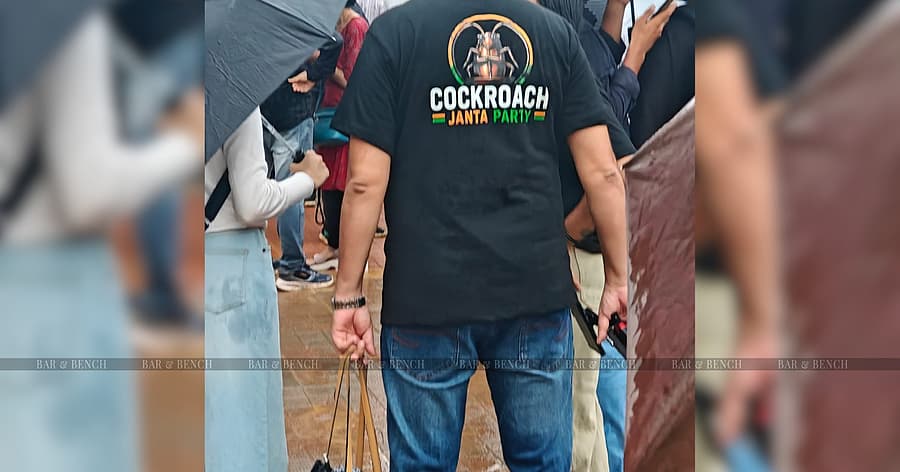
Delhi High Court: Defers CJP Protest Injunction Request
Summary
- A petition was filed in the Delhi High Court to stop the Cockroach Janta Party from protesting at Connaught Place on Friday.
- Senior Advocate Sacchin Puri argued the protest would cause massive disruption, traffic, and financial losses to local businesses.
- Acting Chief Justice Nitin W Sambre's Bench declined to issue any immediate interim directions to halt the protest.
- The High Court deferred its decision, asking the petitioner to return at 2:30 p.m. after the Supreme Court heard related matters.
- This deferral highlights the court's cautious approach and deference to the Supreme Court's ongoing review of protest regulation in the capital.
Judicial Review of Planned Demonstration
The Delhi High Court's cautious handling of the plea for a CJP protest injunction at Connaught Place carries important implications for future legal challenges against public demonstrations.
The Delhi High Court recently addressed an urgent plea seeking to prevent a scheduled public demonstration by the Cockroach Janta Party (CJP) in the heart of the capital. Senior Advocate Sacchin Puri brought the petition before a Bench presided over by acting Chief Justice Nitin W Sambre, requesting immediate judicial intervention to halt the protest planned for Friday at Connaught Place. Puri articulated concerns that the proposed gathering would lead to widespread disruption of daily life, create significant traffic congestion, and inflict considerable financial detriment upon businesses operating in Central Delhi.
Despite the pressing arguments presented regarding potential public inconvenience and economic harm, the High Court Bench opted against issuing any immediate directives during its morning session. Instead of granting the requested interim relief, the court chose to defer its consideration of the matter. The petitioner was instructed to reappear before the court at 2:30 p.m. on the same day, indicating a cautious approach to the request for an injunction against the CJP protest.
Deference to Supreme Court Precedent
The decision by the Delhi High Court to postpone its ruling was notably influenced by the ongoing engagement of the Supreme Court of India with broader issues concerning public protest sites and the regulation of demonstrations within the capital region. Acting Chief Justice Nitin W Sambre explicitly stated that the High Court would revisit the petition after the Supreme Court had an opportunity to hear related matters. This judicial stance underscores a significant deference to the apex court's oversight in complex matters of public order and fundamental rights, particularly when overlapping challenges are already under its review.
This approach highlights a judicial inclination to avoid pre-empting or contradicting potential pronouncements from the Supreme Court on the delicate balance between the right to protest and the maintenance of public order. The High Court's directive for the petitioner to return post-Supreme Court hearing reflects a strategic decision to allow the higher court to address overarching regulatory frameworks before making specific determinations on individual protest injunction requests. Such a move is crucial in shaping the landscape of Delhi public order litigation, ensuring consistency in judicial application across different levels of the judiciary.
Implications for Protest Regulation
The Delhi High Court's cautious handling of the plea for a CJP protest injunction at Connaught Place carries important implications for future legal challenges against public demonstrations. The court's reluctance to grant immediate interim relief, even in the face of arguments citing severe disruption and economic loss, suggests a high threshold for judicial intervention to prevent protests. This ruling, delivered by Justice Nitin W Sambre, reinforces the principle that courts will carefully weigh the right to assembly against claims of public nuisance, often seeking guidance from superior judicial bodies when broader policy or constitutional questions are at play.
For legal practitioners advising on public demonstrations or considering actions to restrain them, this instance serves as a reminder of the judicial system's measured approach. The emphasis on awaiting Supreme Court deliberations before deciding on the Delhi High Court CJP protest injunction indicates that immediate, sweeping injunctions against protests may be difficult to obtain, especially when the Supreme Court is already engaged in setting precedents for Connaught Place protest regulation and similar issues. This case contributes to the evolving jurisprudence on the regulation of public gatherings in Delhi, emphasizing judicial restraint and the importance of established legal frameworks.
Practical Implications
Lawyers advising clients on public demonstrations or seeking injunctions against protests in Delhi should note the Delhi High Court's cautious approach and deference to Supreme Court precedents on protest regulation, indicating a high bar for immediate interim relief in such matters.
Source
How does this affect you?
Get an AI analysis of this article grounded in your jurisdictions, practice areas, and any policy documents you've uploaded to Wansom.
Finish Reading the Full Story and the Expert Analysis.
Get the latest legal & regulatory intelligence in India
Wansom is AI and can make mistakes.