
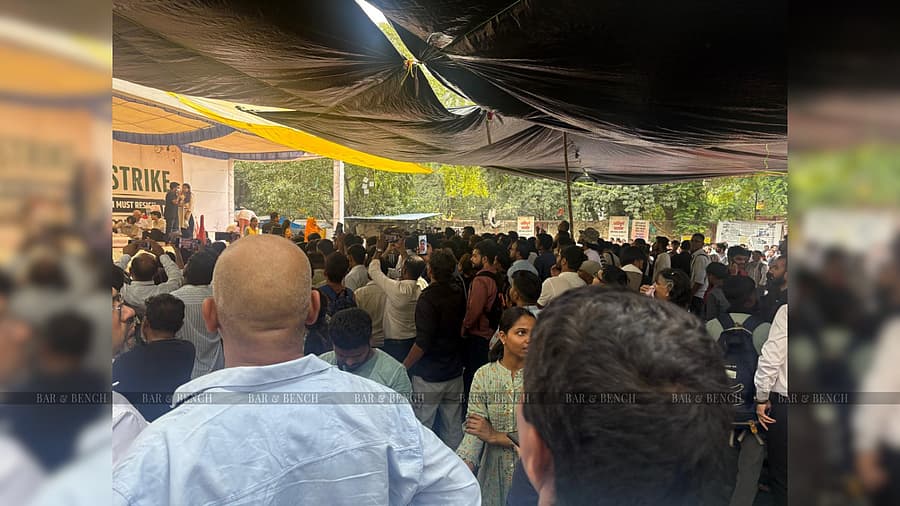
Delhi High Court: Why Not Shut Down Jantar Mantar Protest Site?
Summary
- The Delhi High Court on Friday questioned the government about not considering the shutdown of Jantar Mantar as a protest site.
- Justice Amit Mahajan stated that the city should not be held to ransom unnecessarily by such protests.
- The judge explicitly asked, "Why don’t you shut it down?" indicating his personal view that such events should not occur in the city.
- Justice Mahajan acknowledged that the final decision regarding the protest site rests with the government.
- The court's inquiry highlights concerns about public inconvenience and order amidst ongoing demonstrations.
High Court Questions Jantar Mantar's Role as Protest Hub
The Delhi High Court on Friday directly challenged the central government regarding the continued designation of Jantar Mantar as a primary site for public demonstrations.
The Delhi High Court on Friday directly challenged the central government regarding the continued designation of Jantar Mantar as a primary site for public demonstrations. Justice Amit Mahajan, presiding over the proceedings, questioned why authorities were not considering the closure of the iconic location as a venue for protests, articulating a clear concern about the impact of such gatherings on the city's daily life.
Justice Mahajan's pointed inquiry centered on the premise that the capital should not be subjected to undue disruption. He explicitly asked, "Why don’t you shut it down?" This direct challenge underscored a judicial perspective that public convenience and order ought to be prioritized, questioning the necessity of allowing protests to escalate to a point where they impede the city's normal functioning. The judge further elaborated on his personal view, stating that such activities "should not happen in the city," though he acknowledged that the ultimate decision rests with the government.
Judicial Scrutiny on Public Order
The court's intervention highlights a recurring tension between the fundamental right to protest and the imperative to maintain public order and minimize inconvenience for city residents. Jantar Mantar has historically served as a focal point for various movements and demonstrations, attracting activists and citizens from across the country seeking to voice their grievances. However, its central location in Delhi often leads to significant logistical challenges, including traffic congestion and noise pollution, impacting surrounding areas and daily commuters.
Justice Mahajan's remarks, including his query, "Why should the city be put to ransom unnecessarily?" reflect a judicial willingness to scrutinize the executive's approach to managing public assemblies. While the court did not issue a direct order to cease protests or shut down the site, the very act of posing such a direct question to the government carries significant weight, signaling a strong judicial sentiment regarding the appropriateness of Jantar Mantar's continued designation as a primary protest hub.
Implications for Future Protests
The Delhi High Court's query could prompt the government to re-evaluate its policy concerning protest venues within the capital. While the court acknowledged that the decision ultimately rests with the executive, the judicial branch's direct questioning places pressure on authorities to consider the broader societal impact of large-scale demonstrations in central urban areas. Any potential shift in policy regarding Jantar Mantar could have far-reaching implications for how and where protests are permitted to take place in Delhi, potentially leading to the identification of alternative, less disruptive sites.
This development suggests an ongoing dialogue between the judiciary and the executive regarding the delicate balance between civil liberties and urban management. The government's response to the High Court's inquiry will be closely watched, as it could set a precedent for how similar issues are addressed in other major Indian cities. As of the court's session on Friday, this situation remains an evolving matter, with further developments anticipated as the government considers its position.
Source
How does this affect your business?
Get an AI analysis of this article grounded in your jurisdictions, practice areas, and any policy documents you've uploaded to Wansom.
Wansom is AI and can make mistakes.