
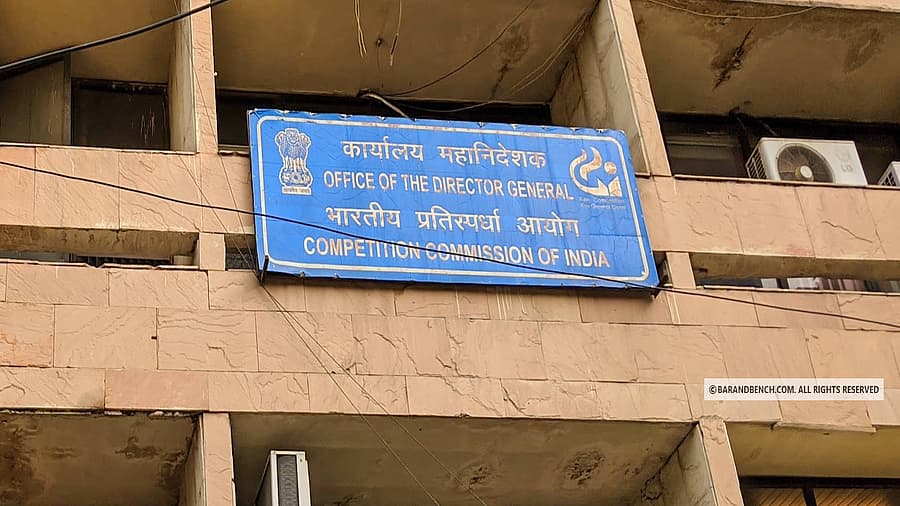
Delhi High Court: CCI Sufficient Interest Participation Affirmed for Third Parties
Summary
- The Delhi High Court ruled that parties with "sufficient interest" can participate in Competition Commission of India (CCI) proceedings.
- This participation is allowed if it aids the CCI and furthers public interest in competition law cases.
- The ruling came after the court dismissed an appeal by UltraTech Cement against the CCI's decision to implead the Builders’ Association of India.
- The court emphasized that impleadment serves to assist the CCI in reaching proper conclusions on alleged violations, not to determine rights.
- Chief Justice Devendra Kumar Upadhyaya and Justice Tejas Karia delivered this significant judgment.
Landmark Ruling on Third-Party Participation
Any party or person or entity or an enterprise having sufficient interest in the matter can be impleaded in the proceedings of the Commission, which in our opinion will be only to farther the public interest.
The Delhi High Court has issued a significant ruling affirming that any individual, association, or enterprise demonstrating a "sufficient interest" in a competition law case may be permitted to participate in proceedings before the Competition Commission of India (CCI). This participation is contingent on its potential to assist the CCI in its functions and further the broader public interest, marking a crucial development for `Delhi High Court CCI sufficient interest participation`.
This clarification came as a Division Bench, composed of Chief Justice Devendra Kumar Upadhyaya and Justice Tejas Karia, dismissed an appeal filed by `Ultratech Cement Vs CCI`. UltraTech Cement had challenged a decision by the CCI to include the `Builders’ Association of India CCI` as a party in ongoing proceedings. These proceedings concern allegations of cartelization among cement manufacturers, highlighting the practical application of third-party involvement in complex competition cases.
Judicial Rationale and Public Interest Mandate
In its judgment, the High Court underscored that the fundamental purpose of investigations initiated by the CCI is to uphold the `public interest competition law India`. This is achieved by actively scrutinizing and curbing anti-competitive practices, thereby safeguarding consumer welfare. The court's perspective frames the CCI's role as a protector of market integrity, making external assistance valuable when aligned with this core mission.
The bench articulated that if an inquiry or investigation is being conducted by the Commission against entities accused of anti-competitive behavior, any party or enterprise possessing a "sufficient interest" in the matter can be formally joined (impleaded) in the CCI proceedings. This `Competition Commission of India impleadment`, in the court's view, serves solely to advance the public interest by providing additional perspectives or information. Crucially, the court clarified that such impleadment does not determine the rights of either the party under investigation or the newly joined party; its sole function is to aid the CCI in reaching an accurate conclusion regarding alleged violations of competition law.
Implications for Competition Law Enforcement
This ruling by the Delhi High Court establishes a clear precedent for `third party intervention CCI proceedings`, potentially broadening the scope of participation in competition cases. It reinforces the idea that the CCI's investigative process is not merely a bilateral dispute but a mechanism to serve the public good, where diverse stakeholders with legitimate interests can contribute.
The decision suggests that parties, beyond those directly accused or complainants, can now seek to be heard if they can demonstrate a tangible connection to the case and show how their involvement would benefit the CCI's fact-finding and decision-making process. This could lead to more robust investigations and more comprehensive outcomes in complex competition matters, ensuring that a wider array of perspectives informs the regulatory body's conclusions.
Practical Implications
Lawyers advising clients in competition law matters before the CCI should be aware of this precedent allowing third-party participation based on 'sufficient interest' and 'public interest,' which could impact case strategy or open new avenues for intervention or defense.
Source
How does this affect you?
Get an AI analysis of this article grounded in your jurisdictions, practice areas, and any policy documents you've uploaded to Wansom.
Finish Reading the Full Story and the Expert Analysis.
Wansom is AI and can make mistakes.