
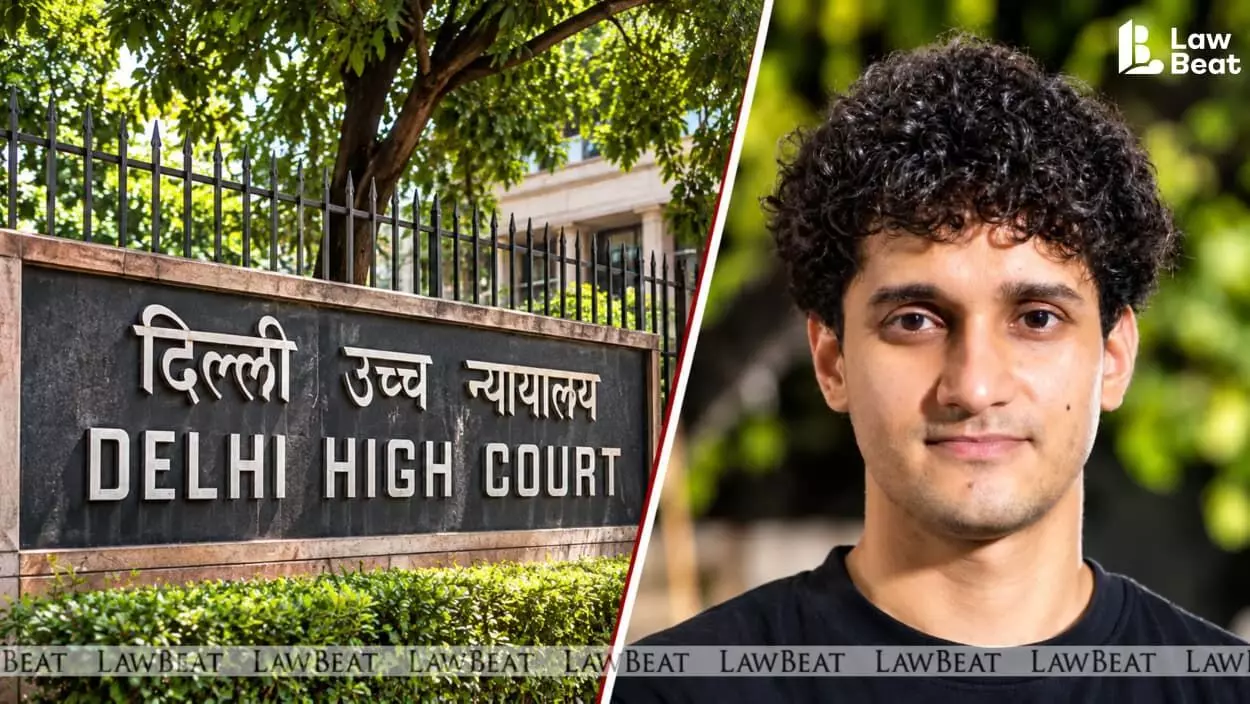
Delhi HC: To Hear CJP Leader's Plea After Travel Stop
Saurav Das, co-convenor of the Cockroach Janata Party (CJP), moved the Delhi High Court on an unspecified Wednesday after being stopped from boarding a London-bound flight at Indira Gandhi International Airport without being shown any order or Look Out Circular (LOC).
Saurav Das was prevented from travelling to the United Kingdom from Delhi's Indira Gandhi International Airport on November 23, shortly before his scheduled flight, by immigration authorities who reportedly flagged his passport due to an alleged discrepancy in his place of birth and a show-cause notice. Despite his counsel's urgent request for a same-day hearing, the Delhi High Court, comprising Acting Chief Justice Nitin Wasudeo Sambre and Justice Sanjay Sharma, declined to hear his writ petition immediately, scheduling it for the following day, even though Das's flight was set for the evening of the next day. Das's counsel argued that no order or Look Out Circular was shown to him at the time he was stopped, and that a delay could render the petition infructuous, but the court maintained its decision for a next-day hearing.
This incident highlights critical issues concerning citizens' fundamental right to travel abroad, the procedural fairness required from immigration authorities, and the judiciary's approach to urgent matters. For legal professionals, it underscores the importance of challenging arbitrary executive actions that restrict personal liberty, particularly when due process, such as the disclosure of an LOC or specific order, is not followed. The High Court's decision to defer an urgent hearing, despite the potential for the matter to become infructuous, also raises questions about judicial discretion and the balance between procedural regularity and the urgency of individual rights. It sets a precedent for how courts might handle similar travel restriction challenges, emphasizing that even in urgent cases, judicial timelines may not always align with personal schedules.
The case primarily involves the fundamental right to travel abroad, which is implicitly protected under Article 21 of the Indian Constitution (Right to Life and Personal Liberty), subject to reasonable restrictions imposed by law. The concept of a Look Out Circular (LOC) is central here; these are issued by various agencies to prevent individuals from leaving the country, but their issuance and execution must adhere to established legal procedures and guidelines, including the requirement to inform the affected individual. The Delhi High Court's jurisdiction to hear such matters stems from Article 226 of the Constitution, which allows it to issue writs for the enforcement of fundamental rights. The petitioner's argument hinges on the lack of a disclosed legal basis for the travel restriction, challenging the procedural propriety of the immigration authorities' actions. The key parties involved are Saurav Das (co-convenor of Cockroach Janata Party), the immigration authorities at Indira Gandhi International Airport, and the Delhi High Court (Acting Chief Justice Nitin Wasudeo Sambre and Justice Sanjay Sharma). The Union government would likely be the respondent in such a writ petition, representing the immigration authorities.
Attorneys advising clients on international travel, especially those who might be subject to government scrutiny or involved in political activities, should be acutely aware of the procedures surrounding Look Out Circulars and the right to travel. This case demonstrates that even without an explicit LOC being shown, individuals can be stopped, necessitating immediate legal action. Practitioners should advise clients to understand their rights when confronted by immigration officials and be prepared to file urgent writ petitions under Article 226. The High Court's reluctance to grant an immediate hearing, despite the urgency, suggests that practitioners must factor in judicial timelines and potentially advise clients on alternative travel arrangements or strategies to mitigate the impact of such delays, while vigorously pursuing the legal challenge to ensure due process is followed.
How does this affect you?
Get an AI analysis of this article grounded in your jurisdictions, practice areas, and any policy documents you've uploaded to Wansom.
Finish Reading the Full Story and the Expert Analysis.
Get the latest legal & regulatory intelligence in India
Wansom is AI and can make mistakes.