
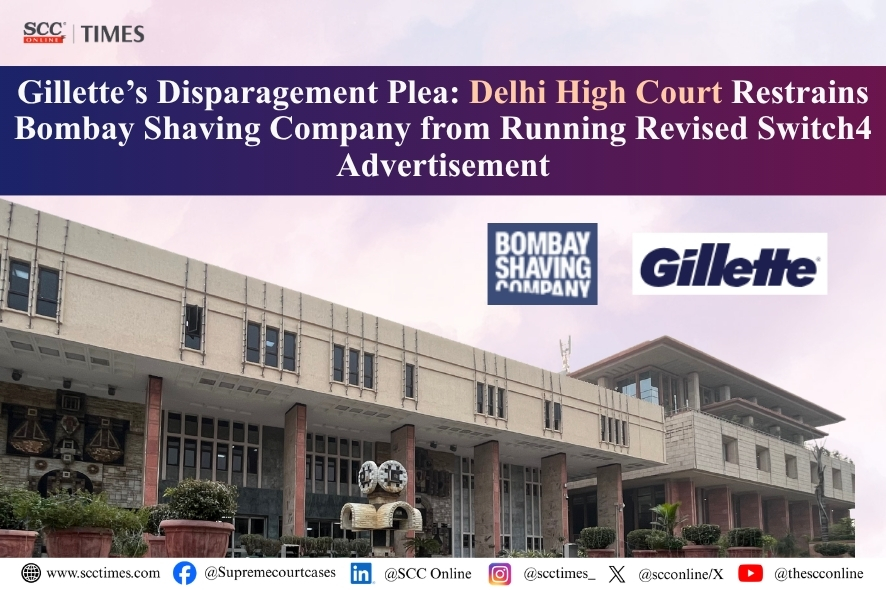
Delhi High Court: Restrains Bombay Shaving Company Switch4 Ad
Summary
- The Delhi High Court has issued a directive in an advertisement dispute between Gillette and Bombay Shaving Company.
- The court ordered Bombay Shaving Company not to run its revised Switch4 advertisement.
- This injunction will remain in effect until the next hearing in the case.
- The dispute originated from a disparagement plea filed by Gillette.
What Happened
This ruling highlights the Delhi High Court's willingness to grant interim injunctions in advertising disparagement cases, signaling increased judicial scrutiny for comparative advertisements.
The Delhi High Court has issued a significant directive concerning an ongoing advertisement dispute between prominent shaving product manufacturers, Gillette and Bombay Shaving Company. The court's order specifically targets a revised advertisement known as "Switch4," produced by Bombay Shaving Company. This judicial intervention stems from a disparagement plea lodged by Gillette, alleging that the advertisement in question unfairly denigrates its products or brand.
As a direct consequence of the Delhi High Court's ruling, Bombay Shaving Company is now prohibited from broadcasting or otherwise disseminating its revised Switch4 advertisement, following a contempt notice issued by the Delhi High Court. This injunction is not permanent but remains in effect until the next scheduled hearing in the case, which is set for October 5, 2026. The interim nature of the order indicates that the court is taking preliminary steps to address the allegations of disparagement while the full merits of the dispute are yet to be thoroughly examined and adjudicated. The immediate impact is a halt to the contested advertising campaign, pending further judicial review.
Legal Context of Disparagement
The legal action initiated by Gillette falls under the category of a commercial disparagement lawsuit, a common occurrence in competitive markets, particularly within India's robust advertising landscape. Such pleas typically arise when one company believes a competitor's advertisement unfairly criticizes, belittles, or misrepresents its products or services, thereby potentially harming its reputation or sales. Courts, including the Delhi High Court, frequently entertain requests for advertising injunctions in these scenarios to prevent irreparable harm while the litigation proceeds.
The Delhi High Court's decision to restrain the Bombay Shaving Company's Switch4 advertisement underscores the judiciary's role in regulating commercial speech to ensure fair competition and prevent misleading or harmful marketing practices. Granting an interim injunction, as seen in this case, is a powerful legal remedy. It allows the court to temporarily halt an activity, such as running a disputed advertisement, when there is a prima facie case of wrongdoing and a risk of significant damage if the activity continues unchecked until a final judgment is rendered. This mechanism is crucial for protecting brand integrity and consumer trust in the interim period of a protracted legal battle.
Broader Implications for Advertising
This ruling by the Delhi High Court carries substantial implications for the broader advertising industry in India, particularly regarding comparative advertisements. This ruling highlights the Delhi High Court's willingness to grant interim injunctions in advertising disparagement cases, signaling increased judicial scrutiny for comparative advertisements. Companies engaging in comparative advertising must now be even more cautious, as courts are demonstrating a readiness to intervene swiftly when disparagement claims are raised.
The outcome of Gillette’s disparagement plea highlights the critical need for businesses to meticulously vet their advertising content. Legal advisors counseling clients on marketing strategies should emphasize the potential risks associated with aggressive comparative claims, which can lead to costly litigation and immediate advertising injunctions. This judicial stance reinforces the principle that while competition is encouraged, it must adhere to legal boundaries that prevent unfair denigration of competitors' products, thereby shaping future practices in commercial advertising disputes across India.
Practical Implications
This ruling highlights the Delhi High Court's willingness to grant interim injunctions in advertising disparagement cases, signaling increased judicial scrutiny for comparative advertisements. Lawyers advising clients on marketing campaigns should carefully vet ad content for potential disparagement risks to avoid costly litigation and injunctions.
Source
Source: Original reporting via SCC Times
How does this affect you?
Get an AI analysis of this article grounded in your jurisdictions, practice areas, and any policy documents you've uploaded to Wansom.
Finish Reading the Full Story and the Expert Analysis.
Get the latest legal & regulatory intelligence in India
Wansom is AI and can make mistakes.