
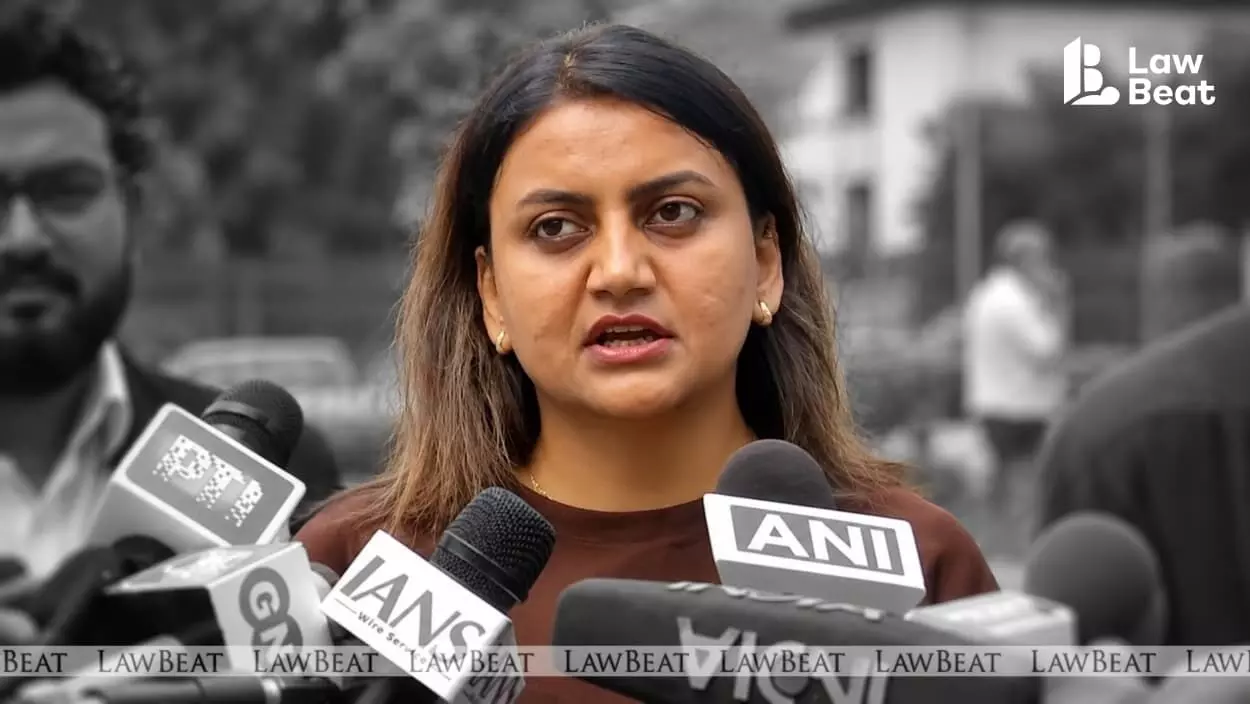
Amol Sinha Consents: Ratna Singh Criminal Contempt Proceedings Initiated
Summary
- Delhi Government counsel Amol Sinha has consented to criminal contempt proceedings against CJP member Ratna Singh.
- The proceedings are based on Singh's X posts accusing a Saket court judge of "serving the master" after dismissing her plea.
- Singh's plea sought an FIR against Delhi Police for alleged wrongful confinement during a planned protest.
- Sinha determined that Singh's statements prima facie fall under Section 2(c)(i) of the Contempt of Courts Act, 1971, which addresses scandalizing the court.
- He distinguished between criticizing a judicial decision and attributing improper motives, asserting that Singh's remarks undermined judicial independence.
What Happened
Such imputations, in my opinion, strike at the independence and impartiality of the judicial process.
Amol Sinha, the Additional Standing Counsel for the Delhi Government, has formally approved the initiation of criminal contempt proceedings against Ratna Singh, who serves as the Legal Affairs Head for the Cockroach Janta Party (CJP). This decision stems from social media posts made by Singh on X, where she accused a Saket court judge of acting under external influence. The posts specifically alleged that the judge was "serving the master" and "following order from master" after dismissing a petition filed by Singh.
Singh's petition sought the registration of a First Information Report (FIR) against Delhi Police personnel. She claimed they had wrongfully confined her and prevented her from participating in a planned CJP protest at Jantar Mantar, which aimed to oppose Chief Election Commissioner Gyanesh Kumar and for which Delhi Police had denied permission. The judicial proceedings, which led to the judge's order declining relief against Singh's alleged detention, were overseen by Chief Judicial Magistrate Abhinav Pandey of the South-East District, Saket Courts, with the order issued on October 10, 2026. Following this, Singh published her critical remarks on X, including statements like, "Judge serving the master. Went for break/meeting 4 times during entire hearing. Order without any application of law."
Advocate Kausik Chatterjee had submitted two representations on October 14 and October 28, seeking the commencement of these criminal contempt proceedings against Singh. Sinha's consent, communicated to Chatterjee on November 2, 2026, indicated that Singh's statements prima facie fell under the purview of the Contempt of Courts Act, 1971. The allegations made in the representations contended that Singh's comments went beyond mere criticism of a judicial decision, instead questioning the impartiality and independence of the presiding judicial officer.
Legal Context
The consent granted by Amol Sinha for the criminal contempt proceedings against Ratna Singh is specifically based on Section 2(c)(i) of the Contempt of Courts Act, 1971. This particular section addresses publications that have the effect of scandalizing or tending to scandalize, or lowering or tending to lower, the authority of a court. Sinha's assessment highlighted a crucial distinction between legitimate criticism of a judicial order and the imputation of improper motives or extraneous influences to the judge who issued it.
Sinha observed that expressions such as "serving the master" and "following order from master" were not confined to the merits of the judicial order or the procedural conduct of the hearing. Instead, these phrases strongly suggested that the judicial officer was operating under directives from an external authority, rather than exercising independent judicial discretion in accordance with established legal principles. He emphasized that such imputations directly undermine the independence and impartiality essential to the judicial process in India. An allegation that a judicial officer acted at the behest of an external authority, particularly when made without any disclosed factual basis, could foster the perception that judicial decisions are swayed by considerations unrelated to the case's merits.
Why It Matters
The decision to pursue criminal contempt proceedings against Ratna Singh underscores the judiciary's commitment to safeguarding its independence and public trust. When public allegations are made against an identifiable judicial officer, especially on widely accessible social media platforms like X, they carry the potential to significantly lower the authority of the court and erode public confidence in the administration of justice. Such statements, by implying that judges are not impartial arbiters but rather tools of external forces, can have far-reaching negative consequences for the rule of law.
This case serves as a critical reminder that while individuals are free to express dissatisfaction with judicial outcomes, there is a clear legal boundary when such expressions cross into imputing motives or questioning the integrity of a judge without substantiation. The legal framework surrounding criminal contempt, particularly concerning actions that scandalize the court in India, aims to protect the judicial institution from unwarranted attacks that could compromise its ability to function effectively and fairly. The public nature of Singh's statements on social media further amplifies the potential for harm to the judiciary's standing.
Practical Implications
This case serves as a critical reminder for lawyers to advise clients on the severe implications of public criticism of judicial officers, particularly on social media, which can lead to criminal contempt proceedings under the Contempt of Courts Act, 1971. It underscores the distinction between legitimate criticism of a judicial decision and imputing improper motives to a judge, which can undermine public confidence in the judiciary and result in legal action.
Source
Source: Original reporting via Live Law
How does this affect you?
Get an AI analysis of this article grounded in your jurisdictions, practice areas, and any policy documents you've uploaded to Wansom.
Wansom is AI and can make mistakes.