
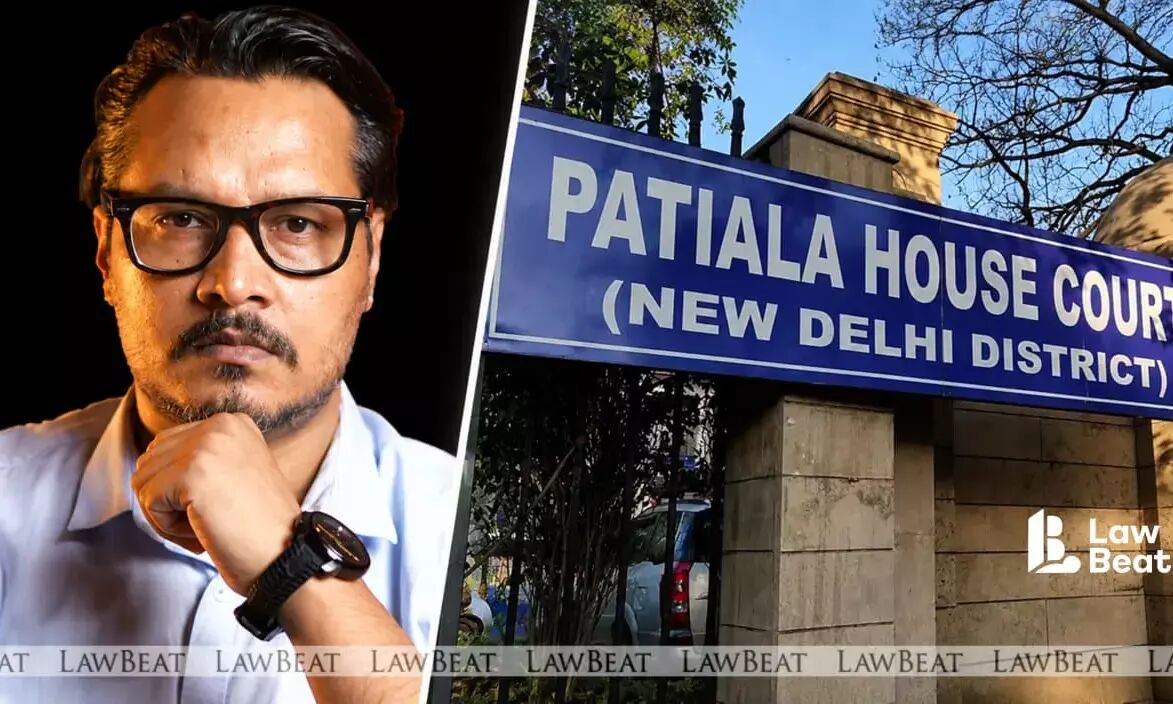
Delhi Court: Ajeet Bharti Anticipatory Bail SC/ST Act Order Reserved
Summary
- A Delhi court has reserved its order on YouTuber Ajeet Bharti's anticipatory bail plea in a case filed under the SC/ST Act over remarks made during a YouTube broadcast.
- Bharti's counsel argued that the Section 18 bar on anticipatory bail only applies if a prima facie offense under the SC/ST Act is disclosed, citing *Prathvi Raj Chauhan v. Union of India*.
- The defense contended that the alleged insult must be specifically "on ground of caste" and highlighted the requirements of Sections 3(1)(r) and 3(1)(s) of the SC/ST Act, including intent and public view.
- Arguments presented by the defense emphasized that Bharti's remarks were made under "grave and sudden provocation" during a social media exchange and were directed at an individual, not an entire community.
- The court's decision is anticipated to provide critical clarification on the interpretation of "insult on ground of caste" and the applicability of anticipatory bail in SC/ST Act cases involving online content.
Delhi Court Reserves Order in Ajeet Bharti's Anticipatory Bail Plea
Lawyers advising on social media conduct or defending clients under the SC/ST Act should closely monitor this ruling, as it is expected to offer critical clarification on what constitutes "insult on ground of caste" in the digital realm.
A Delhi court has reserved its decision on the anticipatory bail application filed by YouTuber Ajeet Bharti. The case stems from allegedly objectionable comments Bharti made during a YouTube broadcast, leading to charges under the Scheduled Castes and Scheduled Tribes (Prevention of Atrocities) Act, commonly known as the SC/ST Act.
The proceedings took place at the Patiala House Court, where Additional Sessions Judge (ASJ) Saurabh Pratap Singh Laler heard the extensive arguments presented by both sides. The court's reservation of its order indicates a thorough consideration of the complex legal questions surrounding the applicability of anticipatory bail in cases under the SC/ST Act, particularly concerning online speech.
Legal Arguments Against Section 18 Bar on Anticipatory Bail
Advocate Jai Anant Dehadrai, representing Ajeet Bharti, contended that the statutory prohibition against anticipatory bail, as outlined in Section 18 of the SC/ST Act, should only apply if the allegations in the complaint or First Information Report (FIR) clearly establish a prima facie offense under the Act. Dehadrai cited the Supreme Court's landmark judgment in *Prathvi Raj Chauhan v. Union of India*, asserting that courts are obligated to scrutinize the averments within the complaint or FIR to ascertain whether the fundamental elements of an SC/ST Act offense are present before invoking the statutory bar.
Central to the defense's argument was the assertion that merely making an offensive or objectionable statement does not automatically constitute an offense under the SC/ST Act. Dehadrai emphasized that any alleged insult or intimidation must be specifically "on ground of caste" to fall within the purview of the legislation. He focused on the specific requirements of Sections 3(1)(r) and 3(1)(s) of the SC/ST Act, arguing that not every insult or intimidation directed at a member of an SC/ST community qualifies as an offense. For Section 3(1)(r), the counsel highlighted the necessity of an intentional insult or intimidation coupled with the intent to humiliate an SC/ST member, stressing that the court must consider not only the words used but also the speaker's intention, the target, and the overall context. Furthermore, under Section 3(1)(s), any alleged abuse by caste name must demonstrably occur in a place within public view.
Defense Cites Provocation and Context of Remarks
To provide context for Bharti's remarks, his counsel presented a transcript of the statements to the court. The defense explained that the comments were made during a social media exchange, following what was described as "grave and sudden provocation." This provocation allegedly involved an individual identified as Singh, who made a comment referencing Bharti’s sister and suggesting she marry Chandrashekhar Azad, within the framework of a debate concerning reservation policies.
Dehadrai argued that Bharti’s subsequent response should not be isolated from this preceding exchange. He maintained that Bharti’s criticism was directed at a specific individual rather than an entire caste or community. The counsel further submitted that Bharti’s objections to Chandrashekhar Azad were based on Azad’s public statements and conduct, explicitly stating that caste was not the basis for his disapproval. Bharti’s position, as articulated by his lawyer, was that he is legally entitled to dislike someone based on their actions, and he had expressly stated that the individual’s caste was irrelevant to his critique. The defense concluded that, when viewed in their entirety, Bharti’s statements did not advocate discrimination against any caste or community, noting his past support for a scientific caste census and quota-within-quota systems to ensure reservation benefits reach genuinely under-represented groups.
Implications for Online Speech and Legal Interpretation
The Delhi Court's forthcoming decision on Ajeet Bharti's anticipatory bail plea in this SC/ST Act case holds significant implications for the interpretation of the law, particularly concerning online speech and the applicability of anticipatory bail despite Section 18. Lawyers advising on social media conduct or defending clients under the SC/ST Act should closely monitor this ruling, as it is expected to offer critical clarification on what constitutes "insult on ground of caste" in the digital realm.
This judgment will undoubtedly impact defense strategies and compliance assessments for online expression, providing crucial guidance on the boundaries of free speech versus caste-based offenses. The court's analysis of intent, context, and the specific ingredients of Sections 3(1)(r) and 3(1)(s) of the SC/ST Act will set an important precedent for future cases involving alleged caste-based remarks made on public platforms.
Practical Implications
Lawyers advising on social media conduct or defending clients under the SC/ST Act should closely monitor the Delhi Court's order. This decision will offer critical clarification on the interpretation of 'insult on ground of caste' and the applicability of anticipatory bail despite Section 18, impacting defense strategies and compliance assessments for online speech.
Source
Source: Original reporting via Live Law
How does this affect you?
Get an AI analysis of this article grounded in your jurisdictions, practice areas, and any policy documents you've uploaded to Wansom.
Finish Reading the Full Story and the Expert Analysis.
Wansom is AI and can make mistakes.