
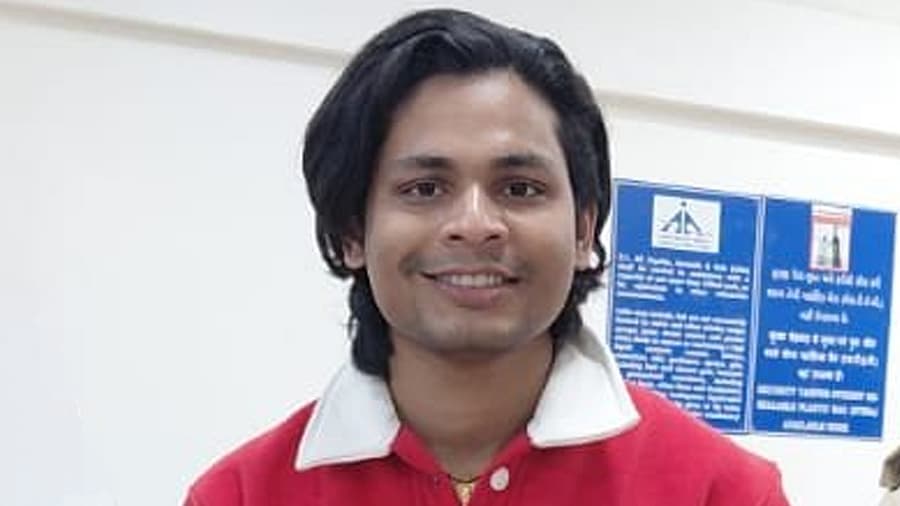
Delhi Court: Grants Regular Bail to Swatantra Bhardwaj in Protest Assault Case
A Delhi court on Tuesday granted regular bail to right-wing influencer Swatantra Bhardwaj in a case related to the assault of a student-activist's father during protests at Jantar Mantar.
Additional Sessions Judge (ASJ) Saurabh Pratap Singh Laler of the Patiala House Court issued the order, following an earlier grant of interim bail for three weeks, during which the court observed Bhardwaj's conduct. Bhardwaj was arrested on September 5 from Uttar Pradesh for the alleged assault of the father of a Dalit student-activist during the Cockroach Janta Party's (CJP) protests in July. Initially, he was booked under Sections 115(2) (causing simple hurt) and 126(2) (wrongful restraint) of the Bharatiya Nyaya Sanhita (BNS). However, after he publicly claimed on social media to have 'cracked the skull' of the victim and subsequent protests by CJP leaders, more serious charges were added, including provisions under the Scheduled Castes and Scheduled Tribes (Prevention of Atrocities) Act (SC/ST Act). A separate First Information Report (FIR) invoking provisions of the Protection of Children from Sexual Offences Act (POCSO Act) has also been registered against him, though the excerpt does not specify if this bail order pertains to that particular FIR.
This development holds significant legal implications for criminal law practitioners, particularly concerning bail jurisprudence and cases involving special legislation. The progression from interim to regular bail, predicated on the accused's conduct, illustrates the court's cautious approach in assessing factors like flight risk and potential for witness tampering. The addition of more stringent charges, including those under the SC/ST Act, after the accused's public statements and subsequent public pressure, highlights the dynamic nature of criminal investigations and the potential for external factors to influence the legal process. The application of sections from the newly introduced Bharatiya Nyaya Sanhita (BNS) also signals the ongoing transition in India's criminal justice system.
The legal context of this case involves the principles governing the grant of bail under the Code of Criminal Procedure, 1973 (CrPC), although specific sections of the Bharatiya Nyaya Sanhita (BNS) are cited for the initial charges. Bail decisions typically weigh the gravity of the offense, the likelihood of conviction, the potential for the accused to abscond or tamper with evidence/witnesses, and the accused's criminal history. The Scheduled Castes and Scheduled Tribes (Prevention of Atrocities) Act, 1989 (SC/ST Act), is a special law designed to protect marginalized communities, and offenses under it often carry stricter bail conditions. Similarly, the Protection of Children from Sexual Offences Act (POCSO Act) is another special statute with stringent provisions. The Patiala House Court, a district court in Delhi, exercises jurisdiction over such criminal matters. The key parties include the accused Swatantra Bhardwaj, the victim (father of a Dalit student-activist), and the presiding Additional Sessions Judge Saurabh Pratap Singh Laler.
Practitioners in criminal defense must recognize the critical importance of strategic communication and client advisement, especially in high-profile cases or those involving sensitive social issues. Public statements by an accused, particularly on social media, can have profound consequences, potentially leading to the addition of more severe charges, as seen here with the SC/ST Act. When handling bail applications, attorneys must meticulously address all relevant factors, including the nature of the charges, the strength of the evidence, and the accused's conduct during interim bail. Specialized knowledge of acts like the SC/ST Act and POCSO Act is crucial, as they often entail unique procedural requirements and higher thresholds for securing bail. This case underscores the need for comprehensive legal strategy that anticipates both legal and public reactions.
How does this affect you?
Get an AI analysis of this article grounded in your jurisdictions, practice areas, and any policy documents you've uploaded to Wansom.
Finish Reading the Full Story and the Expert Analysis.
Get the latest legal & regulatory intelligence in India
Wansom is AI and can make mistakes.