
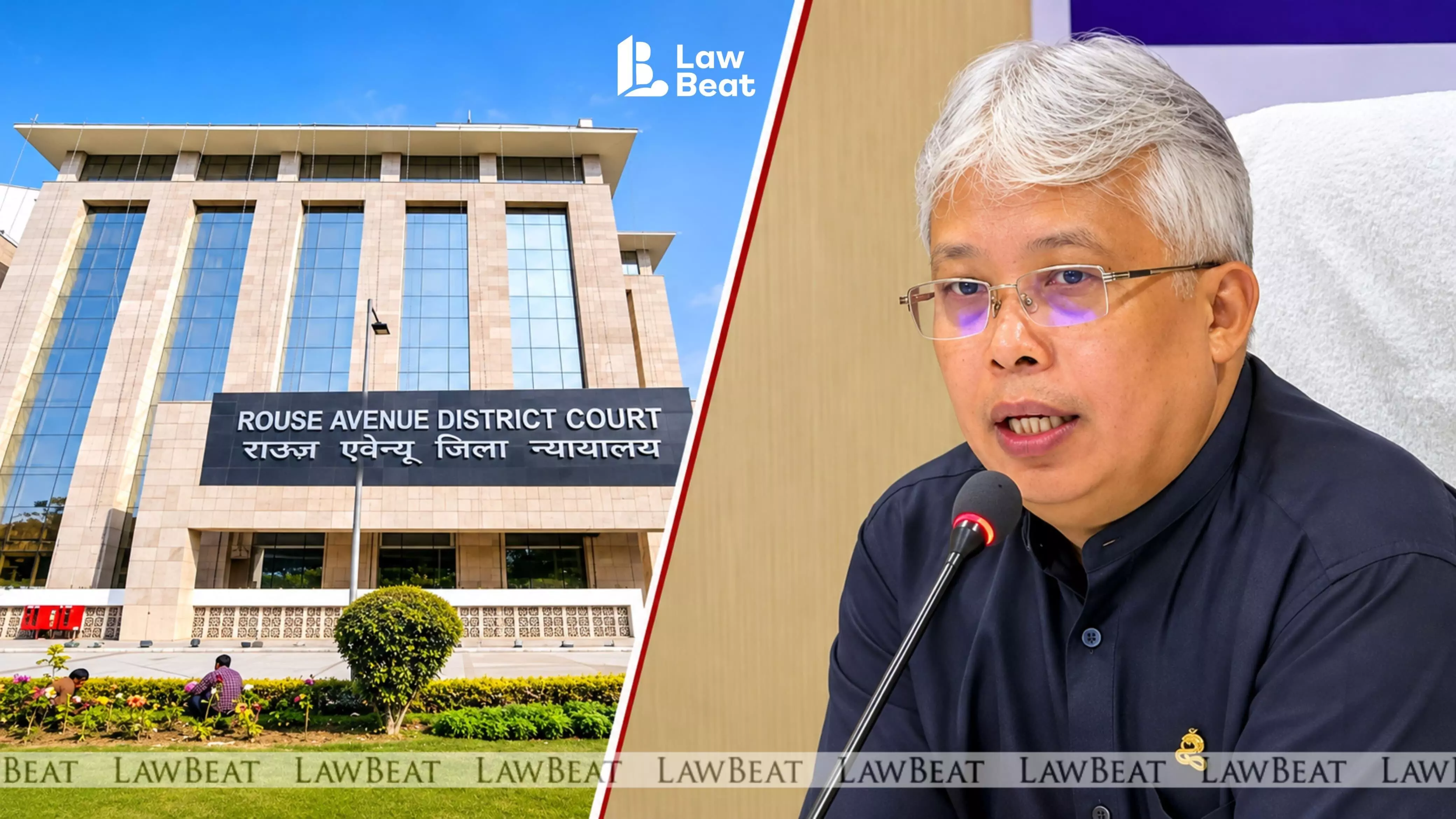
Delhi Court: 7-Day Notice for Angomcha Bimol Akoijam Before Coercive Action
Summary
- A Delhi Court has ordered the Delhi Police to give Congress MP Angomcha Bimol Akoijam seven days' notice before any coercive action, including arrest, in a sexual harassment case.
- Special Judge Dig Vinay Singh of Rouse Avenue Court issued this directive while disposing of Akoijam's anticipatory bail plea.
- Akoijam, a suspended JNU professor, faces sexual harassment allegations from at least 11 female students, leading to an FIR and his dismissal by JNU.
- The Delhi High Court has separately stayed JNU's termination of Akoijam's services, with a hearing scheduled for January.
- The case was transferred to Rouse Avenue Court because Akoijam is a sitting MP, establishing jurisdictional precedent for such matters.
Court Mandates Advance Notice for MP
The court's directive mandates that the Delhi Police must provide a seven-day prior notification before initiating any coercive action, including arrest, against Congress MP Angomcha Bimol Akoijam in connection with the sexual harassment allegations.
A Delhi Court has instructed the Delhi Police to issue a seven-day prior notice before undertaking any coercive action, including arrest, against Congress MP and suspended Jawaharlal Nehru University (JNU) professor Angomcha Bimol Akoijam. This directive, issued by Special Judge Dig Vinay Singh of Rouse Avenue Court, came as the court disposed of Akoijam’s anticipatory bail plea in a sexual harassment case. The court clarified that this seven-day notification period would be mandatory should his arrest become necessary.
This significant ruling follows the court's earlier request for a response from the Delhi Police regarding Akoijam's anticipatory bail application. The detailed order outlining the full scope of this decision is still pending. The case at the heart of these proceedings involves serious allegations of sexual harassment brought forward by female students from JNU.
Allegations and Institutional Response
The sexual harassment allegations against Angomcha Bimol Akoijam stem from complaints filed by at least 11 female JNU students in May. These complainants accused Akoijam of inviting students to his campus residence under the guise of meetings or gatherings, where he allegedly attempted to sexually harass them. Furthermore, some students reported that he made obscene and inappropriate remarks during classes.
In response to these grave accusations, JNU dismissed Akoijam from his service. Days after this dismissal, on October 12, the Delhi Police registered an FIR against the Congress MP. This FIR was lodged at the Vasant Kunj North Police Station, based on a complaint and supporting documents provided by the JNU Chief Security Officer (CSO). The FIR also noted that the university's Internal Committee (IC) had conducted an inquiry into the allegations, subsequently forwarding its findings, assessment, and observations to the police. The IC's examination of the allegations, which involved Akoijam from the Centre for Studies of Social Systems, School of Social Sciences, JNU, included assessing statements from witnesses, defense witnesses, and other pertinent material. Akoijam, for his part, has publicly labeled his dismissal a “witch hunt” and raised concerns about the university's adherence to due process.
Jurisdictional Complexities and Related Legal Actions
The path to the Rouse Avenue Court's recent directive involved several legal and jurisdictional complexities. Initially, Angomcha Bimol Akoijam sought anticipatory bail from the Patiala House Court, given the jurisdiction of the Vasant Kunj North Police Station. On October 29, the Patiala House Court granted him interim protection, which was set to last until November 2. However, that court ultimately declared itself unable to hear the anticipatory bail plea, citing Akoijam’s status as a sitting Member of Parliament from Manipur, which places jurisdiction with the Rouse Avenue Court. The investigating officer also raised this jurisdictional objection.
Following this clarification, Akoijam’s counsel moved the Rouse Avenue Court by filing the application online on November 2. In a separate but related development, the Delhi High Court on November 2 issued a stay on JNU's decision to terminate Akoijam's services. The High Court has also issued a notice to the university regarding Akoijam's petition challenging the termination order, with the matter scheduled for a hearing in January.
Why It Matters
The court's directive mandates that the Delhi Police must provide a seven-day prior notification before initiating any coercive action, including arrest, against Congress MP Angomcha Bimol Akoijam in connection with the sexual harassment allegations. This ruling establishes a significant procedural safeguard, ensuring that individuals, particularly public figures like Members of Parliament, are afforded a reasonable window to prepare their legal defense or challenge any potential coercive measures. It underscores the importance of due process even in serious cases.
Furthermore, the jurisdictional clarification, which necessitated the transfer of Akoijam's anticipatory bail application from Patiala House Court to Rouse Avenue Court due to his status as a sitting MP, highlights specific legal protocols for elected representatives. This aspect of the ruling reinforces the principle that certain legal proceedings involving Members of Parliament are subject to distinct jurisdictional requirements, thereby influencing how such cases are handled within the judicial system.
Practical Implications
This ruling establishes a procedural safeguard for individuals, particularly public figures like MPs, facing potential coercive action, allowing their legal counsel a 7-day window to prepare a defense or challenge the action. Lawyers should note the jurisdictional implications for anticipatory bail applications involving sitting MPs, which may require specific courts like Rouse Avenue Court.
Source
How does this affect you?
Get an AI analysis of this article grounded in your jurisdictions, practice areas, and any policy documents you've uploaded to Wansom.
Wansom is AI and can make mistakes.