
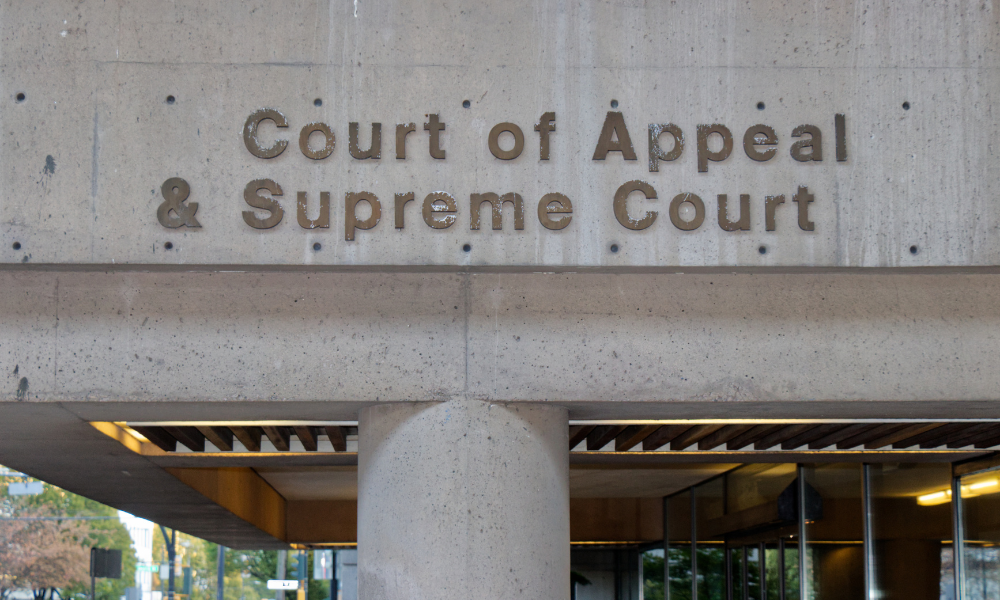
BC Court of Appeal: Degen v Bowers Addresses New Tort False Light
Summary
- The British Columbia Court of Appeal remitted a family law case for a new trial due to a lower court judge's insufficient reasoning.
- The chambers judge recognized a novel 'false light' tort and awarded $2,500 to the ex-wife without providing any explanation for its acceptance.
- The appeal court found the lower court failed to adequately explain decisions regarding family property division, property damage claims, and a $10,000 cost award.
- The ex-husband's appeal was allowed for several orders, emphasizing the necessity of clear judicial justification for effective appellate review.
- The ruling underscores the importance of robust judicial reasoning, particularly when considering new torts or making final orders in family disputes.
Case Background and Lower Court Proceedings
The appellate court specifically highlighted the chambers judge's decision to recognize a novel tort of 'false light' within the province, awarding $2,500 to the ex-wife, without providing any rationale or explanation for this significant legal development.
The British Columbia Court of Appeal recently addressed a family law dispute, Degen v Bowers, 2026 BCCA 417, stemming from a marriage that began in 2011. The couple acquired a family home shortly after their marriage but separated in 2018. Following the sale of their family residence in 2021, the proceeds were held by the ex-wife's legal counsel, amidst a relationship characterized by significant turmoil both before and after the separation. Evidence presented indicated instances where the ex-husband damaged his former wife's belongings, including cutting her clothes and smashing other possessions.
On June 10, 2025, the ex-wife initiated a summary trial application, seeking a range of final orders. These included a divorce, the division of family property and debt, a restraining order, personal injury damages, and legal costs. The ex-husband, who was self-represented, contested most of the requested relief through his response and a supporting affidavit. A hearing before the Supreme Court of British Columbia was scheduled for September 3, 2025.
During the September 3, 2025, hearing, the ex-husband failed to appear and did not respond when called. In his absence, the chambers judge largely granted the ex-wife's requested orders. Notably, these decisions were made without providing explanations and despite the presence of conflicting evidence. Among the orders was an equalization payment of $33,631, based on the ex-wife's proposal. The ex-husband later sought to participate in the summary trial remotely via Microsoft Teams, but his oral application was denied by the judge after a remote hearing, with the judge stating there was no basis to reconsider earlier orders.
The British Columbia Court of Appeal's Scrutiny
The ex-husband subsequently appealed the chambers judge's final orders, specifically challenging those related to the equalization of family property and debt. His grounds for appeal included allegations that the judge disregarded evidence he had submitted and improperly denied him access to a share of his ex-wife's Canada Pension Plan (CPP) benefits. The Court of Appeal for British Columbia reviewed the matter and ultimately allowed the ex-husband's appeal concerning paragraphs 2, 3, 4, 8, 9, and 10 of the original orders, remitting these specific issues back to the lower court for a new trial.
The appellate court acknowledged that while the record offered some insight into the chambers judge's rationale for certain orders, it ultimately concluded that the judge's reasons were insufficient to facilitate proper appellate review. The BC Court of Appeal found that the lower court judge had drawn conclusions on both legal questions and disputed factual issues without adequately explaining the reasoning behind these determinations. This lack of detailed justification was a critical factor in the decision to overturn and remit parts of the original ruling.
The Novel Tort of False Light and Judicial Justification
A central point of contention for the appellate court was the chambers judge's award of $2,500 to the ex-wife. This sum was granted based on her claim that her ex-husband had placed her in a 'false light' by publicly disseminating false and offensive information about her. The appellate court specifically highlighted the chambers judge's decision to recognize a novel tort of 'false light' within the province, awarding $2,500 to the ex-wife, without providing any rationale or explanation for this significant legal development.
Beyond the 'false light' tort, the BC Court of Appeal identified several other deficiencies in the chambers judge's reasoning. Regarding the division of family property, the appeal court determined that the judge failed to provide adequate explanations for the decisions made. Similarly, concerning the ex-wife's request for $50,000 in compensation for property damage or disposal, the chambers judge did not offer reasons for how this claim was addressed. Furthermore, a $10,000 award for costs was fixed without any discernible basis for the amount. However, the appeal court did not find an error in the chambers judge's failure to address the CPP issue, noting that the ex-husband had not raised it during the trial court proceedings, though the ex-wife conceded he could pursue these benefits through an application to Service Canada.
Implications for Judicial Practice and New Legal Claims
The ruling in Degen v Bowers underscores the critical importance of robust and transparent judicial reasoning, particularly in complex family law matters and when considering the recognition of new legal claims. The BC Court of Appeal's decision to remit the case for a new trial sends a clear message that lower court judges must provide comprehensive explanations for their findings, especially when dealing with disputed facts or novel legal concepts like a British Columbia false light tort.
This case serves as a significant precedent for judicial reasoning concerning new torts in Canada, emphasizing that the introduction of a novel cause of action requires thorough justification. The appellate court's scrutiny highlights that even where some basis for a decision might be inferred from the record, insufficient reasons will impede the appellate review process and can lead to the overturning of orders. For practitioners, this reinforces the necessity of ensuring that all orders, particularly in family law summary trial appeals in BC, are supported by clearly articulated judicial reasoning, impacting how arguments are framed and decisions are ultimately rendered.
Practical Implications
Lawyers should note that the BC Court of Appeal will scrutinize lower court decisions for sufficient reasoning, particularly when a judge purports to recognize a new tort like 'false light' without adequate explanation. This case underscores the importance of robust judicial justification for novel legal claims and for all orders in family law proceedings, impacting how practitioners must argue and judges must articulate their decisions.
Source
How does this affect you?
Get an AI analysis of this article grounded in your jurisdictions, practice areas, and any policy documents you've uploaded to Wansom.
Finish Reading the Full Story and the Expert Analysis.
Wansom is AI and can make mistakes.