
Diomaye Faye: Décret Enacts Rejected Loi Finances Rectificative, Sparks Legal Row
Summary
- On November 3, 2026, the National Assembly rejected a rectifying finance law, which President Bassirou Diomaye Faye subsequently enacted by décret on November 19.
- Dooleel PIT-Sénégal formally contested this presidential décret, drawing comparisons to a previous "act of the Prince" by former President Macky Sall.
- Deputy Amadou Ba argues the décret is "illegal" and "non-existent," citing violations of Article 68 of the Constitution and Article 57 of the organic law on finance laws.
- Tidiane Sall warned that the décret sets a lasting precedent for future presidential actions, regardless of current political disputes.
- Dooleel PIT-Sénégal also criticized internal divisions within the new regime and advocated for budgetary decisions prioritizing Senegalese interests over IMF recommendations.
Presidential Enactment of Rectifying Finance Law
Deputy Amadou Ba has vociferously contested the LFR's implementation, asserting that the décret is not merely "illegal" but "non-existent" due to a fundamental lack of legal basis.
On November 3, 2026, Senegal's National Assembly rejected a rectifying finance law (LFR), with 126 deputies voting against the measure without even reviewing its contents. The majority party, PASTEF, opted for a preliminary question, effectively dismissing the bill without public debate. Subsequently, on November 19, President Bassirou Diomaye Faye enacted this very law through a presidential décret.
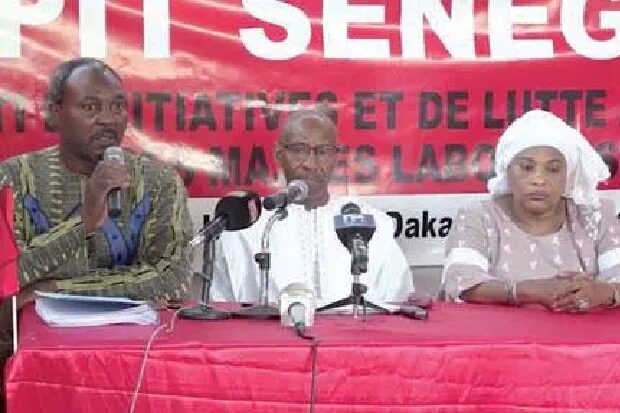
This action has sparked significant controversy, particularly from the organization Dooleel PIT-Sénégal. In a declaration issued on November 23 in Dakar, as reported by lactuacho, Dooleel PIT-Sénégal formally challenged President Faye's decision. The group drew a parallel between this décret and a previous one issued by former President Macky Sall, highlighting a procedural concern that has become a central point of criticism. Tidiane Sall, a commentator, argued that given the nation's debt crisis, deputies should have publicly justified their refusal, detailing specific contested expenditures and rejected taxes, rather than opting for a blanket rejection.
Legal Scrutiny and Constitutional Concerns
The legal foundation of President Bassirou Diomaye Faye's décret enacting the rectifying finance law is under intense scrutiny. Deputy Amadou Ba has vociferously contested the LFR's implementation, asserting that the décret is not merely "illegal" but "non-existent" due to a fundamental lack of legal basis. His arguments hinge on specific provisions within Senegalese law: Article 68 of the Constitution and Article 57 of the organic law pertaining to finance laws.
These articles, according to Ba, establish stringent requirements for the enactment of financial legislation, notably by implicating the Prime Minister's responsibility in the process. The absence of such a legal underpinning, he contends, renders the presidential action invalid. Furthermore, Tidiane Sall has cautioned about the long-term implications of this presidential décret, emphasizing that it establishes a precedent that could be invoked by future presidents, irrespective of the eventual resolution of any political disagreements between President Diomaye Faye and Ousmane Sonko. This aspect is particularly relevant for lawyers and compliance officers, as it could redefine the boundaries of executive power in financial matters.
Political Precedent and Internal Divisions
Dooleel PIT-Sénégal, through its Committee for Reflection "Dooleel PIT-Sénégal ngir defaraat reewmi," has drawn a direct comparison between President Diomaye Faye's décret of November 19 and a prior presidential décret, specifically décret n°2024-106 from February 3, 2024. The earlier décret had notably abrogated the convocation of the electoral body for the presidential election initially slated for February 25 of the same year. Dooleel characterizes both these executive actions as an "act of the Prince," implying an exercise of power that bypasses established democratic norms and the separation of powers.
The organization further suggests that internal divergences within the new regime have overshadowed crucial issues of democratic legitimacy and the reinforcement of institutional frameworks. It criticizes what it perceives as an obstruction of reforms championed by the Pastef parliamentary group, including proposals concerning the dual role of head of state and party leader, special budgetary allocations, and the management of national natural resources. Dooleel identifies a significant political shift occurring on May 22, 2026, marked by Ousmane Sonko's departure from the Prime Minister's office. The committee posits that the faction aligned with President Diomaye Faye, organized around the Kiiraay party, is beginning to replicate certain practices reminiscent of the former Benno Bokk Yaakaar regime, contrasting this with Pastef's purported commitment to participatory governance, budgetary transparency, institutional strength, and social consultation.
Economic Policy and Calls for Unity
Beyond the procedural and constitutional debates, Dooleel PIT-Sénégal has also articulated strong positions on economic policy, aligning itself with Pastef's stance against the debt restructuring recommendations put forth by the International Monetary Fund. The committee firmly asserts that all budgetary decisions must be made with the paramount interest of the Senegalese population in mind, rather than external pressures. This perspective underscores a broader commitment to national sovereignty in economic affairs.
In its declaration, Dooleel issued a call to action, urging all active forces concerned with the national interest to lend their support to the Pastef parliamentary group. The organization specifically encouraged Pastef to strengthen its alliances with urban workers, rural communities, and various social forces across the country. Furthermore, it extended an invitation to left-wing activists, democrats, and what it termed "virtuous" segments of civil society to join the collective effort aimed at reclaiming and reinforcing national sovereignties.
Practical Implications
Lawyers and compliance officers in Senegal should closely monitor the legal challenges and interpretations surrounding President Diomaye Faye's decree enacting the rectifying finance law, particularly concerning its constitutionality under Article 68 of the Constitution and Article 57 of the organic law on finance laws. This development establishes a significant precedent regarding executive power and legislative process, potentially impacting future financial legislation and the balance of powers.
Source
How does this affect you?
Get an AI analysis of this article grounded in your jurisdictions, practice areas, and any policy documents you've uploaded to Wansom.
Finish Reading the Full Story and the Expert Analysis.
Get the latest legal & regulatory intelligence in Senegal
Wansom is AI and can make mistakes.