
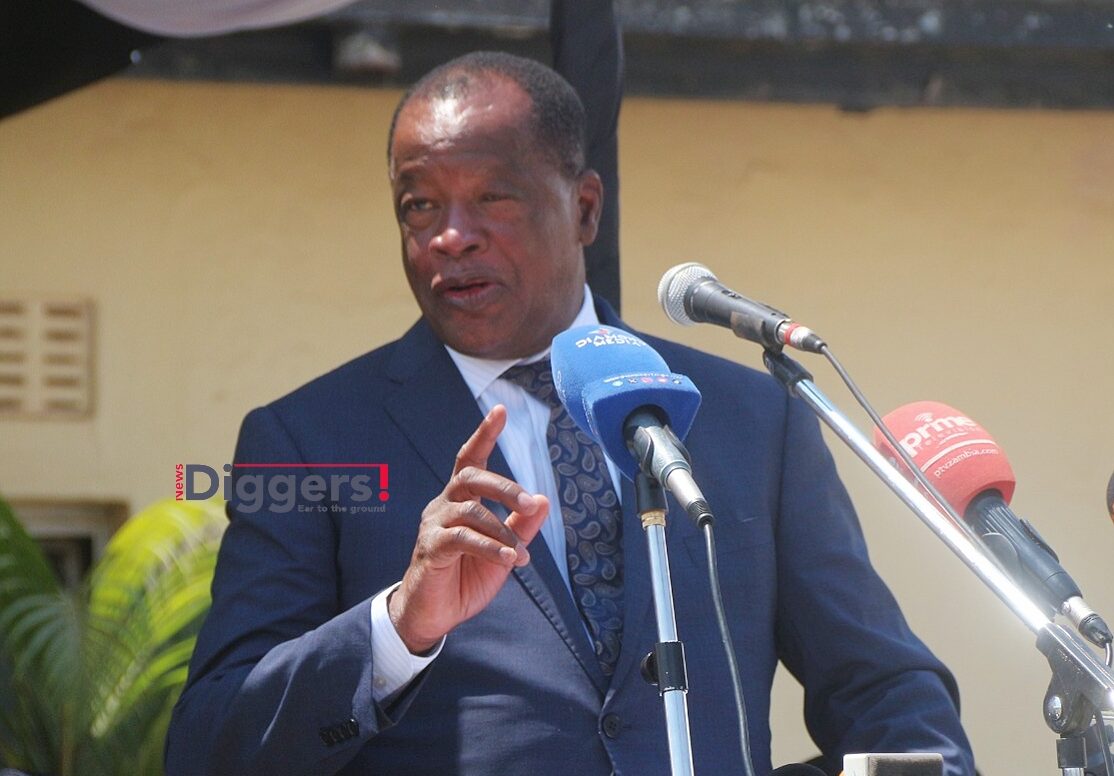
DEC Zambia: Archbishop Alick Banda Arrested Over Unlawfully Obtained Vehicle
Summary
- Archbishop Alick Banda was arrested by the Drug Enforcement Commission on Monday, September 28, 2026, released on bail, and his trial is set for November 3, 2026.
- The arrest is linked to a Toyota Hilux suspected of being unlawfully obtained.
- Jack Mwiimbu, the Minister of Home Affairs and Internal Security, stated that the arrest is a matter between Archbishop Banda and the State, not an attempt to silence the Catholic Church.
- The Drug Enforcement Commission's involvement in a property-related case highlights its established role in investigating illicitly acquired property beyond traditional drug offenses.
Archbishop Banda Arrested by DEC
The Drug Enforcement Commission's involvement in a case centered on an unlawfully obtained vehicle, rather than drug trafficking, highlights its established mandate which includes criminal investigations into various forms of illicitly acquired property and money laundering.
Archbishop Alick Banda was taken into custody by the Drug Enforcement Commission (DEC) on Monday, September 28, 2026, following an investigation into the acquisition of a specific vehicle. He was subsequently released on bail, and his trial is set for November 3, 2026. The arrest of Archbishop Alick Banda by the DEC in Zambia marks a significant development in a criminal investigation concerning property. This action by the Drug Enforcement Commission underscores its mandate to pursue cases involving assets suspected of being unlawfully obtained.
The focus of the DEC's inquiry centers on a Toyota Hilux. Authorities suspect this particular vehicle was acquired through illicit means, leading to the apprehension of Archbishop Banda. The Drug Enforcement Commission Zambia arrest highlights the agency's broad scope in addressing financial irregularities and property-related offenses, moving beyond its traditional focus on narcotics.
Government Clarifies Stance on Catholic Church
Following the arrest, Jack Mwiimbu, the Minister of Home Affairs and Internal Security, issued a statement addressing the situation and clarifying the government's position. Mwiimbu emphasized that the United Party for National Development (UPND) government harbors no intention of stifling or silencing the Catholic Church in Zambia. This assurance aims to dispel any notions that the arrest is politically motivated or part of a broader campaign against religious institutions.
In his remarks, Mwiimbu unequivocally stated that the arrest of Archbishop Banda is a matter strictly between the individual prelate and the State. This distinction underscores that the criminal investigation into the unlawfully obtained vehicle Zambia is not directed at the Catholic Church as an institution, but rather pertains to specific allegations against Archbishop Banda himself. The Jack Mwiimbu Catholic Church statement sought to delineate the personal nature of the charges from the broader relationship between the government and the religious community.
Broader Implications for Asset Investigations
The involvement of the Drug Enforcement Commission in a case centered on an unlawfully obtained vehicle, rather than drug trafficking, highlights its established mandate which includes criminal investigations into various forms of illicitly acquired property and money laundering. This incident suggests that the DEC's operational scope includes criminal investigations into various forms of illicitly acquired property. For legal professionals and compliance officers, this development is crucial, indicating that the DEC is actively engaged in asset-related investigations that may not originate from traditional drug offenses.
This particular Zambia criminal investigation property case could reflect a broader governmental strategy to combat economic crimes and illicit enrichment, irrespective of their direct connection to narcotics. The DEC's proactive role in such matters may point towards enhanced inter-agency cooperation or an expanded mandate to tackle a wider array of financial misconduct. Therefore, the arrest of Archbishop Alick Banda by the DEC in Zambia serves as a notable example of the commission's reach into non-drug-related asset recovery and investigation efforts.
Practical Implications
Lawyers and compliance officers in Zambia should note the Drug Enforcement Commission's involvement in cases beyond traditional drug offenses, specifically regarding the unlawful acquisition of property, which may signal broader enforcement mandates or inter-agency cooperation in asset-related investigations.
Source
Source: Original reporting via The Mast
How does this affect you?
Get an AI analysis of this article grounded in your jurisdictions, practice areas, and any policy documents you've uploaded to Wansom.
Finish Reading the Full Story and the Expert Analysis.
Get the latest legal & regulatory intelligence in Zambia
Wansom is AI and can make mistakes.