
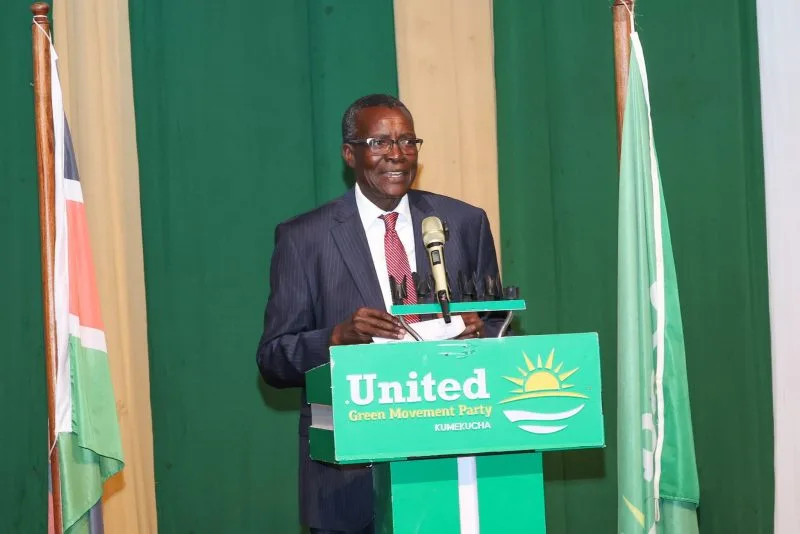
David Maraga: Kenya Ebola Policy U-Turn Is 'Hypocrisy'
Summary
- Former Chief Justice David Maraga accused President Ruto's government of hypocrisy following a U-turn on its Ebola quarantine policy.
- Health CS Aden Duale announced Kenya would no longer host quarantine facilities for other nations, contradicting a previous stance.
- Earlier government plans to host a US-linked Ebola quarantine facility in Laikipia led to June protests where police fatally shot three individuals.
- Investigations into the protest deaths by the Independent Policing Oversight Authority (IPOA) have been criticized for their slow pace and lack of transparency.
- The policy reversal comes as Kenya began a 42-day countdown to being declared Ebola-free, having successfully managed its recent outbreak.
Policy Reversal Sparks Outcry
Maraga directly accused President Ruto of compromising Kenya's "safety, sovereignty and dignity" in favor of "American interests," characterizing the government's current stance as both hypocritical and morally bankrupt.
Kenya's former Chief Justice, David Maraga, has sharply criticized President William Ruto's administration, labeling its recent shift on Ebola quarantine facilities as "hypocrisy." This strong rebuke follows an announcement by Health Cabinet Secretary Aden Duale, who declared that Kenya would no longer serve as a quarantine destination for individuals from other countries. Maraga highlighted the stark contrast between this new policy and the government's earlier, staunch defense of arrangements to host a facility specifically for foreign nationals exposed to the Ebola virus.
The former Chief Justice specifically recalled the deadly protests that erupted in June in Laikipia, where public opposition to a proposed US-linked isolation center was met with force. Maraga asserted that the government had previously disregarded widespread public sentiment against the facility, leading to tragic consequences. He directly accused President Ruto of compromising Kenya's "safety, sovereignty and dignity" in favor of "American interests," characterizing the government's current stance as both hypocritical and morally bankrupt.
The Laikipia Protests and Fatalities
The controversy stems from plans earlier this year to establish a 50-bed isolation and quarantine facility in Laikipia. This center was intended for American citizens potentially exposed to the Bundibugyo strain of Ebola during outbreaks in the Democratic Republic of Congo and Uganda. Local residents and leaders voiced significant concerns, questioning why Kenya, which had no recorded Ebola cases at the time, should bear the public health and economic risks associated with hosting such a facility.
These concerns escalated into protests in June, during which police opened fire on demonstrators. Initial clashes reportedly resulted in two fatalities, with a third death occurring days later amid further demonstrations. Several other protesters and bystanders sustained injuries during these events. The tragic loss of life, including Charles Mangaro Mwangi, Sylvester Muigai Ndungu, and an unidentified third victim, continues to fuel demands for accountability regarding the police response.
Accountability and Scrutiny of Investigations
The circumstances surrounding the deaths in Laikipia have raised persistent questions about police accountability, with law enforcement agencies yet to provide a comprehensive public account of their actions during the demonstrations. The Independent Policing Oversight Authority (IPOA), tasked with investigating such incidents, has also faced considerable criticism. Concerns have been raised regarding the pace and transparency of its investigations into the protest-related fatalities.
Despite documenting the deaths, IPOA has not publicly offered a substantive update on the progress of its ballistic and witness investigations. Adding to the pressure, the Law Society of Kenya (LSK) has independently accused IPOA of deliberately stalling inquiries into alleged human rights violations stemming from protests and police operations. This ongoing lack of transparency and perceived inaction by oversight bodies underscores broader concerns about the absence of accountability for abuses attributed to law enforcement officers.
Broader Implications and Health Status Update
The government's policy reversal, particularly without acknowledging the past deaths or the circumstances that led to them, has drawn further condemnation. The United Green Movement (UGM) Party Leader also criticized the administration for adopting a position now aligned with the original protesters, yet failing to address the human cost of the previous policy. This political and legal fallout unfolds as Kenya marks a significant public health milestone.
The Ministry of Health recently announced that Kenya had discharged its last Ebola patient and released the final eleven contacts from monitoring, following the completion of the required 21-day observation period. The country began a 42-day countdown on November 12, aiming to be declared Ebola-free under World Health Organization guidelines around December 23, provided no new infections are reported. The first imported Bundibugyo virus disease case was confirmed on October 6, leading to nine confirmed cases within one transmission cluster, with all 135 identified contacts successfully traced and monitored. Health CS Duale affirmed that Kenya remains open for business, tourism, trade, and travel, urging other nations to review any imposed restrictions.
Practical Implications
This article highlights critical issues of police accountability for protest-related deaths and the transparency of investigations by bodies like IPOA, which is highly relevant for human rights lawyers and those advising on public order and state conduct. It also underscores the political and legal ramifications of government policy reversals, particularly when public trust and past actions (like the use of force) are involved, which could inform advocacy or litigation strategies.
Source
How does this affect you?
Get an AI analysis of this article grounded in your jurisdictions, practice areas, and any policy documents you've uploaded to Wansom.
Finish Reading the Full Story and the Expert Analysis.
Get the latest legal & regulatory intelligence in Kenya
Wansom is AI and can make mistakes.