
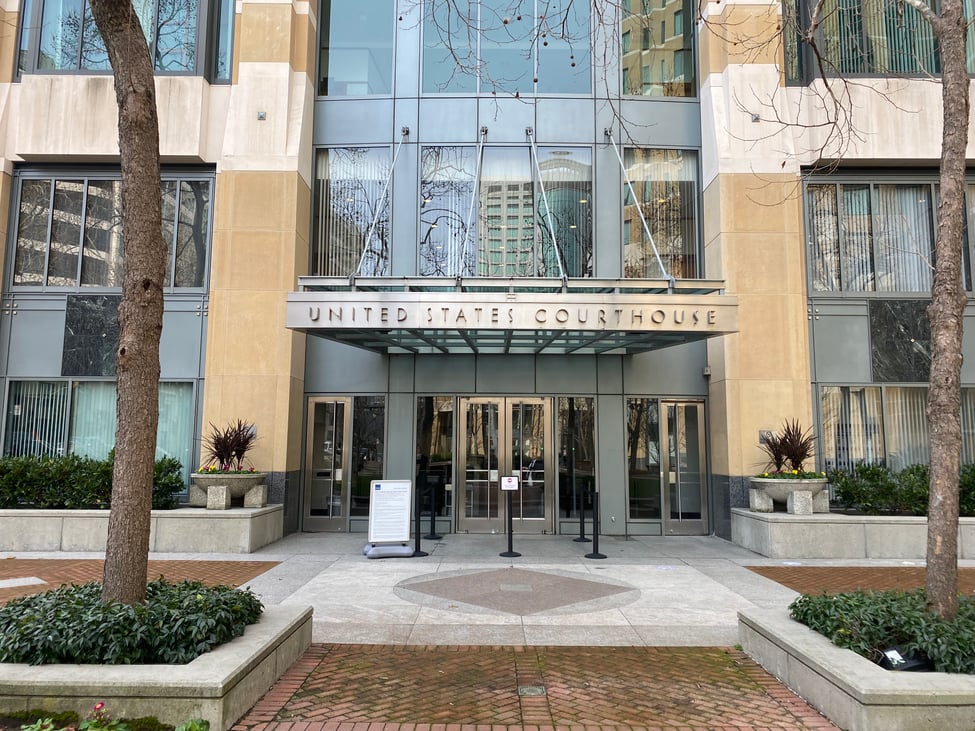
David Brooks Pokorny Trial: Jury Selected in Judge Breyer Threats Case
Summary
- Jury selection has concluded in the federal criminal trial of David Brooks Pokorny, accused of sending threatening emails to a federal court.
- Pokorny, 45, allegedly threatened to assault, kidnap, or murder U.S. District Judge Charles Breyer in September 2025.
- The emails included statements like "I want you to visualize skinning U.S. District Judge Charles Breyer to death" and claims that "it is legal to kill judges."
- Pokorny faces a felony charge of threats against a judicial officer, which carries a maximum sentence of ten years in prison.
- The trial will examine whether these communications constitute a "true threat" under the First Amendment, a key legal question for the jury.
Trial Commences for Alleged Threats Against Federal Judge
The trial is poised to offer crucial insights into how the legal system interprets and prosecutes alleged 'true threats,' particularly when directed at federal judicial officers, under the protections of the First Amendment.
Jury selection concluded on Monday, marking the official start of the federal criminal trial for David Brooks Pokorny, a 45-year-old resident of El Cerrito, California. Pokorny stands accused of dispatching a series of threatening emails targeting U.S. District Judge Charles Breyer, with prosecutors alleging the communications contained explicit threats of assault, kidnapping, or murder. These alleged threats were sent in September 2025, culminating in Pokorny's arrest the following month in Southern California.
The charges against Pokorny stem from nearly a dozen emails sent to the federal court's media email system on September 2, 2025. The initial message reportedly declared, "This is terrorism." Subsequent emails, sent minutes apart, escalated in intensity. One particularly graphic message stated, "I want you to visualize skinning U.S. District Judge Charles Breyer to death." Other communications included assertions such as, "We have a legal right to use terrorism to control California courts & judges," and "It is legal to take & kill hostages in order to get the illegitimate California courts & judges to cease their operations and dissolve their courts." Pokorny also allegedly labeled California courts as "valid military targets" and judges, including Judge Breyer, as "enemy combatants," claiming the judge had "turned traitor" and "did something very stupid, and that is to militarize the court."
Legal Framework: The 'True Threat' Doctrine
The central legal question for the twelve jurors in this Oakland federal court threats case is whether Pokorny's emails constitute a "true threat" under the First Amendment, a critical determination in prosecutions involving speech. Pokorny faces a felony charge of threats against a judicial officer, a serious offense that carries a potential maximum sentence of up to ten years in federal prison. The outcome of this David Brooks Pokorny trial Judge Breyer case will significantly inform the judicial interpretation and prosecutorial application of the 'true threat' doctrine, particularly concerning threats against judicial officers.
Assistant U.S. Attorney Evan Mateer probed prospective jurors on their perspectives regarding the First Amendment, the concept of free speech absolutism, and the criminal prosecution of statements made as threats against public officials. This line of questioning underscores the delicate balance between protected speech and prosecutable threats, a cornerstone of the true threat doctrine federal judge cases. The trial is poised to offer crucial insights into how the legal system interprets and prosecutes alleged 'true threats,' particularly when directed at federal judicial officers, under the protections of the First Amendment.
Jury Selection and Courtroom Dynamics
The selection process for the jury, which included twelve jurors and two alternates, spanned nearly four hours of detailed questioning by both the presiding judge and the legal teams. U.S. District Judge Jon Tigar, an appointee of former President Barack Obama, initiated the selection by emphasizing the necessity for potential jurors to set aside personal biases to ensure impartiality. He clarified that the court sought individuals capable of separating their opinions and life experiences from their duty to be fair.
Defense attorneys John Reichmuth and Elisse Larouche, representing Pokorny, sat alongside their client, who appeared in a grey cardigan, collared shirt, and glasses, with two U.S. marshals positioned behind him. Both the prosecution and defense cautioned the jury that the proceedings would involve offensive and potentially racist language from the alleged communications. Reichmuth specifically described the expected language as "shocking, ugly, revolting, vitriol," and both sides inquired about the jurors' ability to maintain neutrality despite the provocative nature of Pokorny’s alleged statements. The trial is anticipated to conclude by the end of the week.
The Judge at the Center of the Controversy
The target of the alleged threats, U.S. District Judge Charles Breyer, has presided over several high-profile cases, one of which was explored during jury selection as a potential context for the threats. Assistant U.S. Attorney Mateer specifically questioned prospective jurors about their views on President Donald Trump’s deployment of the National Guard in California and the subsequent legal challenge, *Newsom v. Trump*, which Judge Breyer oversaw.
In that case, Judge Breyer ruled the previous year that Trump's deployment of thousands of National Guard troops and Marines in Southern California was unlawful, issuing an injunction to prevent their deployment. He later reaffirmed his findings, blocking the federal government from deploying the state’s National Guard in Los Angeles and mandating that the Guard members be returned to the authority of California Governor Gavin Newsom. No potential jurors indicated that their personal opinions regarding this National Guard deployment or the related court case would compromise their judgment in the current trial.
Practical Implications
This trial will provide critical insight into the judicial interpretation and prosecutorial application of the 'true threat' doctrine under the First Amendment, particularly concerning threats made against federal judges. Criminal defense attorneys and prosecutors should monitor the verdict to understand the evolving legal standards for what constitutes a prosecutable threat versus protected speech, which could influence future cases involving similar allegations against public officials.
Source
How does this affect you?
Get an AI analysis of this article grounded in your jurisdictions, practice areas, and any policy documents you've uploaded to Wansom.
Wansom is AI and can make mistakes.