
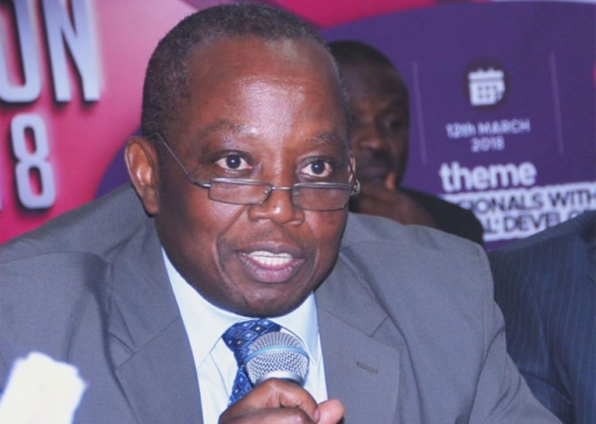
Ghana: Daniel Domelevo Urges Chief Justice Impartiality, Stop Political Remarks
Summary
- Former Auditor-General Daniel Yaw Domelevo urged Chief Justice Paul Baffoe-Bonnie to stop commenting on political matters that could become subjects of litigation.
- Domelevo warned that such public statements could create a perception of bias against the Judiciary and undermine confidence in its neutrality.
- The call followed Chief Justice Baffoe-Bonnie's recent visits to SSNIT and MIIF, where he praised the improved performance of state entities under the current administration.
- The Ghana Centre for Democratic Development (CDD-Ghana) and the New Patriotic Party (NPP) also criticized the Chief Justice's remarks, citing concerns about judicial impartiality and political neutrality.
- This intervention adds to a growing debate regarding the extent to which the Chief Justice should publicly comment on politically or legally sensitive issues.
Calls for Restraint on Judicial Commentary
My wish is that if it is possible, the Chief Justice should stop commenting on some political issues, especially issues that can later on cover litigation coming back to the court.
Former Auditor-General Daniel Yaw Domelevo has publicly urged Chief Justice Paul Baffoe-Bonnie to cease making public comments on political issues, particularly those with the potential to become subjects of future litigation. Mr. Domelevo cautioned that such pronouncements could foster a perception of bias within the Judiciary, undermining public trust in its impartiality. His remarks, delivered on Channel One TV on Saturday, September 5, underscore a growing concern about the appropriate boundaries for judicial leaders' public discourse.
This intervention by Mr. Domelevo follows specific public statements made by Chief Justice Baffoe-Bonnie just days earlier. On Wednesday, September 2, the Chief Justice visited the Social Security and National Insurance Trust (SSNIT) and the Minerals Income Investment Fund (MIIF). During his engagement at MIIF, he commended the improved performance of the institution and other state entities under the current administration, stating, "Sometimes when we hear how well some state organisations are doing now, we wonder what we really have been doing in the past eight years." Similarly, at SSNIT, the Chief Justice drew a contrast between the institution's current operational status and its past consideration of divesting assets, including the Labadi Pleasure Beach.
Safeguarding Judicial Impartiality and Independence
Mr. Domelevo articulated that individuals holding sensitive constitutional offices, especially within the Judiciary, bear a significant responsibility to exercise extreme caution in their public pronouncements. This circumspection is crucial for upholding confidence in the courts' neutrality and independence. He specifically highlighted the importance of refraining from commenting on the performance or conduct of public institutions that could subsequently become parties in legal disputes.
The former Auditor-General elaborated on the potential pitfalls, explaining that if a Chief Justice makes public comments about an institution's conduct or efficiency, it could become problematic should cases involving that institution later appear before the courts. He warned that if one has already expressed views, for instance, by suggesting an institution is "corrupt or inefficient or has so and so," there is a risk of being perceived as prejudiced. Domelevo's clear message was, "My wish is that if it is possible, the Chief Justice should stop commenting on some political issues, especially issues that can later on cover litigation coming back to the court." This stance directly addresses the core issue of Daniel Domelevo Ghana Chief Justice impartiality.
Broader Debate on Judicial Neutrality
The Chief Justice's recent remarks have not only drawn criticism from Mr. Domelevo but have also ignited a broader discussion among other prominent bodies. The Ghana Centre for Democratic Development (CDD-Ghana) has similarly urged Chief Justice Baffoe-Bonnie to exercise greater restraint and discretion in his public engagements. Their concern centers on the need to safeguard the credibility and perceived impartiality of the Judiciary, which is vital for public trust in the legal system.
Adding to the chorus of concern, the New Patriotic Party (NPP) has also voiced criticism, characterizing the Chief Justice's conduct as partisan. The NPP emphasized that the head of the Judiciary must consistently be seen to maintain political neutrality, particularly when politically sensitive cases are pending before the courts. This collective response underscores a significant Ghana judicial independence debate and highlights the critical importance of Chief Justice political neutrality Ghana in maintaining public confidence in the justice system.
Implications for Judicial Ethics and Perceived Bias
The ongoing discussion surrounding Chief Justice Paul Baffoe-Bonnie's public statements carries substantial implications for judicial ethics Ghana and the broader issue of perceived judicial bias Ghana. When the head of the judiciary offers public assessments of government institutions or political administrations, it can inadvertently create an impression of pre-judgment or alignment, potentially compromising the appearance of fairness in future legal proceedings involving those entities. This perception can be particularly damaging in a legal system that relies heavily on the public's belief in its unbiased application of the law.
Such commentary raises questions about the boundaries of judicial engagement in public life, especially concerning matters that could directly or indirectly influence the outcome of cases. The concerns articulated by Mr. Domelevo and others highlight the delicate balance required to ensure that the Judiciary remains above reproach, fostering an environment where all litigants, regardless of political affiliation or institutional standing, feel confident in receiving an impartial hearing. The debate ultimately reinforces the imperative for judicial leaders to uphold the highest standards of neutrality to protect the integrity of the justice system.
Practical Implications
Lawyers should monitor public statements by the Chief Justice for potential implications on judicial impartiality and perceived bias in future litigation, especially concerning state institutions or politically sensitive matters, which could affect case strategy or arguments for recusal.
Source
How does this affect you?
Get an AI analysis of this article grounded in your jurisdictions, practice areas, and any policy documents you've uploaded to Wansom.
Finish Reading the Full Story and the Expert Analysis.
Wansom is AI and can make mistakes.