
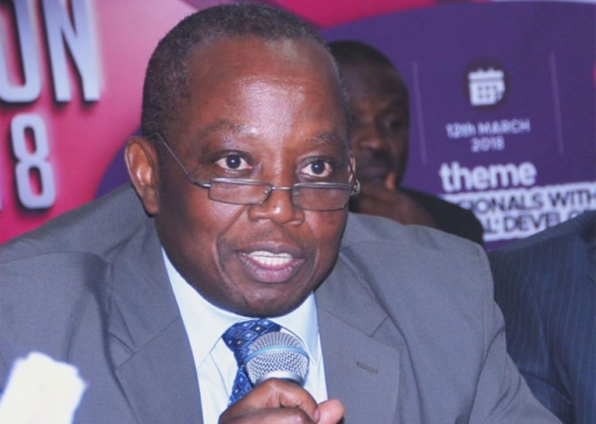
Domelevo Advises Ghana Chief Justice: Avoid Political Comments
Summary
- Former Auditor-General Daniel Yaw Domelevo, who is currently the Board Chairman for EOCO and a Global Fund Board member, advised Chief Justice Paul Baffoe-Bonnie to stop making political comments.
- Domelevo warned that such statements could create a perception of bias within the Judiciary, especially if related cases come to court.
- The advice followed Chief Justice Baffoe-Bonnie's recent remarks praising the current administration's performance and questioning past achievements during visits to state institutions.
- Domelevo emphasized that public officials in sensitive constitutional positions must be cautious to avoid compromising judicial neutrality.
Recent Call for Judicial Prudence
The ethical considerations for public officials in constitutional roles regarding public pronouncements are paramount, as these can significantly influence future litigation or compromise court impartiality, thereby eroding the very foundation of judicial fairness.
Former Auditor-General Daniel Yaw Domelevo, who currently serves as the Board Chairman for the Economic and Organized Crime Office (EOCO) and a Board member of the Global Fund, has publicly urged Chief Justice Paul Baffoe-Bonnie to refrain from making political statements, particularly those that could foreseeably become subjects of future litigation. Speaking on Channel One TV on Saturday, September 5, 2026, Domelevo emphasized that such pronouncements risk fostering a public perception of bias within the Ghana Judiciary. This counsel from Daniel Yaw Domelevo to Chief Justice Paul Baffoe-Bonnie underscores a critical discussion around the ethical boundaries for high-ranking judicial figures and the imperative for perceived impartiality.
Domelevo's advice follows recent public remarks made by Chief Justice Baffoe-Bonnie during official visits to various state-owned institutions. During these engagements, the Chief Justice reportedly commended the performance of these bodies under the current administration, while simultaneously questioning the achievements of the preceding eight years. These Chief Justice Baffoe-Bonnie political remarks appear to have prompted the former Auditor-General's intervention, highlighting significant concerns about the judiciary's perceived impartiality and its role in the broader political landscape.
Upholding Neutrality and Public Trust
The core of Domelevo's concern centers on the potential for such comments to compromise public confidence in the courts' neutrality. He stressed that public officials occupying sensitive constitutional positions in Ghana must exercise extreme caution with their pronouncements, especially when discussing the performance or conduct of institutions that could later become parties in legal disputes. Even if the Chief Justice's intention is to foster greater cooperation between the Judiciary and other state entities, remarks that label an institution as "corrupt" or "inefficient" could inadvertently undermine trust and create an impression of prejudgment.
Domelevo articulated this risk clearly, stating that if a judge has already expressed an opinion that an institution is "corrupt or inefficient or has so and so," the public might reasonably conclude that the judge is "already prejudiced." This directly impacts the Ghana Judiciary neutrality perception, which is vital for the rule of law and the administration of justice. The ethical considerations for public officials in constitutional roles regarding public pronouncements are paramount, as these can significantly influence future litigation or compromise court impartiality, thereby eroding the very foundation of judicial fairness.
Safeguarding Judicial Independence
The former Auditor-General's intervention serves as a stark reminder of the delicate balance required to maintain judicial independence Ghana ethics. His wish, as he expressed it, is for the Chief Justice to cease commenting on political issues, particularly those with the potential to evolve into legal cases. This stance is rooted in the fundamental principle that the judiciary must not only be impartial but also be seen to be impartial, thereby preserving its integrity and the public's faith in the justice system. The advice from Domelevo advises Ghana Chief Justice political comments to be avoided, reinforcing the idea that the actions and words of those in constitutional roles carry significant weight and can profoundly affect the perceived fairness and objectivity of the entire judicial process. This vigilance is crucial for ensuring that the judiciary remains a neutral arbiter, free from political entanglement or the appearance thereof, upholding its constitutional mandate without compromise.
Practical Implications
This development underscores the critical importance of judicial neutrality and independence in Ghana, reminding lawyers to be vigilant about potential perceptions of bias in the judiciary. It also highlights the ethical considerations for public officials in constitutional roles regarding public pronouncements that could impact future litigation or compromise court impartiality.
Source
How does this affect you?
Get an AI analysis of this article grounded in your jurisdictions, practice areas, and any policy documents you've uploaded to Wansom.
Finish Reading the Full Story and the Expert Analysis.
Wansom is AI and can make mistakes.