
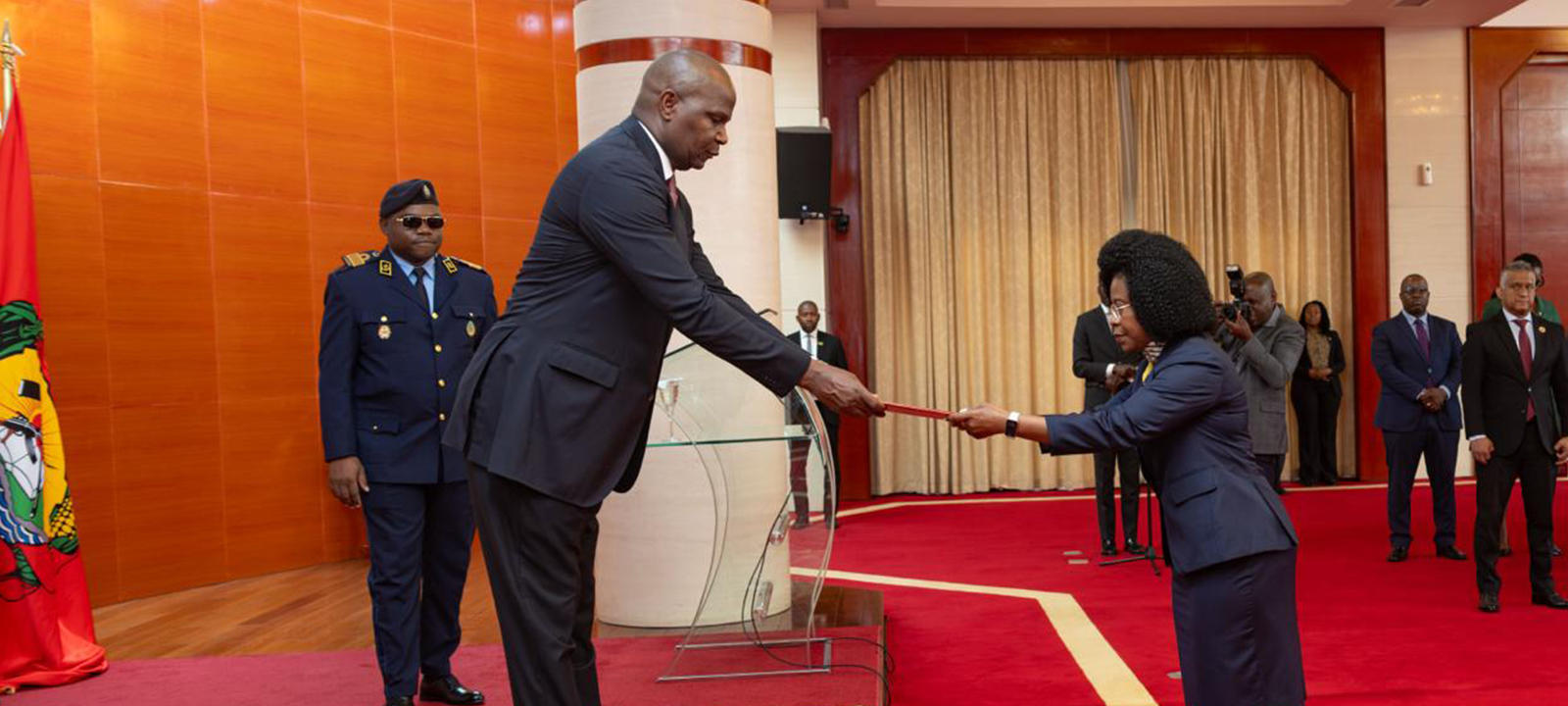
Daniel Chapo Directs Benedita Guimino: Banco Moçambique to Boost AML
Summary
- President Daniel Chapo has challenged Benedita Guimino, the new vice-governor of the Banco de Moçambique, to reinforce financial system integrity.
- Ms. Guimino is tasked with adopting a more rigorous approach to combating money laundering.
- The President also directed the central bank to deepen mechanisms for financing the real economy.
- This mandate signals a period of heightened regulatory scrutiny and a focus on economic development for Mozambique's financial sector.
New Leadership Mandate at Banco de Moçambique
The era under the new leadership of the Banco de Moçambique is expected to be characterized by an unwavering commitment to upholding the highest standards of financial integrity.
President Daniel Chapo has issued a clear directive to Benedita Guimino, the newly appointed vice-governor of the Banco de Moçambique, outlining a mandate for enhanced rigor within the nation's financial sector. This significant leadership transition at the central bank comes with explicit expectations from the head of state, signaling a renewed focus on critical areas of financial governance and economic development. The President's challenge to Ms. Guimino centers on two primary objectives: bolstering the integrity of the national financial system and deepening mechanisms aimed at financing the real economy.
Heightened Scrutiny on Financial Integrity and AML
A core component of President Chapo's directive to Benedita Guimino involves a significant intensification of efforts to combat money laundering, known locally as branqueamento de capitais. This explicit demand for more rigorous action in this domain signals an impending era of heightened regulatory scrutiny for financial institutions operating within Moçambique. The emphasis on strengthening the integridade sistema financeiro Moçambique is not merely a procedural call but a strategic imperative to safeguard the nation's economic framework from illicit financial flows.
Under the leadership of Benedita Guimino, the Banco de Moçambique is expected to implement and enforce stricter anti-money laundering (AML) measures. This will likely translate into more comprehensive oversight, enhanced reporting requirements, and potentially more severe penalties for non-compliance across the financial sector. The focus on Benedita Guimino AML Moçambique initiatives indicates a strategic shift towards a more robust regulatory environment, demanding that all market participants review and fortify their internal compliance frameworks.
Financial institutions, including banks, insurance companies, and other regulated entities, should anticipate a proactive approach from the central bank in monitoring adherence to these reinforced standards. The presidential mandate underscores the critical role of the Banco de Moçambique in maintaining a transparent and secure financial ecosystem, making the fight against financial crime a top priority for the new vice-governor.
Driving Economic Growth Through Central Bank Action
Beyond financial integrity, President Daniel Chapo also tasked Benedita Guimino with deepening the mechanisms for financing the real economy. This directive highlights the central bank's crucial role not only as a regulator but also as a facilitator of economic development. The focus on financiamento economia real Moçambique aims to ensure that financial resources are effectively channeled towards productive sectors, fostering sustainable growth and job creation across the nation.
This aspect of the mandate implies a strategic re-evaluation of how the Banco de Moçambique can influence credit allocation and investment flows to support key industries and small and medium-sized enterprises. The goal is to create a more robust link between the financial sector and the tangible economic activities that drive national prosperity. Such initiatives could involve policy adjustments, new financial instruments, or enhanced collaboration with commercial banks to stimulate lending to critical sectors.
By emphasizing the financing of the real economy, the President underscores the central bank's responsibility to contribute directly to the country's economic vitality. This dual focus on both regulatory rigor and economic enablement positions the Banco de Moçambique under Benedita Guimino to play a transformative role in shaping Mozambique's financial future, ensuring that the system is not only sound but also actively supportive of national development objectives.
Anticipating a Stricter Regulatory Environment
The comprehensive challenge laid out by President Daniel Chapo to Benedita Guimino, the new vice-governor of the Banco de Moçambique, signals a clear trajectory towards a more demanding and meticulously regulated financial landscape in the country. The dual emphasis on rigorous anti-money laundering efforts and strategic financing of the real economy indicates a holistic approach to strengthening Mozambique's economic foundations. This presidential directive is poised to reshape operational expectations for all entities within the financial sector.
Financial institutions should interpret these pronouncements as a strong signal to proactively enhance their compliance protocols and risk management frameworks. The era under the new leadership of the Banco de Moçambique is expected to be characterized by an unwavering commitment to upholding the highest standards of financial integrity. This will necessitate a comprehensive review of existing practices to ensure full alignment with the central bank's reinforced mandate.
The overarching message from President Chapo is one of accountability and strategic alignment, ensuring that the financial system serves both as a bulwark against illicit activities and a catalyst for genuine economic progress. The incoming leadership at the Banco de Moçambique is thus tasked with not only enforcing stricter regulations but also fostering an environment conducive to responsible and impactful economic investment.
Practical Implications
Compliance officers and legal counsel in Mozambique should anticipate heightened regulatory scrutiny from the Banco de Moçambique regarding anti-money laundering (AML) and financial integrity measures under the new vice-governor, Benedita Guimino. This necessitates a proactive review of internal compliance frameworks and readiness for potentially stricter enforcement of financial regulations.
Source
Source: Original reporting via O País
How does this affect you?
Get an AI analysis of this article grounded in your jurisdictions, practice areas, and any policy documents you've uploaded to Wansom.
Finish Reading the Full Story and the Expert Analysis.
Wansom is AI and can make mistakes.