
Dakar: Congolaise Étudiante Poursuivie pour Suppression d'Enfant
Summary
- A 26-year-old Congolese student, B. O., is being prosecuted in Dakar following the birth and disappearance of her newborn.
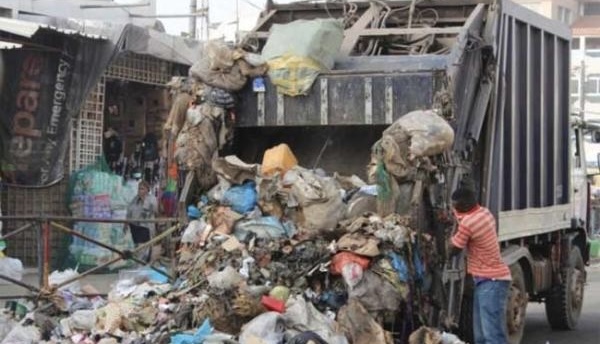
- She informed investigators that the baby was stillborn and she disposed of it in a garbage truck.
- Authorities were unable to recover the infant's body as the waste had already been transported to the Mbeubeuss landfill.
- B. O. faces charges of child suppression and desecration of a corpse.
- The case has been referred to the Tribunal de Grande Instance hors classe de Dakar, with the exact cause of the newborn's death still undetermined.
Initial Discovery and Investigation
The procedural path, from the initial police investigation to presentation before the Dakar public prosecutor and subsequent referral to the Tribunal de Grande Instance, illustrates the standard legal framework in Senegal for handling serious criminal matters.
On October 19, authorities were alerted to a concerning situation involving B. O., a 26-year-old Congolese student residing in Ouest-Foire, Dakar. Following a birth that occurred outside a medical facility, the young woman was unable to provide medical staff with information regarding the whereabouts of her newborn, despite the umbilical cord having been severed. This immediate lack of clarity prompted an investigation.
When questioned by investigators, B. O. stated that the infant had been stillborn. She further explained that she had subsequently disposed of the body by placing it in a truck designated for garbage collection. This account initiated a search operation to locate the remains of the child.
Gendarmes, accompanied by B. O. and the duty physician, proceeded to inspect the location where the collected waste had been deposited. However, their efforts to recover the body proved unsuccessful. It was determined that the entire load of refuse had already been transported to the Mbeubeuss landfill, making the retrieval of the infant's body impossible at that stage. The circumstances surrounding this Dakar étudiante congolaise suppression d'enfant poursuite began to unfold with these initial findings.
Formal Charges and Legal Process
Following these developments, B. O. received necessary medical attention. She was also formally apprised of her legal rights, including the crucial right to legal counsel. Subsequently, she was taken into police custody, marking a significant step in the legal proceedings. The case, involving the alleged abandon nouveau-né Dakar, quickly escalated.
According to reports, B. O. now faces serious charges. She is being prosecuted for "suppression d'enfant" (child suppression) and "profanation de cadavre" (desecration of a corpse). These charges reflect the gravity with which the Senegalese legal system views the alleged actions and the disappearance of the infant's body.
Upon the conclusion of the initial police procedures, B. O. was presented before the public prosecutor's office in Dakar. From there, her case was referred to the Tribunal de Grande Instance hors classe de Dakar, indicating that the matter is proceeding through the higher courts. The legal journey for B. O. suppression d'enfant has thus moved into the formal judicial phase, where the specifics of the profanation de cadavre Sénégal will be examined.
Legal Framework and Evidentiary Challenges
This case, involving a Congolese student in Dakar, highlights the complexities inherent in prosecuting charges like child suppression and desecration of a corpse under Senegalese law, particularly when key evidence, such as the body itself, is unrecovered. The "droit pénal sénégalais suppression d'enfant" typically addresses situations where a child's birth is concealed or its existence denied, often with intent to harm or abandon. The additional charge of "profanation de cadavre" underscores the legal protection afforded to human remains, even in tragic circumstances.
A significant challenge for the prosecution in this instance is the undetermined cause of the newborn's death. Without the body, establishing whether the infant was stillborn, as B. O. claims, or died post-birth due to other factors, becomes exceedingly difficult. This evidentiary gap directly impacts the ability to prove the elements required for both "suppression d'enfant" and "profanation de cadavre," which often rely on forensic evidence regarding the state of the body and the circumstances of death.
The procedural path, from the initial police investigation to presentation before the Dakar public prosecutor and subsequent referral to the Tribunal de Grande Instance, illustrates the standard legal framework in Senegal for handling serious criminal matters. However, the unique circumstances of this case, particularly the absence of the infant's body and the lack of a definitive cause of death, present a complex legal and ethical dilemma for the judicial system. It underscores the challenges faced by legal professionals when dealing with sensitive cases that lack complete physical evidence.
Broader Implications
The ongoing legal proceedings against the 26-year-old Congolese student in Dakar serve as a critical example of how the Senegalese justice system navigates criminal charges involving profound human tragedy and significant evidentiary hurdles. The decision to pursue charges of both child suppression and desecration of a corpse, even without the recovery of the infant's body, demonstrates the state's commitment to investigating and prosecuting alleged offenses against life and human dignity.
This particular case, handled by the tribunal de grande instance Dakar, will undoubtedly test the application of existing legal statutes in circumstances where the primary evidence is missing. The outcome could provide important insights into the interpretation of "droit pénal sénégalais suppression d'enfant" and related offenses, especially concerning the standards of proof required when the cause of death remains officially undetermined. It highlights the meticulous process required from initial police reports to judicial review in such sensitive matters.
Practical Implications
This case highlights the legal framework and prosecutorial approach in Senegal for serious criminal charges like child suppression and desecration of a corpse, particularly when the body is not recovered and the cause of death is undetermined. Lawyers should note the procedural steps, from initial police investigation to presentation before the Dakar public prosecutor and referral to the Tribunal de Grande Instance, as it offers insight into the handling of complex criminal matters involving sensitive circumstances and evidentiary challenges.
Source
How does this affect you?
Get an AI analysis of this article grounded in your jurisdictions, practice areas, and any policy documents you've uploaded to Wansom.
Finish Reading the Full Story and the Expert Analysis.
Get the latest legal & regulatory intelligence in Senegal
Wansom is AI and can make mistakes.