
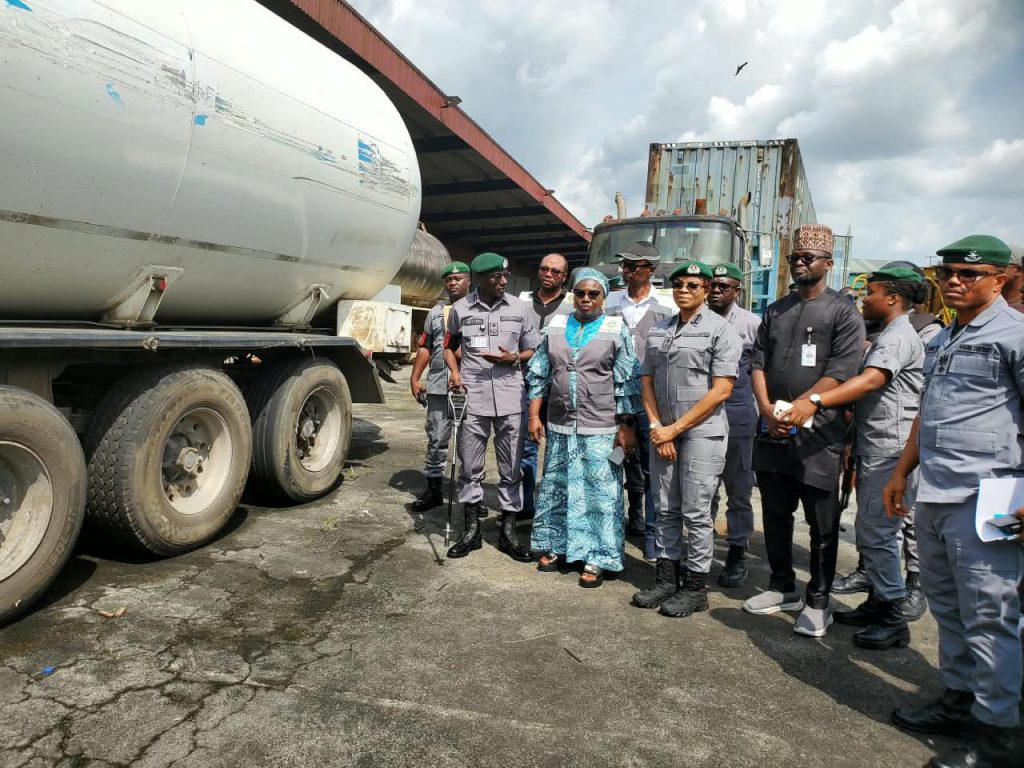
Nigeria Customs: Hands Over Seized LPG to NMDPRA Calabar
Summary
- The Nigeria Customs Service, through Operation Whirlwind, intercepted a truck carrying diverted Liquefied Petroleum Gas (LPG) in Calabar.
- The seized LPG-laden truck was subsequently handed over to the Nigerian Midstream and Downstream Petroleum Regulatory Authority (NMDPRA).
- This action highlights active enforcement against non-compliant petroleum product transportation.
- The incident underscores the importance of strict adherence to NMDPRA regulations and licensing requirements for LPG distribution.
Customs Intercepts Diverted LPG Shipment
This incident highlights the active enforcement by the Nigeria Customs Service and NMDPRA against non-compliant petroleum product transportation.
The Nigeria Customs Service, operating through its specialized unit, Operation Whirlwind, recently took action against an illicit petroleum product movement. On a recent Friday, the service successfully intercepted a truck in Calabar that was found to be transporting Liquefied Petroleum Gas (LPG) under circumstances indicating diversion from its intended route or authorized purpose. This interception underscores the ongoing efforts by regulatory bodies to curb unauthorized activities within the nation's energy sector.
Following the successful interception, the Nigeria Customs Service proceeded to formally hand over the seized LPG-laden truck to the Nigerian Midstream and Downstream Petroleum Regulatory Authority (NMDPRA). This transfer of custody to the NMDPRA in Calabar signifies a crucial step in addressing the regulatory breaches associated with the diverted cargo. The incident highlights the collaborative enforcement approach adopted by various government agencies to ensure compliance and maintain order in the distribution of vital energy resources.
Regulatory Oversight in Petroleum Distribution
The involvement of the Nigerian Midstream and Downstream Petroleum Regulatory Authority in this handover is particularly significant, as the NMDPRA is the primary body responsible for regulating the midstream and downstream petroleum operations in Nigeria. Their mandate includes ensuring adherence to licensing requirements, safety standards, and proper distribution channels for products like LPG. The term 'diverted' in this context typically implies a breach of these regulations, which could range from unauthorized routes to improper documentation or even attempts to circumvent taxation or quality controls.
This incident serves as a clear indicator of the active enforcement measures being undertaken by the NMDPRA, in conjunction with other security agencies, to monitor and control the movement of petroleum products. The regulatory framework governing LPG distribution is stringent, designed to prevent accidents, ensure fair market practices, and protect consumers. Any deviation from approved protocols can lead to severe consequences for operators, including the seizure of assets and potential legal action.
Implications for the Energy Sector
The Customs hands over seized LPG NMDPRA Calabar action sends a strong message to all stakeholders within the midstream and downstream petroleum sector regarding the imperative of strict compliance. The Nigeria Customs Service LPG seizure, executed by Operation Whirlwind, demonstrates that regulatory bodies are actively patrolling and enforcing the rules governing the transportation of sensitive commodities. Such interventions are critical for maintaining stability and integrity within the national energy supply chain.
This incident highlights the active enforcement by the Nigeria Customs Service and NMDPRA against non-compliant petroleum product transportation. Lawyers should advise clients in the midstream and downstream petroleum sector, particularly those involved in LPG distribution, to ensure strict adherence to NMDPRA regulations and licensing requirements to avoid seizures, penalties, and potential criminal charges. The NMDPRA Calabar LPG handover reinforces the need for companies to conduct thorough due diligence and maintain impeccable records for all their logistical operations to prevent similar enforcement actions.
Practical Implications
This incident highlights the active enforcement by the Nigeria Customs Service and NMDPRA against non-compliant petroleum product transportation. Lawyers should advise clients in the midstream and downstream petroleum sector, particularly those involved in LPG distribution, to ensure strict adherence to NMDPRA regulations and licensing requirements to avoid seizures, penalties, and potential criminal charges.
Source
How does this affect you?
Get an AI analysis of this article grounded in your jurisdictions, practice areas, and any policy documents you've uploaded to Wansom.
Wansom is AI and can make mistakes.