
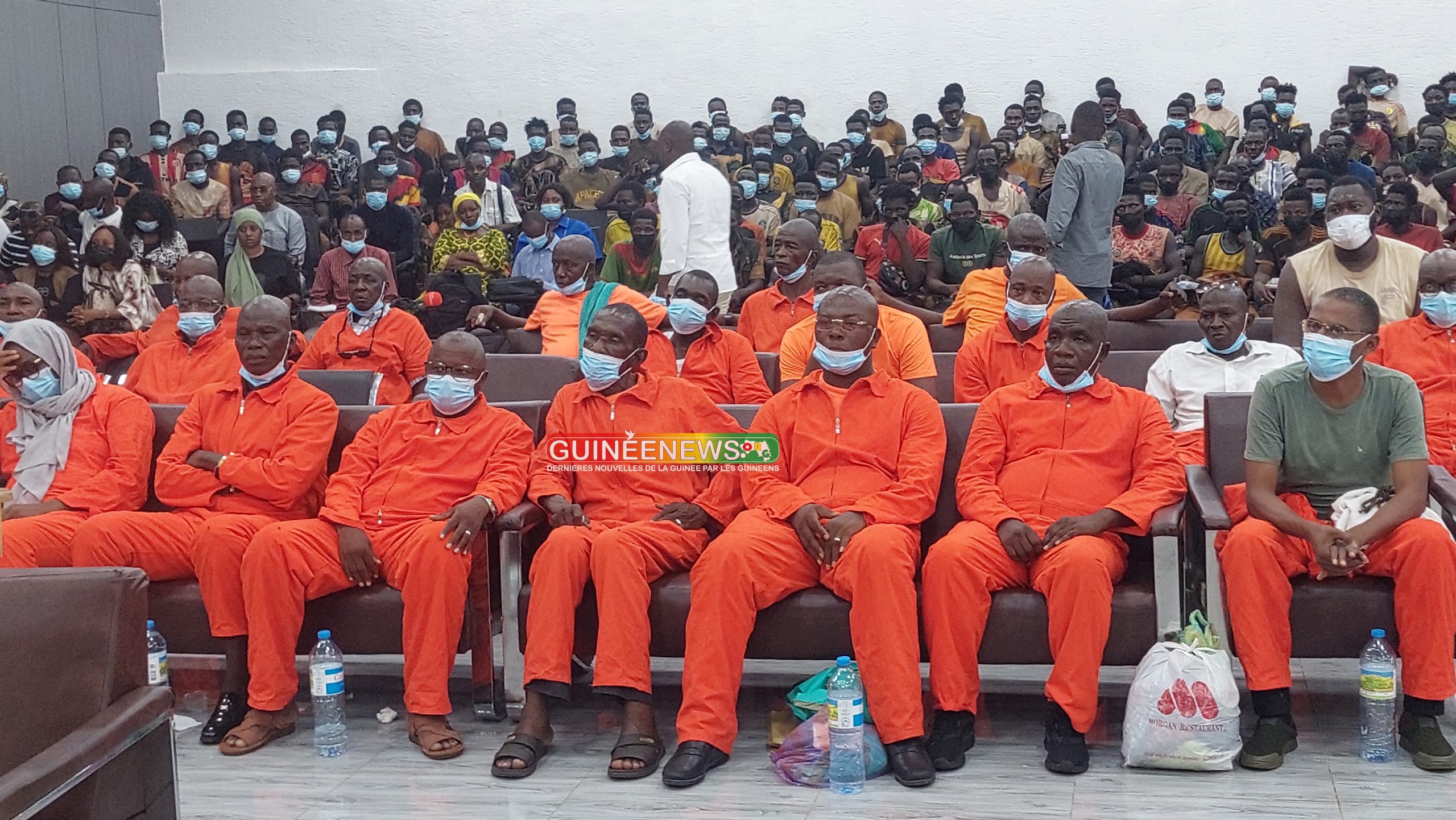
CRIEF: 22 Administrators' Trial Continues; Panners' Absence Justified
On Monday, November 16, 2026, in Guinea, the trial of 22 territorial administrators accused of illegal gold panning activities in Siguiri continued before the judgment chamber of the Court for the Repression of Economic and Financial Offenses (CRIEF), notably without the presence of 222 previously arrested gold panners whose cases remain pending. The absence of these 222 gold panners was attributed by Special Prosecutor Alphonse Charles Wright to health considerations, specifically a concern for public health due to defendants suffering from coughs, necessitating their return to their respective countries. The president of the judgment chamber, Alpha Camara, also cited diplomatic considerations for their repatriation. Despite their physical absence, the cases against these 222 individuals remain active before the court, while the 22 administrators, including a governor, prefects, and sub-prefects, who have been in custody since November 6, 2026, were present to face charges of corruption of public officials, illicit enrichment, money laundering, and complicity in environmental degradation, destruction, and water pollution. The current hearing was dedicated to the public prosecutor's requisitions and the defense's pleadings.
This development holds significant legal implications, showcasing the complex interplay between judicial proceedings, public health concerns, and international relations within Guinea's legal framework. The CRIEF, a specialized court designed to combat serious economic and financial crimes, demonstrates its capacity to handle high-profile cases involving public officials and substantial environmental ramifications. The decision to release the 222 gold panners on health and diplomatic grounds, while maintaining their pending cases, raises important questions about procedural flexibility, the practicalities of prosecuting large groups of foreign nationals, and the balance between judicial efficiency and humanitarian considerations. It also underscores the Guinean judiciary's approach to managing public health risks within the courtroom, potentially setting a precedent for future mass trials. The charges against the administrators—corruption, illicit enrichment, money laundering, and environmental complicity—fall squarely within the CRIEF's mandate, reflecting Guinea's commitment to tackling governance issues and environmental crimes, particularly in the lucrative but often unregulated mining sector.
Key parties involved in this ongoing legal battle include the Court for the Repression of Economic and Financial Offenses (CRIEF), specifically its judgment chamber presided over by Alpha Camara, and the Public Prosecutor's Office, represented by Special Prosecutor Alphonse Charles Wright. The defendants are 22 territorial administrators, including high-ranking officials such as Colonel Fadjimba Mara (prefect, interim governor of Siguiri), Lieutenant-colonel Pépé Doualamou (sub-prefect), and various other prefects and sub-prefects listed in the article. Additionally, 222 gold panners, whose cases are pending, are also key parties, despite their current absence from court. The jurisdiction is Guinea, with the alleged offenses centered in the Siguiri region, a significant area for gold mining. Practitioners in Guinea, especially those dealing with economic crimes, environmental law, or public administration, should closely monitor the outcome of this trial, as it could establish significant precedents regarding the prosecution of public officials for corruption and environmental offenses. The handling of the absent gold panners also provides insight into the court's flexibility in managing complex multi-defendant cases involving foreign nationals and public health considerations. Businesses operating in the mining sector should take note of the stringent enforcement against illegal gold panning and associated corruption, reinforcing the need for robust compliance frameworks and ethical conduct to mitigate legal and reputational risks. The outcome of this matter is not yet reported, as the trial is ongoing with the public prosecutor's requisitions and defense pleadings.
How does this affect you?
Get an AI analysis of this article grounded in your jurisdictions, practice areas, and any policy documents you've uploaded to Wansom.
Finish Reading the Full Story and the Expert Analysis.
Get the latest legal & regulatory intelligence in Guinea
Wansom is AI and can make mistakes.