
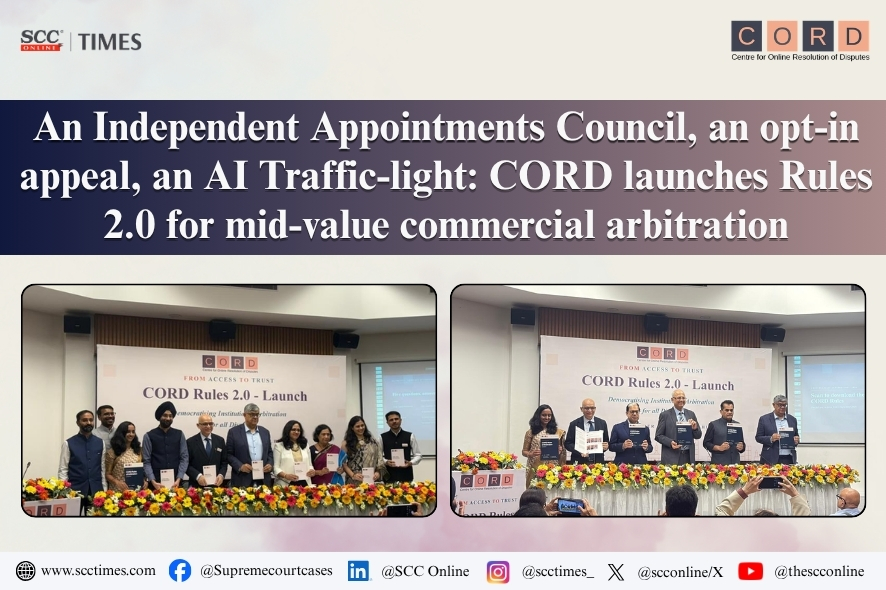
CORD: Launches CORD Rules 2.0 Integrating AI for India Arbitration
Summary
- CORD has launched its updated Rules 2.0 for mid-value commercial arbitration in India.
- The new framework includes a tiered fee schedule and an independent appointments council for arbitrators.
- Provisions for daily costs for missed deadlines aim to enhance procedural efficiency.
- A key innovation is an opt-in appellate mechanism, allowing parties to agree to an appeal process.
- CORD Rules 2.0 introduces a traffic-light practice note to govern the use of artificial intelligence in arbitration.
Introduction to CORD Rules 2.0
This development positions India at the forefront of integrating AI into dispute resolution, offering a blueprint for future advancements.
The Centre for Online Resolution of Disputes (CORD) has unveiled its updated framework, CORD Rules 2.0, specifically designed to govern mid-value commercial arbitration proceedings in India. This significant revision introduces a suite of new mechanisms aimed at enhancing the efficiency, transparency, and adaptability of dispute resolution within this crucial economic segment. The launch marks a pivotal moment for stakeholders involved in commercial disputes, offering a more structured and technologically informed approach to arbitration.
This new iteration of rules addresses several key areas, from fee structures to the appointment of arbitrators, and critically, integrates provisions for technological advancements and appellate review. The comprehensive nature of CORD Rules 2.0 reflects an evolving landscape where speed, cost-effectiveness, and fairness are paramount in resolving business disagreements.
Core Enhancements for Efficiency and Fairness
Among the foundational changes introduced by CORD Rules 2.0 is a refined tiered fee schedule, which aims to provide greater clarity and predictability regarding the costs associated with arbitration. This structured approach to fees is intended to make the process more accessible and transparent for parties engaged in CORD mid-value commercial arbitration.
Further bolstering the integrity and impartiality of the arbitration process, the new framework establishes an independent appointments council. This council is tasked with overseeing the selection and appointment of arbitrators, thereby minimizing potential biases and ensuring that qualified and neutral individuals preside over cases. This move is crucial for maintaining trust in the arbitration system.
To combat delays and promote timely resolution, CORD Rules 2.0 also incorporates provisions for daily costs to be levied for missed deadlines. This measure serves as a strong incentive for parties and their representatives to adhere strictly to procedural timelines, fostering a more disciplined and expedited arbitration environment.
Integrating Technology and Appellate Review
Perhaps the most forward-looking aspects of CORD Rules 2.0 are its provisions concerning artificial intelligence and an innovative appellate mechanism. The framework introduces a dedicated traffic-light practice note specifically governing the use of AI in arbitration. This guidance aims to provide clear parameters for how AI tools can be ethically and effectively deployed, ensuring that technological integration enhances rather than compromises the fairness and integrity of proceedings. This development positions India at the forefront of integrating AI into dispute resolution, offering a blueprint for future advancements.
Additionally, the new rules present an opt-in appellate mechanism, a significant departure from traditional arbitration models where appeals are often limited or non-existent. This arbitration opt-in appeal mechanism allows parties to agree beforehand to a structured review process, providing an additional layer of scrutiny and recourse for decisions rendered under CORD Rules 2.0. This optional appeal pathway offers greater flexibility and confidence for businesses considering arbitration as their preferred dispute resolution method, addressing a common concern about the finality of arbitral awards.
Practical Implications
Lawyers and compliance officers involved in commercial arbitration in India must familiarize themselves with CORD Rules 2.0, particularly the new AI traffic-light practice note and opt-in appeal mechanism, to ensure compliance and strategically advise clients on dispute resolution processes and potential appeals.
Source
Source: Original reporting via SCC Times
How does this affect you?
Get an AI analysis of this article grounded in your jurisdictions, practice areas, and any policy documents you've uploaded to Wansom.
Finish Reading the Full Story and the Expert Analysis.
Get the latest legal & regulatory intelligence in India
Wansom is AI and can make mistakes.