
Sahel AES: Conseil Régulateurs Sahel Création Unifies Telecom Law
Summary
- Regulatory authorities from Burkina Faso, Mali, and Niger signed a cooperation agreement on September 25, 2026, in Ouagadougou.
- This agreement led to the creation of the Conseil des régulateurs du Sahel (CRS), a permanent framework.
- The CRS aims to strengthen consultation and coordination among the three Alliance des États du Sahel (AES) member countries.
- The signatory bodies include ARCEP Burkina Faso, AMRTP Mali, and ARCEP Niger.
Sahel Nations Establish New Telecom Regulatory Body
The newly formed Conseil des régulateurs du Sahel (CRS) is designed as a permanent structure.
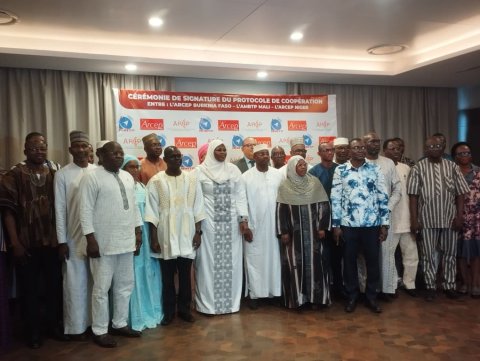
Regulatory authorities overseeing electronic communications in Burkina Faso, Mali, and Niger have officially established a new regional framework, the Conseil des régulateurs du Sahel (CRS). This significant development occurred with the signing of a cooperation agreement on Friday, September 25, 2026, during a ceremony held in Ouagadougou. The creation of the CRS marks a concerted effort by the three nations, all members of the Alliance des États du Sahel (AES), to foster closer collaboration in the telecommunications sector.
The newly formed Conseil des régulateurs du Sahel (CRS) is designed as a permanent structure. Its primary objective is to enhance consultation and coordination among the regulatory bodies of the participating countries. This initiative underscores a commitment to a unified approach to telecommunications governance within the AES zone, aiming to address shared challenges and opportunities in the rapidly evolving digital landscape. The establishment of this body represents a concrete step towards regional integration in a critical infrastructure sector.
Foundational Agreement and Member Regulators
The cooperation agreement, which formally brought the CRS into existence, was signed by key national regulatory agencies. These include ARCEP Burkina Faso, the authority responsible for electronic communications regulation in Burkina Faso; AMRTP Mali, the Malian regulatory body for telecommunications and postal services; and ARCEP Niger, the regulatory agency for electronic communications and postal services in Niger. Their collective action through this `Convention de coopération télécommunications AES` signifies a shared vision for a more integrated and harmonized regulatory environment across the Sahel.
This collaborative effort is set against the broader backdrop of the Alliance des États du Sahel (AES), an alliance formed with a focus on various aspects of regional cooperation, including security. The establishment of the `CRS Sahel regulatory body` reflects a recognition that robust and coordinated telecommunications infrastructure and regulation are integral to the overall stability and development objectives of the member states. The permanent nature of the framework suggests a long-term commitment to `Sahel telecom regulation cooperation`.
Implications for Regional Telecom Governance
The formation of the Conseil des régulateurs du Sahel (CRS) is poised to have substantial implications for `Burkina Faso Mali Niger telecom law` and regulatory practices. By creating a permanent platform for dialogue and joint action, the CRS could lead to the harmonization of regulatory standards, policies, and enforcement mechanisms across the three countries. This could streamline operations for telecommunications companies and digital service providers operating within the `Alliance États du Sahel telecommunications` market, potentially reducing compliance complexities and fostering a more consistent investment climate.
Furthermore, the enhanced coordination facilitated by the CRS could enable more effective responses to cross-border challenges, such as spectrum management, consumer protection, and cybersecurity threats. The collective expertise and resources of ARCEP Burkina Faso, AMRTP Mali, and ARCEP Niger, channeled through this new body, are expected to strengthen the overall regulatory oversight and promote the development of a resilient and interconnected digital economy across the Sahel region. This move signals a strategic shift towards a more unified regulatory front within the AES.
Practical Implications
Lawyers advising telecommunications companies or digital service providers in Burkina Faso, Mali, and Niger should closely monitor the newly formed Conseil des régulateurs du Sahel (CRS) for potential harmonized regulations, joint enforcement actions, or new regional policies. This body could introduce significant changes to compliance obligations and market strategies for clients operating within the AES zone.
Source
How does this affect you?
Get an AI analysis of this article grounded in your jurisdictions, practice areas, and any policy documents you've uploaded to Wansom.
Finish Reading the Full Story and the Expert Analysis.
Get the latest legal & regulatory intelligence in Burkina Faso
Wansom is AI and can make mistakes.