
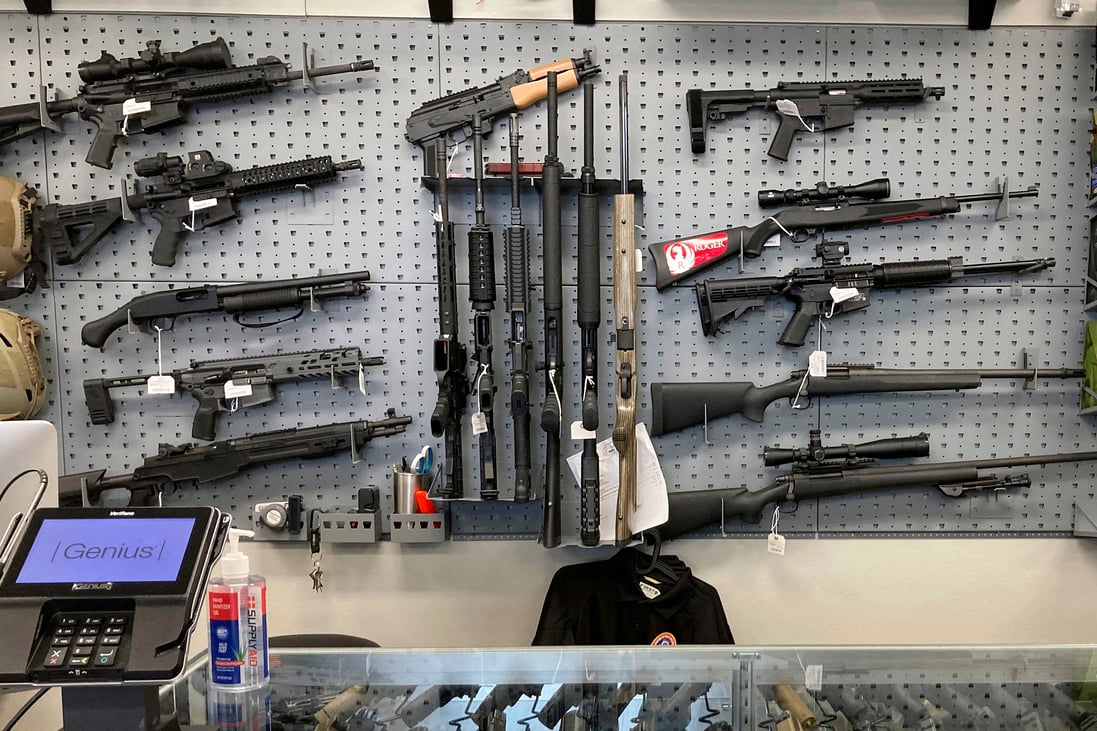
Federal Judge Martinez: Colorado Assault Rifle Restrictions Enforcement Can Proceed
Summary
- A federal judge has denied a request to block the enforcement of Colorado's new gun law, SB25-3.
- The law restricts semi-automatic firearm ownership and bans rapid-fire devices, requiring a safety course for purchasers.
- Judge William Martinez ruled that plaintiffs were unlikely to succeed on their Second Amendment challenge, citing a lack of evidence for common use in self-defense.
- The Colorado gun safety course requirement mandates sheriff-verified instructors and statewide recording of exam results.
- First-time violators face a Class 2 misdemeanor, with subsequent offenses escalating to a Class 6 felony.
Federal Judge Upholds Colorado Gun Law
Judge Martinez ultimately concluded that the plaintiffs failed to establish a substantial likelihood of success on the merits of their Second Amendment claim, specifically finding that they did not demonstrate that "law-abiding citizens commonly use specified semiautomatic firearms today for self-defense."
A federal judge recently rejected a request from gun owners to halt the implementation of a Colorado statute that places significant restrictions on firearms. Senior U.S. District Judge William Martinez, an appointee of former President Barack Obama, issued a 35-page opinion denying the plaintiffs' motion to block the enforcement of the state's new gun law. This ruling means that the Colorado assault rifle restrictions enforcement can proceed as planned, despite ongoing legal challenges.
The legislation, known as SB25-3, or the "Act Concerning the Prohibition of Certain Semiautomatic Firearms and Rapid-Fire Devices," became effective in August. It specifically targets rapid-fire devices and limits the ownership of semi-automatic rifles to individuals who have successfully completed a mandatory safety course. The legal action was initiated by six individuals and the Colorado State Shooting Association, who filed suit against Governor Jared Polis and Attorney General Philip Weiser, both members of the Democratic party. Weiser, who was a key defendant in the case, is term-limited and did not seek re-election as Attorney General in the November 3, 2026 election. Jena Griswold was elected as the new Attorney General for Colorado.
Second Amendment Challenge Fails Initial Test
Central to the plaintiffs' argument for a preliminary injunction was a Second Amendment challenge, referencing the 2022 U.S. Supreme Court decision in *New York State Rifle & Pistol Association v. Bruen*. Under the two-step framework established by *Bruen*, plaintiffs must first demonstrate that their conduct falls within the scope of the Second Amendment's protection. If that threshold is met, the government then bears the burden of proving that its regulation aligns with the historical tradition of firearm regulation in the nation.
The gun owners contended that semi-automatic rifles are commonly used and thus protected by the Second Amendment, citing precedent from the Third Circuit. However, the state countered by pointing to rulings from the Fourth and Seventh Circuits, which have characterized the AR-15 as a combat rifle unsuitable for self-defense and therefore outside the Second Amendment's purview. Judge Martinez ultimately concluded that the plaintiffs failed to establish a substantial likelihood of success on the merits of their Second Amendment claim, specifically finding that they did not demonstrate that "law-abiding citizens commonly use specified semiautomatic firearms today for self-defense." This Colorado SB25-3 ruling highlights the ongoing judicial interpretation of gun rights.
Judge Martinez further elaborated on his decision, noting that these semi-automatic firearms are "particularly devastating to living tissue" and frequently employed in mass shootings. He also found limited evidence to support their necessity as weapons for civilian self-defense. Because the plaintiffs did not satisfy the initial step of the *Bruen* test, Judge Martinez did not proceed to evaluate whether the Colorado semi-automatic firearm ban was consistent with historical firearm regulations. The U.S. Supreme Court is anticipated to address the existing circuit split on this issue in its current term.
New Requirements for Semi-Automatic Firearm Ownership
The Colorado gun law imposes specific new requirements for individuals seeking to purchase a semi-automatic weapon. Prospective owners must now complete a hunter education class, which includes either a four-hour safety course or an extended 12-hour class conducted over two days. This Colorado gun safety course requirement is a cornerstone of the new legislation.
Furthermore, these classes must be taught by an instructor verified by a county sheriff, and the results of the final examination are to be recorded in a statewide database. While sheriffs are generally mandated to issue an eligibility card upon successful completion of the coursework, they retain the discretion to deny a card if they possess a "reasonable belief that the documented previous behavior by the applicant makes it likely the applicant will present a danger to themselves or others." Violators of the law face a Class 2 misdemeanor for a first offense, with subsequent infractions escalating to a Class 6 felony. The plaintiffs, represented by the Mountain States Legal Foundation and First & Fourteenth, had also raised concerns about the financial and time burdens associated with complying with these new regulations, in addition to the implementation responsibilities placed on county sheriffs.
Why the Ruling Matters
The decision by Judge William Martinez to allow the Colorado semi-automatic firearm ban and associated restrictions to proceed marks a significant moment for gun control advocates in the state. The judge explicitly stated that the balance of equities and public interest weighed in favor of the defendants, underscoring the court's view on the societal benefits of the law. This ruling provides immediate clarity regarding the enforceability of these new provisions, requiring gun owners and sellers to comply with the updated regulations.
For legal professionals advising clients on firearms ownership or sales in Colorado, this ruling confirms the immediate enforceability of the new restrictions on semi-automatic firearms and the mandatory safety course requirements. Despite the ongoing Second Amendment challenge Colorado faces, the law is now in effect, and compliance is mandatory. The Supreme Court's eventual resolution of the circuit split on semi-automatic weapons will undoubtedly have long-term implications, but for now, Colorado's law stands.
Practical Implications
Lawyers advising clients in Colorado on firearms ownership or sales must now ensure compliance with the state's new restrictions on semi-automatic firearms and mandatory safety course requirements, as a federal judge has cleared the law for enforcement. This ruling provides clarity on the immediate enforceability of these provisions, despite ongoing Second Amendment challenges.
Source
How does this affect you?
Get an AI analysis of this article grounded in your jurisdictions, practice areas, and any policy documents you've uploaded to Wansom.
Wansom is AI and can make mistakes.