
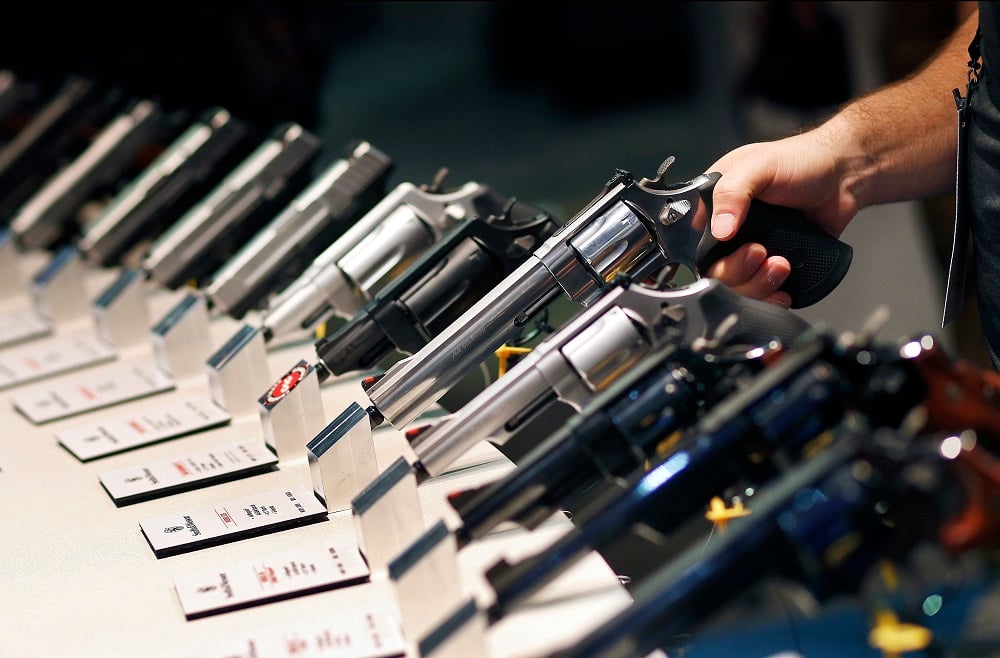
Federal Judge Hears Colorado 3-Day Firearm Waiting Period Challenge
Summary
- Second Amendment advocates are challenging Colorado's 3-day firearm waiting period law in federal court.
- Plaintiffs, Rocky Mountain Gun Owners and Alicia Garcia, argue the law is unconstitutional, citing recent Supreme Court and 10th Circuit rulings.
- The state of Colorado defends the law, distinguishing it from other invalidated waiting periods and arguing it aligns with federal background check timelines.
- Senior U.S. District Judge John Kane is presiding over the case and is expected to issue a thorough decision.
- The outcome will significantly impact firearm acquisition rights in Colorado and could influence similar laws elsewhere.
The Challenge Unfolds
He questioned how a right to possess arms could exist without a corresponding right to acquire them in the first place, directly addressing the Second Amendment Colorado firearm acquisition aspect.
Second Amendment advocates recently presented their case to a federal judge, seeking to overturn Colorado's law mandating a three-day waiting period between the purchase and acquisition of a firearm. The legal challenge, spearheaded by the Rocky Mountain Gun Owners (RMGO) advocacy group and individual plaintiff Alicia Garcia, known as "Boomstick Babe," argues that this waiting period infringes upon constitutional rights. Their lawsuit against the state of Colorado was initially filed in October 2023, aiming to prevent the law from taking effect.
Senior U.S. District Judge John Kane is presiding over the case in Denver. He had previously denied a request for a preliminary injunction against the waiting period. Although Garcia initially appealed this denial to the 10th Circuit in 2024, she subsequently withdrew that appeal, leaving the current proceedings before Judge Kane as the primary battleground for the Colorado 3-day firearm waiting period challenge.
Precedent and Principles
Central to the plaintiffs' arguments is the evolving landscape of Second Amendment jurisprudence, particularly following the U.S. Supreme Court's landmark 2022 decision in *New York State Rifle & Pistol Association, Inc. v. Bruen*. This ruling established a new standard, requiring that any new gun restrictions be grounded in historical law and tradition. Attorney Michael McCoy, representing RMGO and Garcia, contended that the government cannot disarm individuals based on a presumption of dangerousness.
McCoy highlighted several recent rulings he believes support their position. He cited *Wolford v. Lopez*, a Hawaii case that, according to McCoy, called into question any period of separation between a gun and its owner. He referenced Justice Samuel Alito's lament in a 6-3 Supreme Court opinion regarding the unconstitutional burden of a gun owner being separated from their firearm for even a single lunch hour, arguing that a three-day waiting period imposes a far greater burden. McCoy asserted that *Wolford* demonstrates a low bar for challenging restrictions that impede firearm acquirement. Furthermore, McCoy pointed to the high court's 2026 decision in *U.S. v. Hemani*, which found that the government cannot broadly deny gun rights to casual cannabis users. He also referenced the 10th Circuit's decision in *Ortega v. Grisham*, which invalidated New Mexico's seven-day waiting period for firearm acquisition, suggesting these cases provide clear guidance for the Colorado gun waiting period constitutionality debate.
Competing Interpretations
State attorney Joseph Michaels, representing Colorado, urged Judge Kane to uphold his earlier finding that the Centennial State's waiting period withstands scrutiny, even in light of the *Ortega* and *Wolford* decisions. Michaels argued that Colorado's law aligns with federal background check timelines, posing the question: "If a three-day background check is constitutional, how can a three-day waiting period not be?" He emphasized key distinctions between Colorado's and New Mexico's laws. The Colorado statute applies solely to buyers, whereas New Mexico's law also restricted sellers. Additionally, Michaels noted that New Mexico's law included more exceptions, leading to uneven application, unlike Colorado's more uniform approach.
Regarding the *Wolford* precedent, Michaels contended that the Supreme Court's decision pertained to a law limiting access to a firearm an individual already owned, rather than a future acquisition. He argued that the act of "acquiring" a firearm occurs before one comes into possession, thereby separating it from the constitutional right to "have and bear arms." In rebuttal, McCoy dismissed the state's argument as "ridiculous," challenging the notion that obtaining and possessing firearms could be distinct rights. He questioned how a right to possess arms could exist without a corresponding right to acquire them in the first place, directly addressing the Second Amendment Colorado firearm acquisition aspect.
The Path Forward
Senior U.S. District Judge John Kane, a Jimmy Carter appointee, listened attentively to both sides during the recent arguments, taking notes without interruption. While he did not specify when or how he would render his decision in the *Wolford v Lopez impact Colorado* case, he assured all parties that his ruling would be thorough. The forthcoming decision by Judge Kane on the Colorado 3-day firearm waiting period challenge is highly anticipated, as it will clarify the legal standing of such regulations within the state and could influence similar legislative efforts nationwide. This ruling, particularly in light of the precedents set by *Ortega v Grisham Colorado gun law* and other recent Second Amendment cases, will have significant implications for gun owners, sellers, and legal practitioners advising on firearm acquisition rights in Colorado.
Practical Implications
Lawyers advising clients on firearm sales, acquisition, or Second Amendment rights in Colorado should closely monitor Judge Kane's forthcoming decision on the 3-day waiting period, as it will clarify the legal standing of such regulations and could influence similar laws in other states. The ruling will directly impact compliance obligations and potential litigation strategies for gun owners and sellers, particularly in light of recent Supreme Court and Circuit Court precedents cited.
Source
How does this affect you?
Get an AI analysis of this article grounded in your jurisdictions, practice areas, and any policy documents you've uploaded to Wansom.
Wansom is AI and can make mistakes.