
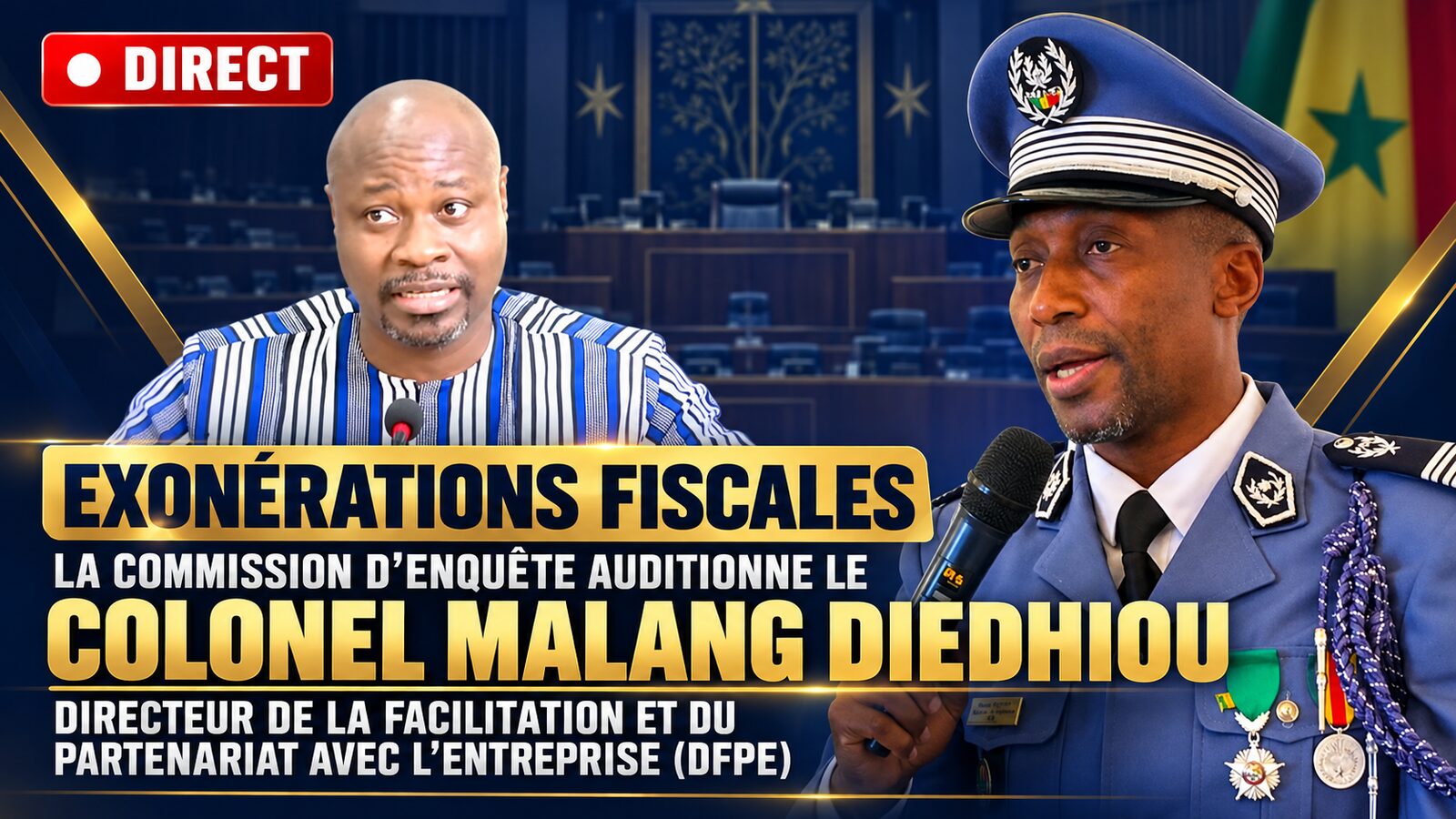
Colonel Malang Diedhiou Audition: Exonérations Fiscales Inquiry in Sénégal
Summary
- Colonel Malang Diedhiou was recently auditioned live by a parliamentary commission investigating tax exemptions in Senegal.
- This audition is part of an ongoing inquiry into fiscal matters, with no conclusions reported yet.
- The commission previously heard from Jean Koné, Director General of Taxes and Domains, on October 13, 2026.
- Other high-ranking officials are also scheduled to testify before the commission as part of its extensive review.
- The inquiry signals increased legislative scrutiny over Senegal's tax exemption policies and their implementation.
Ongoing Parliamentary Scrutiny
The ongoing "audit fiscal Sénégal" conducted by the parliamentary commission carries substantial implications for the nation's fiscal policy and future compliance requirements.
The parliamentary commission tasked with investigating tax exemptions in Senegal recently conducted a live hearing involving Colonel Malang Diedhiou. This public audition forms a critical part of the commission's extensive review into fiscal matters, specifically focusing on the framework and application of tax exemptions within the nation. The proceedings, which were broadcast live, underscore the transparency and seriousness with which this legislative body is approaching its mandate.
While the inquiry into Colonel Malang Diedhiou's involvement or knowledge regarding these exemptions is ongoing, no definitive conclusions have been released by the commission at this stage. Reports from Dakaractu confirm that the commission is actively gathering information from the colonel as part of its comprehensive investigation, indicating a methodical approach to understanding the intricacies of the country's tax exemption policies. This direct engagement with key figures is central to the commission's fact-finding mission.
Broader Context of the Tax Exemption Inquiry
The audition of Colonel Malang Diedhiou is not an isolated event but rather a continuation of a broader parliamentary effort to scrutinize the system of tax exemptions in Senegal. This "commission d'enquête exonérations fiscales Sénégal" has been systematically calling various high-ranking officials to provide testimony and insights. For instance, on October 13, 2026, the commission previously heard from Jean Koné, who serves as the Director General of Taxes and Domains, highlighting the wide scope of individuals and institutions under review.
The parliamentary agenda for this fiscal audit extends further, with several other prominent figures slated for appearances. Demba Dieng and Amadou Tidiane Gaye were anticipated to testify before the commission on October 15, 2026. Additionally, six other senior officials were expected to present themselves to the National Assembly on the same date, indicating a concerted push to gather comprehensive data and perspectives on the efficacy and fairness of the current "législation fiscale sénégalaise" concerning exemptions. This extensive series of hearings aims to build a complete picture of how tax benefits are granted and utilized across various sectors.
Beyond the specific inquiry into tax exemptions, the broader landscape of parliamentary oversight in Senegal has seen other significant actions. In a separate but related development, the parliamentary immunity of Farba Ngom was lifted on February 13, 2025, leading to his appearance before an ad hoc commission. While distinct from the tax exemption inquiry, this event signals a general trend of increased legislative scrutiny over public figures and governmental processes, reinforcing the importance of accountability within the Senegalese administrative and political spheres.
Implications for Fiscal Policy and Compliance
The ongoing "audit fiscal Sénégal" conducted by the parliamentary commission carries substantial implications for the nation's fiscal policy and future compliance requirements. The detailed examination of tax exemptions, exemplified by the audition of Colonel Malang Diedhiou and other officials, suggests a potential re-evaluation of existing statutes and their implementation. The findings from this inquiry could lead to significant adjustments in how tax benefits are administered, potentially impacting various entities that currently benefit from such provisions.
This heightened focus on tax exemptions signals a period of increased scrutiny over financial benefits previously granted. The commission's work, including its direct engagement with figures like Jean Koné, Director General of Impôts, is likely to inform future legislative reforms aimed at enhancing transparency and ensuring equitable application of the "législation fiscale sénégalaise". For businesses and individuals operating in Senegal, this could translate into stricter enforcement, revised eligibility criteria, or new reporting obligations, making it crucial to monitor the commission's progress and recommendations closely.
The ultimate outcome of this parliamentary inquiry into tax exemptions will undoubtedly shape the future direction of Senegal's tax framework. By thoroughly investigating the current system, the commission aims to identify areas for improvement, ensuring that tax benefits serve their intended purpose without creating loopholes or unintended consequences. This proactive approach to fiscal governance is vital for maintaining economic stability and fostering a fair and transparent financial environment across the country.
Practical Implications
Lawyers and compliance officers in Senegal should closely monitor the ongoing parliamentary inquiry into tax exemptions, as the findings and recommendations could lead to stricter enforcement, revised regulations, or new compliance requirements for entities currently benefiting from such exemptions. This signals increased scrutiny on tax benefits.
Source
How does this affect you?
Get an AI analysis of this article grounded in your jurisdictions, practice areas, and any policy documents you've uploaded to Wansom.
Finish Reading the Full Story and the Expert Analysis.
Get the latest legal & regulatory intelligence in Senegal
Wansom is AI and can make mistakes.