
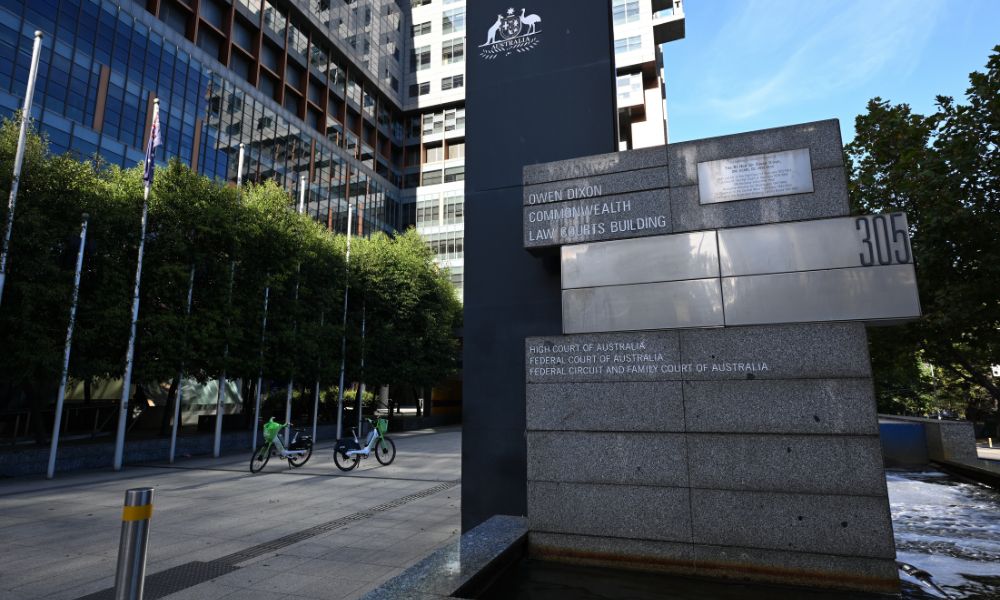
Federal Court: Colgrave Awarded Indemnity Costs After TT-Line Rejected Offer
Summary
- The Federal Court ordered TT-Line Company Pty Ltd to pay indemnity costs to Colgrave in Colgrave v TT-Line Company Pty Ltd (Costs) [2026] FCA 1462.
- This decision followed Colgrave achieving a more favorable judgment than an offer to compromise he made under Part 25 of the Federal Court Rules.
- Colgrave's offer proposed specific orders for the appeal, which aligned with the court's final substantive judgment.
- Rule 25.14(3) of the Federal Court Rules created a presumptive entitlement to indemnity costs after the offer was rejected and bettered.
- The court also refused TT-Line's request to stay the costs orders pending a foreshadowed appeal, citing a lack of evidence for prejudice or specific appeal grounds.
Case Background and Initial Claims
Lawyers advising clients in Federal Court litigation must carefully assess the strength of their case against the terms of any offer received, understanding that a misjudgment can lead to severe cost penalties.
The Federal Court of Australia recently addressed the issue of costs in the matter of Colgrave v TT-Line Company Pty Ltd (Costs) [2026] FCA 1462, ultimately directing the respondent to cover the applicant's legal expenses on an indemnity basis. This decision stemmed from a finding that the applicant had secured a more advantageous judgment than the terms outlined in an offer to compromise he had extended prior to the appeal hearing. The underlying substantive judgment had determined that compensation was due to the applicant under section 38(2) of the Seafarers Rehabilitation and Compensation Act 1992 (Cth). In that earlier ruling, the court had overturned a decision by the Administrative Review Tribunal and sent the case back for further review, specifically with instructions regarding the applicant's entitlement to compensation.
Initially, the applicant sought indemnity costs by arguing that the respondent had pursued a case that was clearly without merit and destined to fail. However, the court did not accept this argument. While the substantive judgment had indeed clarified that the proper interpretation of sections 38(1) and (2) was unambiguous, the court reasoned that the respondent's stance could not be retrospectively judged. It noted that the tribunal had previously endorsed the respondent's interpretation of the relevant legislation. Furthermore, the court considered that although the respondent had disregarded a recommendation from Comcare that reflected the correct statutory construction, this recommendation was not binding on the respondent and did not definitively prove that the respondent's competing interpretation was untenable.
The Offer to Compromise and Legal Framework
The applicant also presented an alternative argument for indemnity costs, which ultimately proved successful. This claim was based on an offer to compromise served on 17 June 2026, made under Part 25 of the Federal Court Rules 2011 (Cth). This specific offer proposed that the appeal be granted, the Administrative Review Tribunal's decision be vacated, and the matter be returned for reconsideration with a clear directive concerning section 38(1) of the Act. Crucially, the applicant also included a provision to pay the respondent's costs on a party and party basis as part of this proposal.
The court had previously declined to award indemnity costs based on an earlier settlement offer made while the dispute was still before the tribunal. That particular offer required the respondent to concede liability and cover the applicant's costs. The court concluded that the respondent's rejection of this earlier offer did not constitute unreasonable conduct in defending the subsequent Federal Court appeal. However, the later offer under Part 25 presented a different scenario, directly engaging the provisions designed to encourage early resolution of disputes.
Court's Reasoning and Outcome
Upon comparing the terms of the applicant's Part 25 offer with the final substantive orders issued by the court, it was evident that the judgment ultimately rendered was more favorable to the applicant than the terms he had proposed. The respondent, for its part, conceded that costs should generally follow the event, a standard principle in litigation.
Under Rule 25.14(3) of the Federal Court Rules, a presumptive entitlement arises for party and party costs up to a specific point, and for indemnity costs thereafter, when an offer to compromise is rejected and the offering party subsequently achieves a more favorable outcome. Specifically, this rule dictates that indemnity costs are payable from 11 a.m. on the second business day following the service of the offer. In this instance, the respondent failed to provide any valid justification for the court to deviate from this established presumption. Consequently, the court ordered the respondent to pay the applicant's costs on a party and party basis for the period before 11 a.m. on 19 June 2026, and on an indemnity basis for all costs incurred after that precise time. Furthermore, the court rejected the respondent's application to stay the costs orders, which was sought pending a foreshadowed appeal. The respondent had not presented any evidence or developed arguments to demonstrate potential prejudice or inconvenience if a stay were not granted, nor had it specified the grounds upon which its proposed appeal would be based.
Implications for Litigation Practice
This ruling underscores the critical importance for legal practitioners and their clients to meticulously evaluate offers to compromise, particularly those made under Part 25 of the Federal Court Rules. The decision in Colgrave v TT-Line Company Pty Ltd (Costs) [2026] FCA 1462 serves as a clear reminder that rejecting a reasonable offer, only for the offering party to achieve a more favorable result at judgment, carries significant financial risks. The imposition of indemnity costs, as seen in this case, substantially increases the financial burden on the unsuccessful party, moving beyond the standard party-and-party scale to cover a much larger proportion of the successful party's actual legal expenses.
Lawyers advising clients in Federal Court litigation must carefully assess the strength of their case against the terms of any offer received, understanding that a misjudgment can lead to severe cost penalties. The court's refusal to grant a stay on the costs orders further highlights the immediate and tangible consequences of such decisions, emphasizing that the financial implications of rejecting a Part 25 offer can be swift and difficult to mitigate. This case reinforces the strategic value of offers to compromise as a tool for dispute resolution and a mechanism for managing litigation risk in the Australian Federal Court system.
Practical Implications
Lawyers advising clients in Federal Court litigation must carefully evaluate offers to compromise made under Part 25 of the Federal Court Rules, as rejecting a reasonable offer that is subsequently bettered at judgment can lead to an order for indemnity costs, significantly increasing the client's financial exposure.
Source
How does this affect you?
Get an AI analysis of this article grounded in your jurisdictions, practice areas, and any policy documents you've uploaded to Wansom.
Finish Reading the Full Story and the Expert Analysis.
Get the latest legal & regulatory intelligence in Australia
Wansom is AI and can make mistakes.