
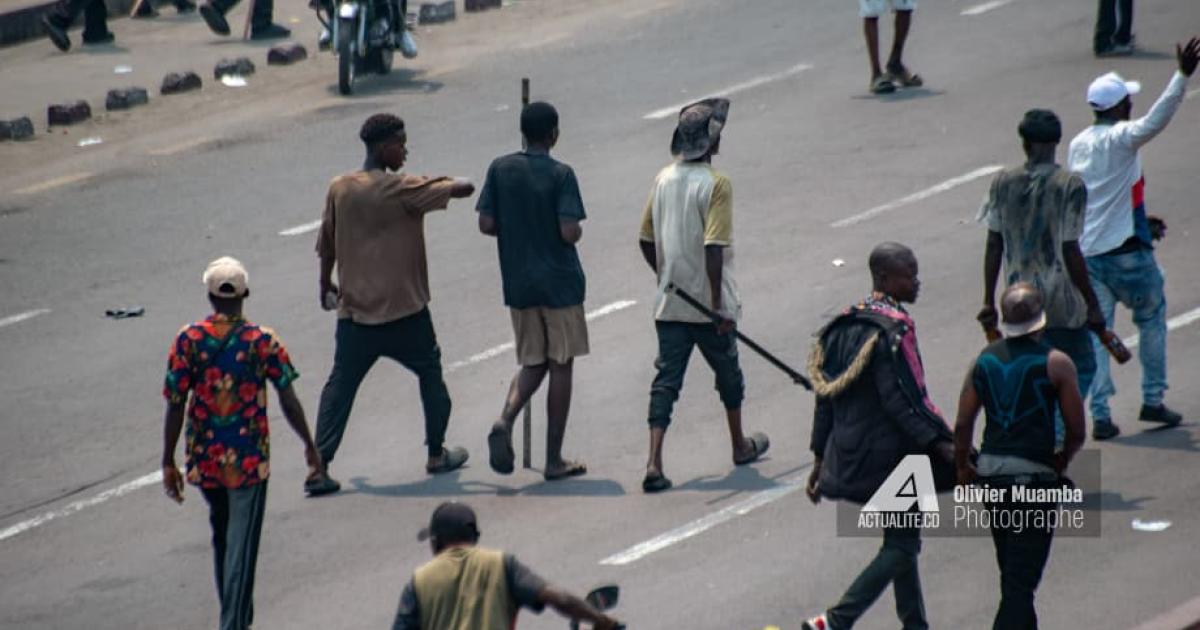
CNDH: Limete Opposition March Obstructed, Human Rights Violated
Summary
- An opposition march in Limete on Tuesday, September 15, was obstructed by individuals carrying bladed weapons.
- The Commission nationale des droits de l’homme (CNDH) deployed an observation mission to the protest.
- The CNDH formally noted that the actions of armed individuals constituted a human rights violation.
- The interference prevented the demonstration from progressing as planned.
- The CNDH's findings were reported by Friday, September 18, 2026.
Incident During Limete Opposition March
The CNDH's explicit finding of a human rights violation emphasizes the gravity of the situation, highlighting that the mere prevention of a march by armed individuals constitutes a serious breach of fundamental liberties rather than a simple public order issue.
An opposition march held in Limete on Tuesday, September 15, encountered significant disruption, as reported by the Commission nationale des droits de l’homme (CNDH). The demonstration, intended to proceed through the Limete area, was ultimately prevented from advancing due to the intervention of individuals carrying bladed weapons. This interference directly impacted the participants' ability to exercise their right to peaceful assembly and movement.
The presence of armed individuals at a political protest raises serious concerns regarding public order and the safety of citizens. The CNDH's observation highlights a direct impediment to the progression of the demonstration, underscoring the challenges faced by opposition movements in the region when attempting to organize public gatherings. The incident specifically involved the use of bladed weapons to obstruct the march, leading to a noted human rights violation.
CNDH's Observation and Findings
The Commission nationale des droits de l’homme (CNDH) deployed a dedicated observation and monitoring mission to the field on Tuesday, September 15, specifically to oversee the opposition march in Limete. This Congo human rights observation effort was undertaken to assess the conduct of the protest and any related incidents. The CNDH's mandate includes safeguarding human rights during public events, making its presence and subsequent report crucial for accountability.
Following its on-the-ground assessment, the CNDH formally noted a clear human rights violation. This finding, detailed in a Limete human rights report, specifically pointed to the actions of individuals equipped with bladed weapons who actively prevented the marchers from continuing their planned route. The CNDH's declaration underscores the severity of the incident and its implications for fundamental freedoms.
Nature of the Human Rights Violation
The CNDH's report on the Limete opposition march identifies the obstruction of the demonstration by individuals wielding bladed weapons as a direct infringement on human rights. Such actions, which involve the use of force or intimidation to suppress peaceful assembly, are contrary to international human rights standards. The ability of citizens to gather and express their views without fear of violence or arbitrary interference is a cornerstone of democratic societies.
This incident, involving bladed weapons at a political protest, signals a concerning escalation in tactics used to disrupt opposition activities. The CNDH's explicit finding of a human rights violation emphasizes the gravity of the situation, highlighting that the mere prevention of a march by armed individuals constitutes a serious breach of fundamental liberties rather than a simple public order issue.
Broader Implications for DRC Opposition Protests
The CNDH human rights Limete opposition march report carries significant weight, particularly in the context of ongoing DRC opposition protest violence. The official acknowledgment by a national human rights body that armed individuals impeded a peaceful demonstration underscores the challenges to political expression in the region. Such incidents can have a chilling effect on future protests, deterring citizens from participating due to safety concerns.
The findings by the Commission nationale des droits de l’homme RDC serve as a critical record of events, providing a basis for potential investigations and advocacy efforts. The report, published on Friday, September 18, 2026, brings attention to the need for authorities to ensure the protection of peaceful assemblies and to address the presence of armed elements at political gatherings. The CNDH's role in monitoring and reporting these violations is vital for promoting accountability and upholding human rights standards.
Practical Implications
This CNDH report on human rights violations during a political march, particularly involving armed individuals, signals potential avenues for human rights litigation or advocacy. Lawyers should monitor official responses and investigations into these incidents, and advise clients on the evolving public order and security risks in areas prone to such unrest.
Source
Source: Original reporting via PMaki
How does this affect you?
Get an AI analysis of this article grounded in your jurisdictions, practice areas, and any policy documents you've uploaded to Wansom.
Finish Reading the Full Story and the Expert Analysis.
Get the latest legal & regulatory intelligence in DR Congo
Wansom is AI and can make mistakes.