
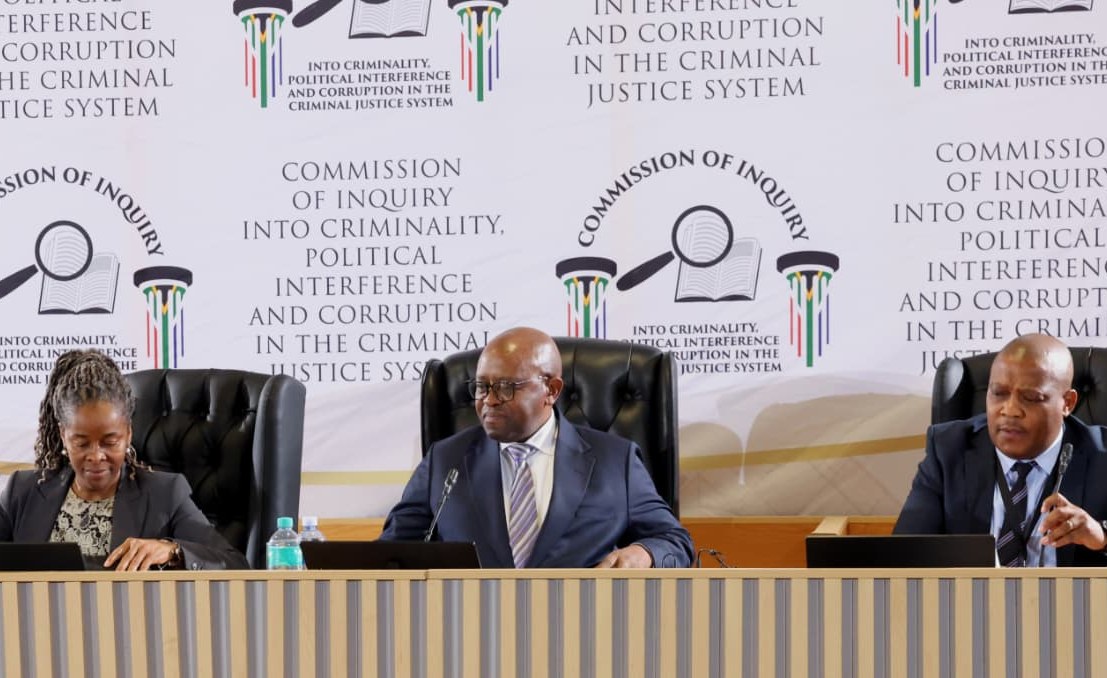
Madlanga Commission: Clive Naicker Drug Ring Inquiry Reveals Towing Scheme
Summary
- The Madlanga Commission is investigating allegations against Durban businessman Clive Naicker.
- Naicker is accused of using his towing, panel-beating, and taxi businesses for drug distribution and money laundering.
- Witness T claimed Naicker transported drugs like hunga capsules and crack cocaine using tow trucks to avoid detection.
- Clive Naicker has explicitly denied all accusations of involvement in drug trafficking.
The Inquiry Unfolds
The alleged integration of these drug-related activities with established businesses like towing, panel-beating, and taxi services highlights a common tactic used in organized crime to obscure illegal earnings.
The Madlanga Commission, a significant investigative body, has recently heard compelling testimony regarding alleged illicit activities involving Durban businessman Clive Naicker. These proceedings are part of a broader inquiry into serious criminal allegations, bringing to light claims that Naicker leveraged his seemingly legitimate commercial ventures—specifically his towing, panel-beating, and taxi operations—to facilitate extensive drug distribution networks and to systematically launder the substantial proceeds generated from these illegal enterprises. The gravity of these accusations underscores the commission's role in scrutinizing potential high-level criminal involvement within the business community.
A key witness, identified only as Witness T, presented detailed accounts to the commission, asserting Naicker's direct involvement in these criminal undertakings. According to Witness T's testimony, Naicker allegedly exploited his towing business infrastructure, utilizing tow trucks as a clandestine method for transporting narcotics. This alleged strategy was reportedly designed to circumvent law enforcement detection, allowing for the discreet movement of illicit substances across various locations. The inquiry is meticulously examining these claims to ascertain the full scope of the alleged drug ring.
Allegations of Illicit Operations
The specific nature of the drug allegations against the Durban businessman is particularly concerning, painting a picture of a sophisticated operation. Witness T informed the Madlanga Commission that Naicker was purportedly engaged in the distribution of "hunga capsules," a term often associated with illicit substances, and was also involved in the manufacturing of crack cocaine. These claims suggest a multi-faceted role in the drug trade, extending beyond mere distribution to include the production of highly addictive narcotics.
The alleged integration of these drug-related activities with established businesses like towing, panel-beating, and taxi services highlights a common tactic used in organized crime to obscure illegal earnings. The use of tow trucks, in particular, as a means of drug transport, as alleged in the Clive Naicker drug ring inquiry, points to an attempt to blend illicit logistics with everyday commercial operations, making detection more challenging for authorities. This method of operation is a central focus of the ongoing investigation.
Naicker's Denial and Legal Scrutiny
Despite the detailed allegations presented before the Madlanga Commission, Clive Naicker has vehemently denied any and all involvement in drug trafficking. His denial stands in stark contrast to the testimony provided by Witness T, setting up a critical point of contention within the inquiry. The commission is tasked with sifting through conflicting evidence and testimonies to establish the truth regarding the Durban businessman drug allegations.
The legal process unfolding at the Madlanga Commission is crucial for addressing serious claims of criminal conduct that could undermine public trust and economic integrity. The inquiry provides a formal platform for witnesses to present evidence and for individuals like Naicker to respond to the accusations leveled against them, ensuring due process in the investigation of the alleged South Africa drug trafficking activities.
Broader Implications for Illicit Finance
The allegations against Clive Naicker serve as a stark reminder of the persistent challenge posed by money laundering, particularly when it is intricately woven into the fabric of legitimate commerce. The reported use of a towing business for money laundering, alongside panel-beating and taxi services, illustrates how diverse sectors can be exploited to clean illicit funds derived from drug trafficking. This method allows criminals to obscure the origins of their wealth, making it appear as if it stems from legal business operations.
This case, part of the broader Clive Naicker drug ring inquiry, underscores the sophisticated methods employed by criminal organizations to integrate their illegal proceeds into the mainstream economy. It highlights the critical need for robust anti-money laundering frameworks and vigilant oversight within industries that are susceptible to such exploitation. The Madlanga Commission's investigation into these matters is vital for understanding and combating the complex financial structures that support South Africa drug trafficking.
Practical Implications
This report on the Madlanga Commission highlights the sophisticated methods used to launder proceeds from drug trafficking through seemingly legitimate businesses like towing, panel-beating, and taxi services. Compliance officers and legal counsel advising clients in the transport, automotive, or related financial sectors should review their anti-money laundering (AML) and anti-drug trafficking compliance frameworks, paying close attention to enhanced due diligence for business relationships that could be exploited for illicit activities.
Source
Source: Original reporting via SABC News
How does this affect you?
Get an AI analysis of this article grounded in your jurisdictions, practice areas, and any policy documents you've uploaded to Wansom.
Finish Reading the Full Story and the Expert Analysis.
Get the latest legal & regulatory intelligence in South Africa
Wansom is AI and can make mistakes.