
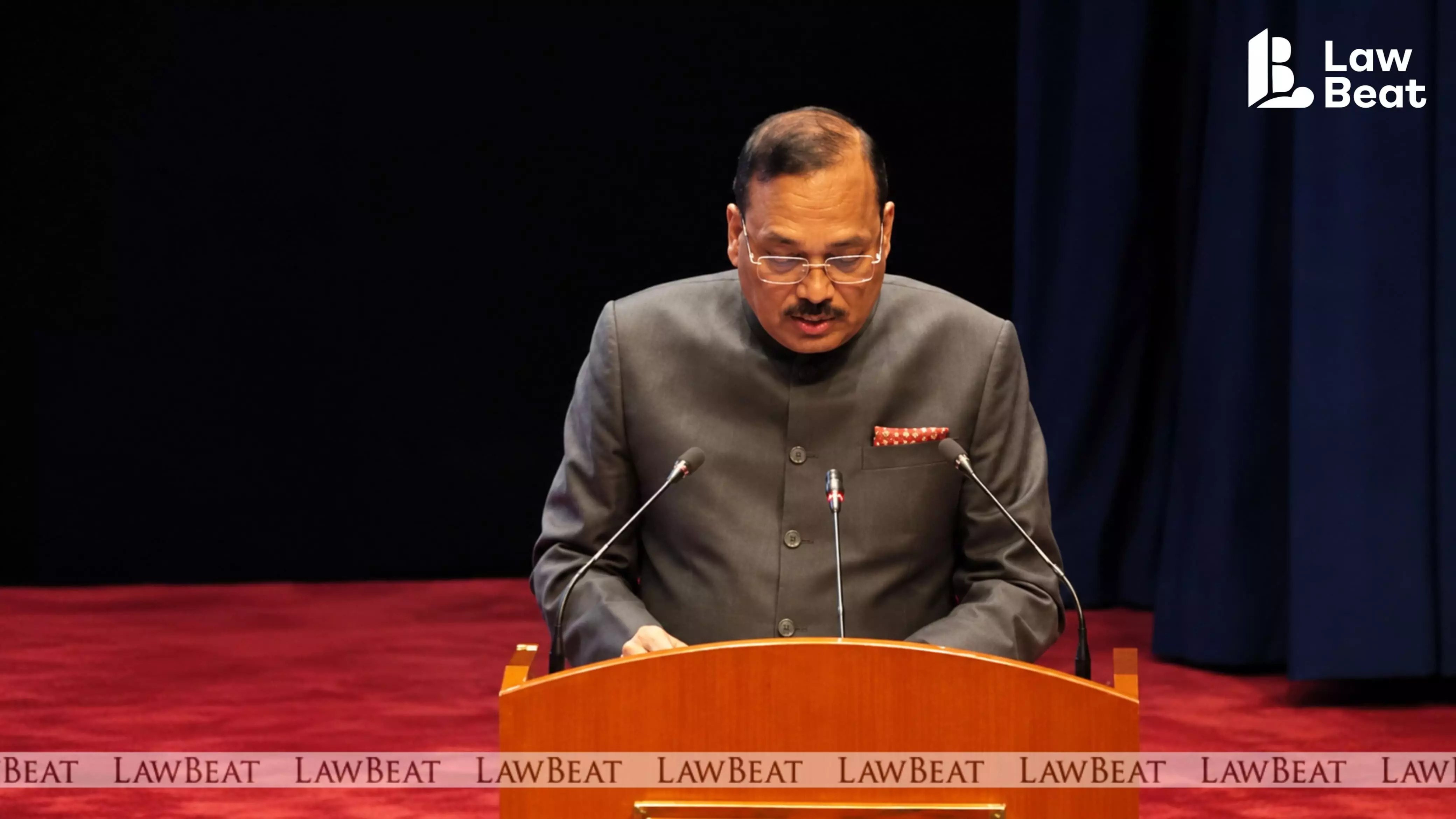
CJI Surya Kant: Supreme Court No Longer 'Court of Privileged'
Summary
- CJI Surya Kant declared that the era of the Supreme Court being a "court of the privileged" is now over, emphasizing that case listings are governed by system, not stature.
- He used the analogy of a pashmina shawl to describe the Court's jurisprudence, noting that historically, only those who could afford it truly benefited.
- The CJI acknowledged that for the wealthy, the Supreme Court was often a court of first resort, while for the majority, it remained revered but inaccessible.
- Public Interest Litigation (PIL), which began over four decades ago by accepting letters as petitions, was credited with initiating a significant change in access.
- CJI Surya Kant affirmed that all litigants, regardless of eminence, must now adhere to the same procedures and rules, making the Supreme Court truly "the people's court."
A Shift in Supreme Court Access
That era is now over, for even the most eminent among them must appear on exactly the same footing as a lawyer from a small town, bound by the same queue, the same clock, and the same rules.
Chief Justice of India Surya Kant recently delivered a significant address on Constitution Day, held on November 26, 2026, at the Supreme Court's Administrative Buildings Complex Auditorium in New Delhi, with the President of India in attendance. During his speech, the CJI declared a definitive end to what he termed the era of the "privileged handful" at the Supreme Court, asserting that case listings are now determined "by system rather than by stature." This statement signals a fundamental change in how the highest court in India approaches access to justice.
CJI Surya Kant employed a compelling analogy, comparing the Supreme Court's extensive body of jurisprudence to a pashmina shawl. He described this shawl as exquisitely fine, capable of passing through a finger ring, yet robust enough to provide warmth and shelter to the Republic. However, he critically observed that even such a precious garment could only protect those who could afford to wear it, highlighting a historical disparity in who could truly benefit from the Court's protection.
He candidly acknowledged that the Indian Supreme Court had, "not entirely without reason," been perceived as a "court of the privileged." This historical perception, he stressed, is now firmly in the past. His remarks underscore a commitment to making the Supreme Court more accessible and equitable for all citizens, moving away from a system where influence or wealth might have dictated the ease of navigating the judicial process.
Historical Disparities and Constitutional Ideals
The Chief Justice began his Constitution Day speech by invoking the Preamble's phrase, "give to ourselves," reflecting on the unique act where the people simultaneously became both the benefactors and beneficiaries of the Constitution. He further referenced a December 1946 speech by Smt. Hansa Mehta in the Constituent Assembly, where she articulated that Indian women sought not privileges, but rather social, economic, and political justice. This distinction, the CJI noted, is central to the Constitution's essence, which was designed as a covenant of justice for every citizen, not merely a charter of advantage for a select few.
CJI Surya Kant elaborated on his pashmina shawl analogy, noting that while no single judicial decision could have safeguarded the Republic, the cumulative effect of thousands of patiently crafted judgments had indeed achieved this. Yet, he posed a critical question: whether the justice dispensed by the Court had truly reached all its intended recipients, or if it had, at times, remained the exclusive domain of those already familiar with its corridors. He admitted that the answer to this question had not always been a comfortable one.
He observed that for individuals of substantial means, the Supreme Court occasionally functioned as a court of first resort, rather than a final appellate body, allowing them to initiate disputes at the earliest stages. Conversely, for the vast majority of the Indian populace, many of whom were in dire need of justice, the Court was revered from a distance but rarely accessed. This stark contrast underscored the historical barriers to justice that the CJI is now committed to dismantling.
The Transformative Role of Public Interest Litigation
The Chief Justice credited Public Interest Litigation (PIL) with initiating a significant transformation in the Supreme Court's accessibility, a change that began more than four decades ago. This pivotal shift occurred when the Court started accepting ordinary letters and postcards as formal petitions, effectively lowering the entry barrier for those seeking judicial intervention. He cited a powerful example where a single letter, written on behalf of bonded laborers in the stone quarries of Faridabad, was sufficient to secure their freedom, illustrating the profound impact of this new approach.
While acknowledging that this jurisdiction has, at times, faced abuse and misuse, CJI Surya Kant emphasized that PIL taught the institution a crucial lesson: its strength derives as much from the doors it keeps open as from the specific legal questions it resolves. This mechanism broadened the scope of access to justice in India, allowing marginalized communities to bring their grievances directly to the highest court.
However, the CJI stressed that merely opening doors is insufficient if a privileged few continue to bypass the established process. He asserted that this era of preferential treatment is unequivocally over. He declared that even the most prominent individuals must now approach the Court on an equal footing with a lawyer from a small town, subject to the same queue, the same time constraints, and the same procedural rules. This leveling of the playing field, he concluded, is what has truly transformed the Supreme Court into "the people's court."
Practical Implications
Lawyers should note the Chief Justice's explicit declaration of an end to the 'court of the privileged' era, implying a more equitable and system-driven approach to case listing and access to justice at the Supreme Court of India. This shift may impact strategic litigation decisions, particularly for clients who historically faced barriers to accessing the highest court, and reinforces the importance of Public Interest Litigation as a mechanism for broader access.
Source
Source: Original reporting via LiveLaw
How does this affect you?
Get an AI analysis of this article grounded in your jurisdictions, practice areas, and any policy documents you've uploaded to Wansom.
Finish Reading the Full Story and the Expert Analysis.
Get the latest legal & regulatory intelligence in India
Wansom is AI and can make mistakes.