
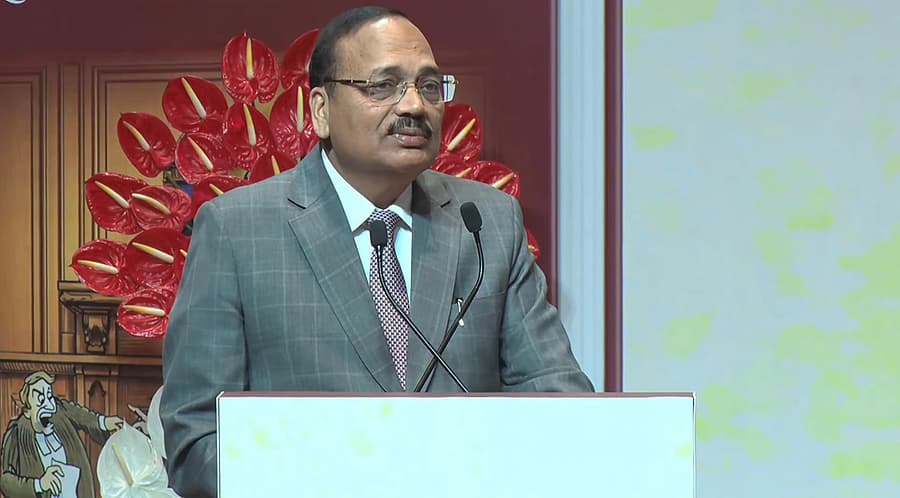
CJI Surya Kant: Calls For Infrastructure Dispute Prevention
Summary
- CJI Surya Kant advocated for a shift from 'retrospective justice' to 'preventive justice' in infrastructure projects at the FIDIC Global Infrastructure Conference 2026 in New Delhi.
- He emphasized that infrastructure projects cannot afford delays caused by escalating legal disputes, citing examples like bridges, highways, and power projects.
- Preventive justice involves designing contracts and institutions to prevent disagreements from escalating, focusing on early intervention, open communication, and swift decisions.
- Key elements of robust infrastructure contracts include clearly defined obligations, fair risk distribution, and credible mechanisms for prompt dispute resolution.
- The CJI highlighted that the rule of law should aim to create conditions where things go right, rather than solely correcting wrongs after they occur.
CJI Calls for Proactive Dispute Management
What our infrastructure ecosystem therefore needs is a shift from retrospective justice to preventive justice.
Chief Justice of India (CJI) Surya Kant recently underscored the critical need for a fundamental shift in how disagreements arising from large-scale development projects are handled across the nation. Speaking at the International Federation of Consulting Engineers (FIDIC) Global Infrastructure Conference 2026 in New Delhi, the CJI advocated for an approach that addresses potential conflicts at their nascent stages, well before they escalate into formal legal battles and cause project delays.
CJI Surya Kant articulated a vision for India's infrastructure ecosystem to transition from what he termed "retrospective justice" – a system that intervenes only after damage has occurred – to a more forward-looking model of "preventive justice." This paradigm, he explained, necessitates the deliberate design of contracts and institutional frameworks specifically engineered to preempt the escalation of disputes, thereby safeguarding project timelines and economic viability. The Chief Justice of India Surya Kant's remarks highlight a growing judicial emphasis on proactive measures.
The Imperative for Early Resolution
The urgency of this shift stems from the inherent nature of infrastructure projects, which cannot afford prolonged interruptions. CJI Kant vividly illustrated this point, stating that a bridge under construction cannot halt its progress while an arbitration process unfolds, nor can a highway await the conclusion of an appeal. Similarly, a power project's economic purpose is severely undermined if it must suspend operations while parties debate contractual clauses, such as force majeure provisions.
These examples underscore the significant economic and societal costs associated with protracted legal disputes in the infrastructure sector. The CJI emphasized that early intervention, coupled with transparent communication and decisive actions, represents the most effective strategy to prevent disagreements from evolving into formal legal claims. This focus on early dispute resolution infrastructure projects is crucial for maintaining momentum and avoiding costly stoppages.
Designing Contracts for Prevention
To achieve this goal of preventive justice, CJI Surya Kant outlined key principles for the design of infrastructure contracts. He stressed that these agreements must clearly delineate the obligations and powers of all involved parties, ensuring unambiguous responsibilities. Furthermore, contracts should incorporate a fair distribution of risks among stakeholders, preventing disproportionate burdens on any single entity.
Crucially, the CJI called for the establishment of credible and efficient mechanisms within these contracts for the prompt resolution of disagreements. Such robust infrastructure contract dispute resolution mechanisms are vital to address issues swiftly and effectively, aligning with the broader objective of India infrastructure preventive justice. The rule of law, as the CJI noted, extends beyond merely rectifying wrongs; it also encompasses the creation of conditions conducive to successful outcomes.
A Broader Vision for Justice
The Chief Justice's address at the FIDIC Global Infrastructure Conference 2026 underscored a broader judicial philosophy: that the rule of law's ultimate purpose is not solely to correct errors but to proactively foster an environment where things proceed correctly from the outset. This perspective champions a systemic overhaul, moving away from reactive litigation towards a framework that embeds dispute prevention into the very fabric of project development.
What our infrastructure ecosystem therefore needs is a shift from retrospective justice to preventive justice. This call to action from CJI Surya Kant for infrastructure dispute prevention signals a significant push for legal and contractual frameworks that prioritize stability and continuity in critical development projects, ensuring that India's growth trajectory remains unhindered by avoidable conflicts.
Practical Implications
Lawyers drafting or reviewing infrastructure contracts should prioritize robust dispute prevention and early resolution mechanisms, aligning with the CJI's call for 'preventive justice' to mitigate project disruptions. This signals a judicial emphasis on proactive contract design over retrospective litigation.
Source
Source: Original reporting via {source}
How does this affect you?
Get an AI analysis of this article grounded in your jurisdictions, practice areas, and any policy documents you've uploaded to Wansom.
Finish Reading the Full Story and the Expert Analysis.
Get the latest legal & regulatory intelligence in India
Wansom is AI and can make mistakes.