
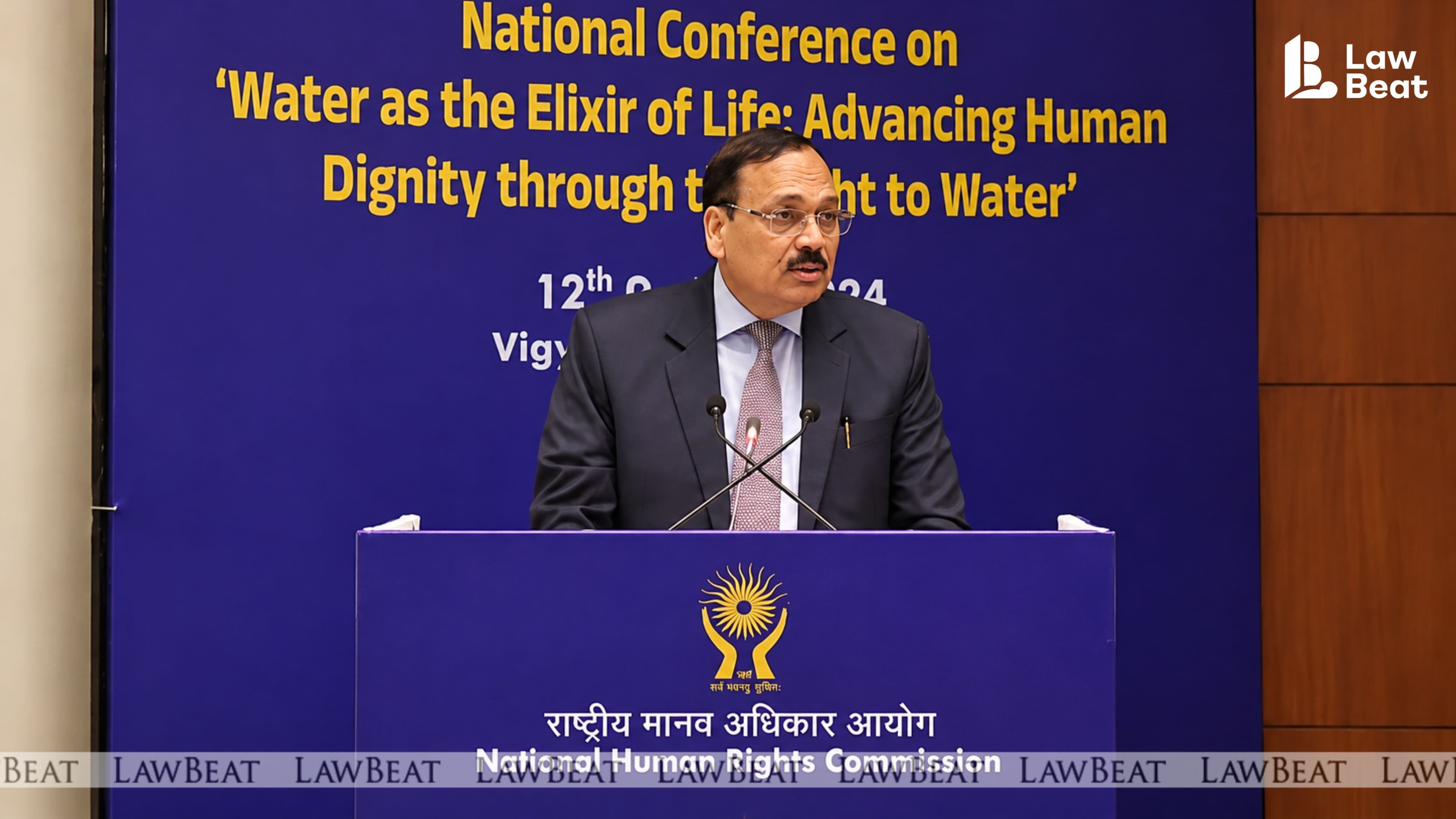
CJI Surya Kant: Human Rights Commissions Role Complements Courts
Summary
- CJI Surya Kant stated that courts and human rights commissions have separate but complementary duties in enforcing constitutional rights.
- Courts intervene in rights violations, while human rights commissions identify systemic failures and ensure institutional attention for invisible concerns.
- The NHRC's moral authority, built through credibility and timely interventions, is crucial for its influence, rather than coercive power.
- Commissions provide an accessible avenue for rights enforcement, especially for individuals in remote areas who struggle to reach courtrooms.
- The NHRC addresses broader issues like custodial torture and bonded labor, and fosters collaboration through thematic groups and conferences.
Distinguishing Roles in Rights Enforcement
Its moral authority is like a bank balance. It is built slowly, deposit by deposit, and it can be spent very quickly.
Chief Justice of India Surya Kant recently articulated a clear distinction between the functions of courts and human rights commissions in upholding constitutional rights. Speaking at the 33rd Foundation Day of the National Human Rights Commission (NHRC) on Monday, October 12, 2026, CJI Kant emphasized that while both entities are crucial, their duties are separate yet complementary. He stated that courts are primarily tasked with intervening directly when constitutional rights are violated, acting as immediate arbiters of justice.
In contrast, human rights commissions, such as the NHRC, are designed to investigate complaints, pinpoint systemic failures within institutions, and ensure that concerns which might otherwise remain unaddressed receive appropriate institutional attention. This delineation highlights a strategic division of labor, where courts handle direct infringements and commissions tackle the underlying issues that lead to such violations. The CJI illustrated this shared responsibility by referencing the provision of safe water, explaining that such a complex issue cannot be the sole responsibility of any single body.
The Unique Mandate of Human Rights Commissions
CJI Kant further elaborated on the indispensable role of non-judicial bodies like the NHRC, particularly in a vast country like India. He noted that while the Constitution's framers entrusted rights enforcement to the judiciary, many individuals in remote districts face significant barriers to accessing a courtroom. It is precisely in these circumstances that a commission finds its purpose, acting as a guardian of the constitutional promise by reaching those who cannot easily speak for themselves.
A key characteristic that sets a commission apart from a court is its ability to listen to the voiceless and initiate action proactively, without needing a formal request. Addressing common criticisms regarding the limited powers of human rights institutions, CJI Kant offered an alternative perspective: their influence stems not from coercive authority, but from the credibility they meticulously build over time. He likened this moral authority to a bank balance, accumulated slowly through diligent inquiry, timely intervention, and honest reporting, yet capable of being depleted rapidly.
Addressing Systemic Failures and Broader Impact
The NHRC's work extends beyond merely identifying individual rights violations; it actively seeks accountability, provides meaningful relief to affected parties, and advocates for changes that prevent future recurrences. CJI Kant highlighted the commission's interventions in critical areas such as custodial torture and deaths, bonded labor, silicosis resulting from industrial exposure, and the rights of marginalized communities, showcasing its broad impact.
Furthermore, the commission fosters collaboration through thematic advisory groups and national conferences, bringing together public authorities, experts, and civil society. These forums address diverse issues including mental health, disability, children's rights, gender-based discrimination, and environmental concerns. Such gatherings are instrumental in consolidating problems that might otherwise appear as isolated incidents, ultimately leading to more responsive institutions and enhanced protection on the ground. While the National Commission establishes standards and identifies broader patterns, state commissions play a vital role by being closer to the local communities where violations frequently occur, especially in a country where the experience of rights is often shaped at the village, neighborhood, and household levels.
Measuring True Impact
Despite the impressive operational statistics—over 24 lakh cases registered and more than 23 lakh disposed of by the NHRC in its 33-year history, reflecting a disposal rate exceeding 98 percent—CJI Kant cautioned against using numbers as the sole metric of success. He underscored that the true measure of a human rights institution's effectiveness transcends mere statistics.
The enforcement of constitutional rights is a collective endeavor, as exemplified by the issue of safe water access. This problem, according to the CJI, necessitates a multi-faceted approach where the government is responsible for constructing and maintaining infrastructure, while international institutions contribute scientific knowledge, experience, and cooperative efforts. This integrated view reinforces the idea that human rights protection is a shared responsibility, requiring distinct yet coordinated actions from various institutions.
Practical Implications
Lawyers and compliance officers should recognize the distinct yet complementary roles of courts and the National Human Rights Commission (NHRC) in India. While courts intervene in direct rights violations, the NHRC focuses on identifying systemic failures and providing accessible redressal, especially for those unable to reach courts. This implies that engaging with the NHRC can be a strategic avenue for addressing broader human rights issues or for clients in remote areas, and its findings on systemic failures can signal areas of increased regulatory scrutiny or policy change.
Source
How does this affect you?
Get an AI analysis of this article grounded in your jurisdictions, practice areas, and any policy documents you've uploaded to Wansom.
Finish Reading the Full Story and the Expert Analysis.
Get the latest legal & regulatory intelligence in India
Wansom is AI and can make mistakes.