
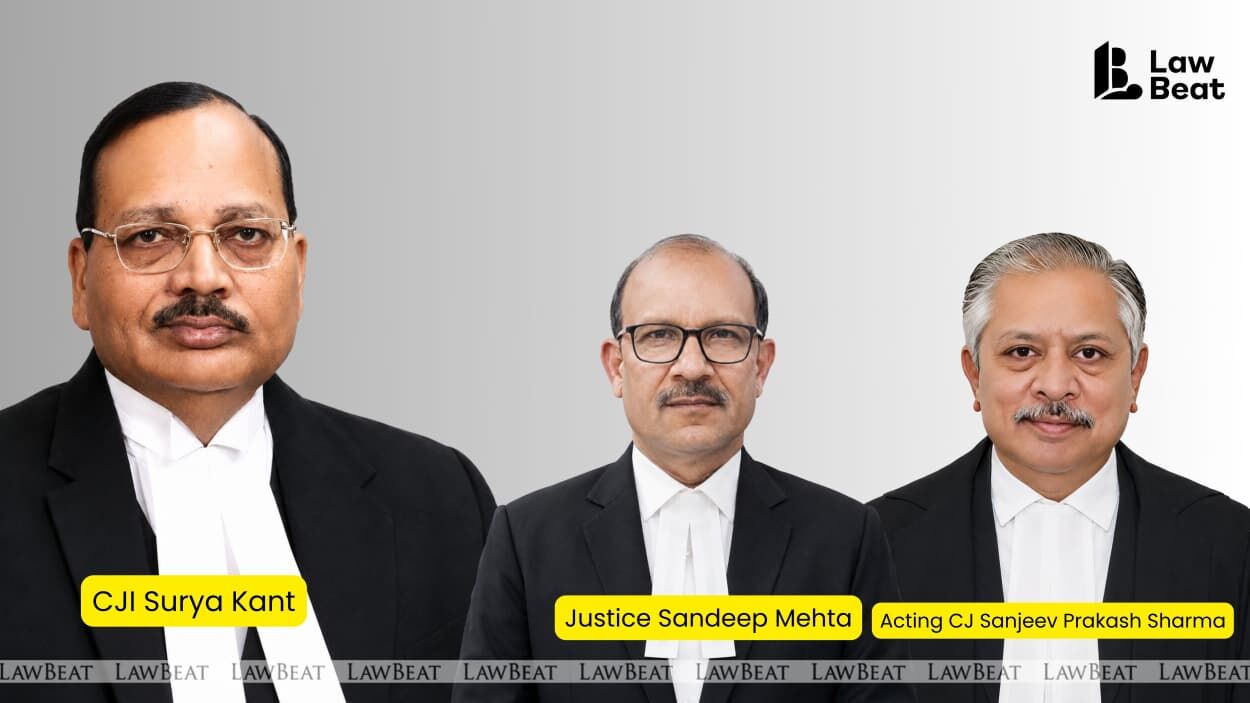
CJI Surya Kant: Collegium Probes Justice Sharma Allegations
Summary
- CJI Surya Kant confirmed the Supreme Court Collegium is examining letters from Justice Sandeep Mehta alleging misconduct by Rajasthan High Court Acting Chief Justice Sanjeev Prakash Sharma.
- Justice Mehta's letters detail claims including threats of retaliatory transfers, improper listing of land appeals, and questionable appointments for close associates.
- The CJI stressed that allegations against a sitting judge must be handled through established institutional mechanisms, ensuring a fair opportunity for Justice Sharma to respond.
- The Collegium will consider all submitted material and Justice Sharma's response before making any decision regarding his continuation, transfer, or other administrative actions.
- Justice Sharma was appointed to the Rajasthan High Court in November 2016, transferred twice, and returned as Acting Chief Justice under a May 2025 Collegium resolution, holding the post for over ten months.
Collegium Initiates Inquiry into Rajasthan HC Allegations
The CJI underscored the principle that allegations against a sitting judge must be handled strictly within the institutional framework, cautioning against public adjudication of such sensitive matters.
Chief Justice of India Surya Kant has confirmed that the Supreme Court Collegium is actively examining a series of letters submitted by Senior Supreme Court Justice Sandeep Mehta. These communications raise serious allegations concerning the conduct of Justice Sanjeev Prakash Sharma, who currently serves as the Acting Chief Justice of the Rajasthan High Court. The CJI's statement comes amidst a growing controversy surrounding the Rajasthan High Court Acting CJ, signaling that the highest judicial body is addressing the matter through established internal mechanisms.
CJI Surya Kant emphasized that while the Collegium has taken note of the concerns articulated in Justice Sandeep Mehta's letters, no definitive conclusions can be reached until Justice Sharma has been afforded a fair opportunity to present his response. The CJI underscored the principle that allegations against a sitting judge must be handled strictly within the institutional framework, cautioning against public adjudication of such sensitive matters. This approach ensures that due process is followed before any judgment is made regarding the `CJI Surya Kant Collegium Justice Sharma allegations`.
Specific Claims Against Acting Chief Justice Sharma Detailed
Justice Sandeep Mehta, who penned letters to the CJI on August 2, 10, and 17, has brought forth several specific claims against Justice Sanjeev Prakash Sharma. Among these, Justice Mehta reported that multiple judges expressed distress over Justice Sharma's behavior, including allegations that he threatened colleagues with retaliatory transfers, purportedly leveraging his perceived proximity to the CJI. The `Justice Sandeep Mehta letters Rajasthan HC` also highlighted concerns regarding the listing of appeals related to valuable Udaipur land before a Jaipur bench presided over by Justice Sharma, despite his own prior ruling that principal-seat matters should not be moved from Jodhpur to Jaipur.
Further allegations cited by Justice Mehta include a complaint from Justice Uma Shankar Vyas, detailing alleged vindictive conduct by Justice Sharma towards Vyas's wife, a senior judicial officer. This complaint also referenced a delayed inauguration of a new Jodhpur court building, which Justice Vyas described as an unpardonable loss. Additionally, Justice Mehta referenced a complaint made by Advocate Pooja Tripathi to Justice Vikram Nath, which claimed that Justice Sharma facilitated permanent Lok Adalat appointments in Jaipur and Ajmer for close associates, including a childhood friend and the spouses of two district judges. The complaint also alleged that Justice Sharma recommended four women advocates for elevation despite their not being in active practice. It is important to note that none of these `Sanjeev Prakash Sharma allegations` have undergone judicial testing.
CJI Surya Kant's Stance on Due Process and Institutional Integrity
In his `CJI Surya Kant judicial conduct statement`, the Chief Justice of India firmly stated that the Supreme Court cannot permit individual complaints concerning judges to be resolved through competing claims aired in the media. This stance appears to be a direct caution against public speculation, reinforcing the Collegium's commitment to internal processes. The CJI reiterated that the mere existence of allegations cannot, by itself, be construed as a finding against a judge, emphasizing the need for a thorough and impartial examination.
The `Supreme Court Collegium Justice Sharma inquiry` is being conducted at the appropriate level, and the process will meticulously consider all material provided by Justice Mehta, alongside Justice Sharma's forthcoming response. Any subsequent decision regarding Justice Sharma's continuation, transfer, or other administrative actions will be made by the competent institutional authority only after careful consideration of all relevant information. This methodical approach aims to reassure both the legal fraternity and the public that the institution is diligently addressing the `Rajasthan High Court Acting CJ controversy` without succumbing to hasty conclusions based on unverified claims.
Background of Justice Sharma's Judicial Career
Justice Sanjeev Prakash Sharma's judicial career includes his initial appointment as a judge of the Rajasthan High Court in November 2016. He was subsequently transferred to the Patna High Court in 2022, and later to the Punjab and Haryana High Court. His return to Rajasthan as Acting Chief Justice occurred under a Collegium resolution dated May 2025, a position he has held for over ten months. This background provides context to the current `CJI Surya Kant Collegium Justice Sharma allegations`.
Practical Implications
This highlights the Supreme Court Collegium's adherence to due process in examining serious allegations against sitting judges. Lawyers should observe such developments for insights into judicial accountability and the integrity of the appointment and transfer processes within the Indian judiciary.
Source
How does this affect you?
Get an AI analysis of this article grounded in your jurisdictions, practice areas, and any policy documents you've uploaded to Wansom.
Wansom is AI and can make mistakes.